

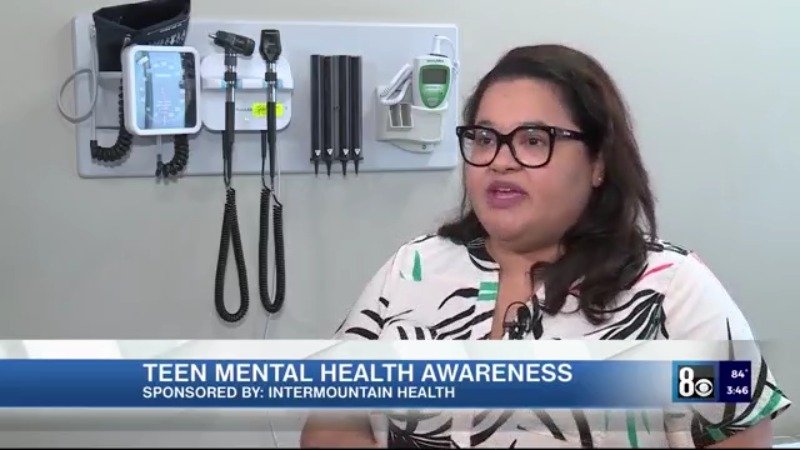
For Mental Health Awareness Month, Intermountain also wants to focus on how mental health issues affect teenagers.
“Adolescents have their own challenges,” says Intermountain Health pediatrician Dr. Agatha Formoso. “In addition to their physical changes, they’re also feeling the pressure to do well in school, get good grades, be well-rounded students and get along with their families. They’re trying to figure out their future and who they are as people.”
Moreover, they address large-scale problems related to the socio-economic environment (poverty, strife, food insecurity). You may encounter discrimination based on race, gender, sexual orientation, appearance, or disability.and overall fear of global conflicts, school shootings, climate change, and other issues.
There are signs that parents and adults can look out for in teenagers and young adults. Keep in mind that just one symptom on this list does not mean your teen is experiencing a full-blown crisis. Biological changes such as hormonal changes that all tweens and teens experience can affect things like your child’s mood and performance in school. But if you consistently see one or more of these signs, it’s time to have a conversation with your teen about mental health.
- Mood swings, irritability, anger, tearfulness
- Changes in sleep, weight, and eating habits
- Loss of interest in things you used to like
- More isolation from friends, family and community
- Academic struggles seem different or more intense: For example, failing a quiz in a favorite subject or refusing to do homework that once seemed easy.
- Thoughts and worries that haunt you
- A whole new set of friends you’ve never met before
- Refusing to talk about what is bothering them, even after making it as safe as possible to discuss difficult issues openly
- An obsession with a particular goal, perhaps the belief that life will never be the same if it is not achieved.
The most common mental health problems and disorders among teenagers are:
- ADHD: Approximately 10% of all U.S. children ages 3 to 17.
- Anxiety: About 9.5% experience anxiety that interferes with their daily life.
- Depression: About 4.5% suffer from depression, which may look like the typical teary blues of anger or frustration.
- Although self-harm is believed to be underreported, it remains a major problem for teens.
- Eating disorders such as anorexia nervosa and bulimia nervosa are less common, but can co-exist with issues such as anxiety and depression and can cause serious health problems.
Drug use is common among teenagers and is a concerning use in itself. Approximately 15 percent of high school students report having tried street drugs and up to 30 percent have tried alcohol. Dr. Formoso says substance use is something to discuss with his teenager, regardless of the signs of a mental health problem. It becomes even more concerning if a parent notices drug use along with mental health issues. This is because drinking and drugs are usually used to cope with emotions or situations and are a sign that a teenager needs help.
Although research is still being conducted on how social media affects human health, research shows that 90% of teens use multiple platforms and use social media daily. Masu. Teaching children how to use social media in a healthy way can help reduce the mental health and safety risks associated with social media use.
How do I talk to my teenager?
Having frequent conversations about mental health with your teens will make the discussion easier. Make check-in a normal thing.
- Create a safe space to discuss difficult or uncomfortable issues. Reassure your child that it is a judgment-free zone.
- Resolve to listen more than you speak.
- Be patient and comfortable with silence.
- Try not to blame yourself for your child’s problems. Life is hard, but everyone is just trying their best. If you yourself are a parent with mental health issues, remember that you are not the root cause of your child’s difficulties.
- Consider timing your conversation to a more relaxing location or time.
- Be supportive and remind them that their feelings are okay.
- Recognize that the stigma surrounding mental health still exists. But remember – mental health is part of human health. Receiving treatment is no different than receiving treatment for a broken bone or an infection.
Keep in mind that mental health is not just about dealing with problems. It’s important to promote positive mental health and resilience in positive ways every day. Even if your teen is doing well, help them find time for self-care and healthy habits that boost their mood. Make time to enjoy each other as a family. Positive activities and relationships may have a protective effect.
Intermountain has more tips for having important conversations, especially for teens: The transition to teenage years, ages 9-12, can be difficult because kids have a hard time communicating their feelings. They tend to give one-word answers. Visit talktotweens.org for specific resources for this age group.
How can my pediatrician help?
Your pediatrician will discuss treatments, including effective medications. They may also refer you to a mental health professional who can evaluate your teen. In this way, the pediatrician becomes part of the care team that helps create a treatment plan and helps create a crisis plan detailing what to do if the child’s situation worsens.
“Remember, mental health is not something to be stigmatized. It’s like coming in with a sore throat or a fever. We are here to help you and understand that it happens,” Formoso said.
Providers and more information can be found at intermountainnv.org.
If your child has suicidal thoughts or acts, never ignore them. Call or text the National Suicide and Crisis Lifeline at 988. Our trained Lifeline staff can help you find immediate steps to protect your child.
