


The mental health of North Carolina students is improving as their physical activity increases, according to results from the 2023 N.C. Youth Risk Behavior Survey (YRBS) presented to the State Board of Education on Wednesday.
After nearly a decade of declines in physical activity and mental health indicators, the new data shows positive trends in both categories.
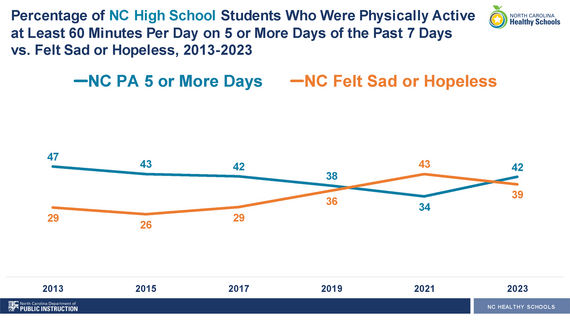
The percentage of high school students feeling sad or hopeless fell to 39% in 2023 after reaching 43% in 2021. The percentage of middle school students feeling sad or hopeless fell from 35% to 32% during the same period.
Several other indicators related to students’ feelings toward themselves and their teachers also improved. The percentage of high school students who had seriously considered suicide in the past year fell from 22% in 2021 to 18% in 2023.
Meanwhile, 42% of high school students say they are physically active five or more days a week for 60 minutes or more, up from 34% in 2021. Among middle school students, 52% say they are physically active five or more days a week for 60 minutes or more, up from 44% in 2021.
The North Carolina Middle School Youth Risk Behavior Survey and the North Carolina High School Youth Risk Behavior Survey are administered to a randomly selected representative sample of students in odd-numbered years. Surveys are anonymous, and parents may choose not to have their children participate in the survey.
The department will select survey questions from a list created by the Centers for Disease Control and Prevention that is used by educational institutions and schools nationwide.
Recognizing the expanding role of technology in students’ lives, this year’s survey included questions about social media for the first time.
More than 80 percent of high school students report using social media at least several times a day, with about half of them saying they use it at least once an hour. Middle school students have slightly less access to social media, with 63 percent using it at least several times a day.
Use of e-cigarette products, marijuana and alcohol is also declining among high school students. Smoking rates remain at an all-time low of 4 percent. There has been no significant change in prescription painkiller use or bullying.
The 2023 data shows a notable improvement from the 2021 survey, which was the first survey since the COVID-19 pandemic.
“It’s very encouraging to see that students are not only recovering from the effects of the pandemic, but in many cases, performing better than they did before 2019,” said Michael Maher, the state’s assistant superintendent who oversees standards, accountability and research.
Ellen Essick, superintendent of the North Carolina Division of Healthy Schools, said the positive impact of exercise on mental health is well documented.
Proposed amendments to the existing Healthy Active Kids Policy have been presented to the board for consideration that would expand existing language that calls for 30 minutes of physical activity per day for students in kindergarten through grade 8. The proposed amendments would encourage high schools to provide 60 minutes of physical activity per week to students.
“We’ve heard time and time again from school leaders that student mental health is a top priority, and it’s a top priority for NCDPI as well. Based on YRBS data and national surveys, we believe this addition to our Healthy Active Kids policy will have a positive impact,” said Essick. “Students cannot perform to their full potential in the classroom if they are not mentally and physically healthy. Providing more opportunities for activity during the school day should ultimately translate to improved academic achievement.”
Board members are expected to discuss the policy on Wednesday and vote at their July meeting.

