

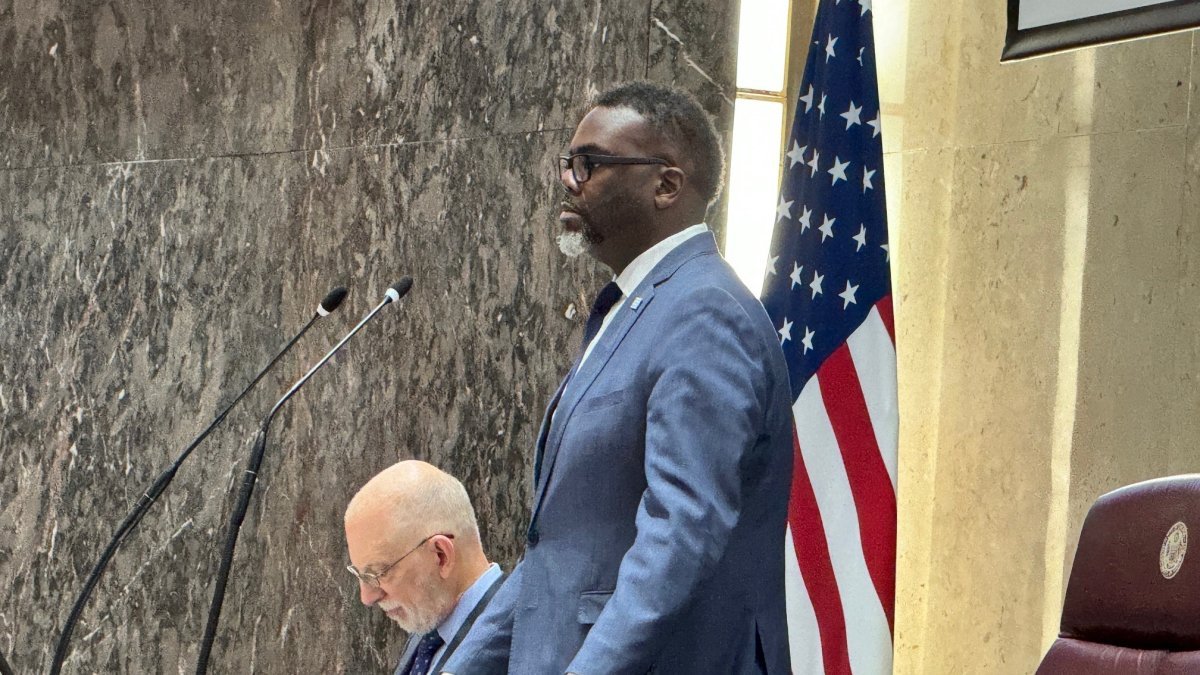
The city is taking steps to expand mental health services it cut more than a decade ago, reopening a center in the Roseland neighborhood on the Far South Side and adding services to two other locations on the West Side.
“Today, my administration is reversing course and taking extraordinary steps to expand our city’s mental health system,” Mayor Brandon Johnson told reporters and community members during a news conference outside Roseland Mental Health Center Thursday morning.
The Roseland facility will be one of three additional locations offering mental health services by the end of the year, with services also set to be added at a Chicago Department of Public Health vaccine clinic in the Pilsen neighborhood and Legler Library in Garfield Park.
Johnson said his administration wants to hire “as many people as possible” to expand mental health services.
“Clearly there’s not only a need, but a desire for workers to have the opportunity to work for public health,” Johnson said.
The announcement came following the release of a report compiled by the Mental Health System Expansion Working Group that detailed a citywide mental health expansion plan.
In addition to reopening city-run mental health centers, the report suggests opening new health centers in areas with the most unmet need and adding mental health services to existing city public health clinics that don’t offer them.
Councilwoman Rossana Rodriguez-Sanchez (33rd Ward) said the city selected Roseland, Pilsen and Garfield Park for the expansion of mental health services based on the needs of the areas.
“It’s well documented that the South Side and the West Side are areas where there is much less access to mental health care,” said Rodriguez-Sanchez, who chairs the City Council’s Health and Human Relations Committee. “All of the work that we and the mayor’s office are doing right now is driven by that need.”
Last July, the mayor’s allies set the stage for the clinic to reopen as part of a comprehensive plan to build a new network for mental health care called “Treatment, Not Trauma.”
“No matter what logic or justification the previous administration offered, [as] “I’m not the mayor of why families don’t qualify for mental health treatment,” Johnson said. “We made a promise. [and] I kept it because it would save a life.”
In 2012, Mayor Rahm Emanuel closed seven city clinics, half of the ones open at the time, due to budget cuts.
Johnson said working to improve mental health access in the city is personal after his brother, Leon, died after becoming homeless due to drug addiction and struggling with mental health issues.
“My administration is working to create a Chicago where people suffering from a mental health crisis, like my brother Leon, can get the treatment they need,” Johnson said.
