After noticing a lack of mental health education in high schools, three Mercer University students developed an interactive program to more effectively reach local youth.
Sophomores Shan Khan, Manas Patel and Aleem Patni are part of a new student organization called Mercer Youth, which piloted its unique curriculum at two schools earlier this year and hopes to expand with funding they recently received from Mercer’s Visionary Student Panel mini-grant program.
Khan, a biology and global health major, was inspired by her personal experiences in high school to found Mercer YOUTH, which stands for Youth Organization for Understanding and Teaching Mental Health.
“I started this organization because I lost one of my friends (to suicide) during the 2020 pandemic,” he said. “We weren’t able to do anything right away because we were all in quarantine, but I put the idea off until I was in college. With the help of my best friends, Manas and Aleem, we started talking about the situation and how we could strengthen (mental health) in high schools in Georgia.”
Patel, a chemistry major, comes from a rural, underprivileged area where mental health is ignored and taboo. He saw firsthand the need for greater awareness of mental health, especially among teenagers, and the problems it causes. Patni, on the other hand, had seen mental health discussed since he was a child, but never in a meaningful or accessible way. Once a semester, students at his high school would fill the auditorium to hear a required lecture on mental health.
“Through that experience, I realized that you can’t just teach someone about mental health,” said Patni, a history major. “When you speak in a big lecture hall, you’re always speaking in front of people. You’re always the one being talked to. We came together to figure out how to make this education interactive. We’re not medical experts, but we know the facts from the CDC and we can present it in a way that’s fun, engaging, and spreads awareness about mental health.”
For their project, the three friends sought advice from Mercer University’s Counseling and Psychological Services, their Visionary Student Panel advisors and their partner high school administrators, Patel said. With input from the Centers for Disease Control and Prevention, they developed a presentation that incorporated guided discussions and game-based lesson plans.
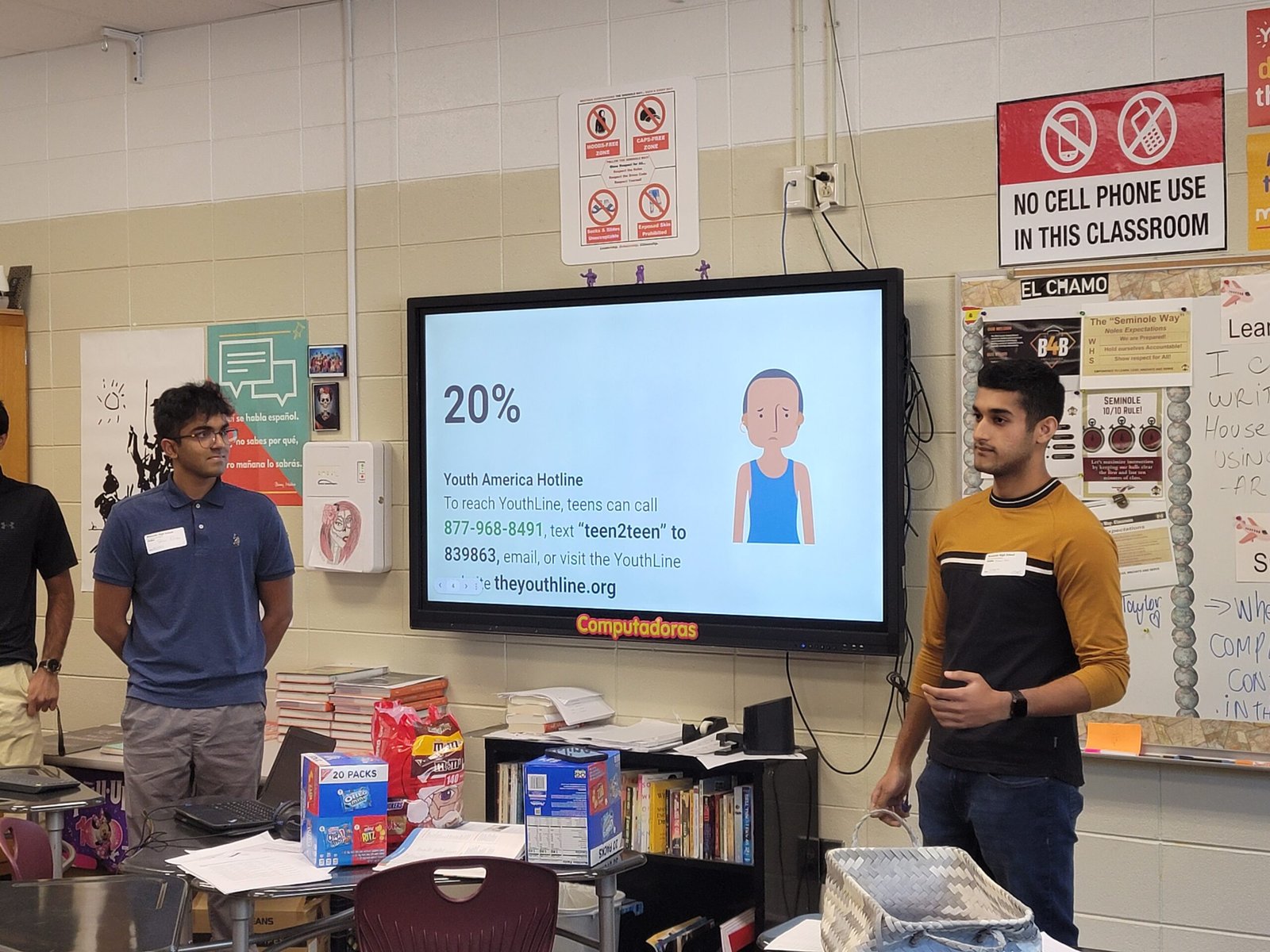
High school students are divided into small groups, presented with a PowerPoint presentation asking questions about mental health and then asked to write their answers on a small whiteboard. Correct answers earn them points and rewards, Khan said.
Patni said the questions are presented in a more relatable way, rather than just statistics: For example, instead of stating that 36% of teenagers experience severe anxiety disorders, one in three say they experienced severe anxiety disorders during high school.
“This is more of a discussion starter among students than a memorization of facts per se,” Patel said. “This fact is just a way for students to be able to talk about mental health in a free and open space.”
Their programs last 45 minutes to an hour, but can be tailored to meet the needs of individual schools. They deliver lectures in classrooms with a maximum of 30 students, rather than in packed lecture halls. This encourages interaction and makes students feel more comfortable speaking, Patni said. Students who don’t want to speak can provide feedback anonymously, Khan said.
“What’s really helped us is the fact that we’ve been in their shoes,” Patni said. “We were high school students. We know what they’re going through. And because of that, students are actually able to come to us and tell us what they’re going through.”
Last year, Khan, Patni and Patel made several presentations at the South Georgia Regional Achievement Center in Albany and one at Westside High School in Macon. Their program was well-received: High school students were surprised by some of the findings, and some even realized they had been using unhealthy coping mechanisms.
“Students realize how serious mental health issues are and that we are just like them and we are trying to help them,” Patel says. “Peer-to-peer education leads to higher student engagement and improved learning outcomes, especially in the area of mental health.”
Patni said he saw the “magic” the first time he helped present it.
“It really worked,” Patni said. “Everybody had something to say. They were happy to talk to us. They had fun. I related it to my own high school experiences and thought, ‘I really got something out of this.’ That interaction is the best way to teach someone.”
The Center for Rural Health and Health Disparities at Mercer School of Medicine is helping provide healthy snacks for the program, and with the $1,000 they were awarded by the Visionary Students Panel, Patni, Khan and Patel hope to purchase items such as stress balls to hand out as incentives, as well as create a website with resources schools can use.
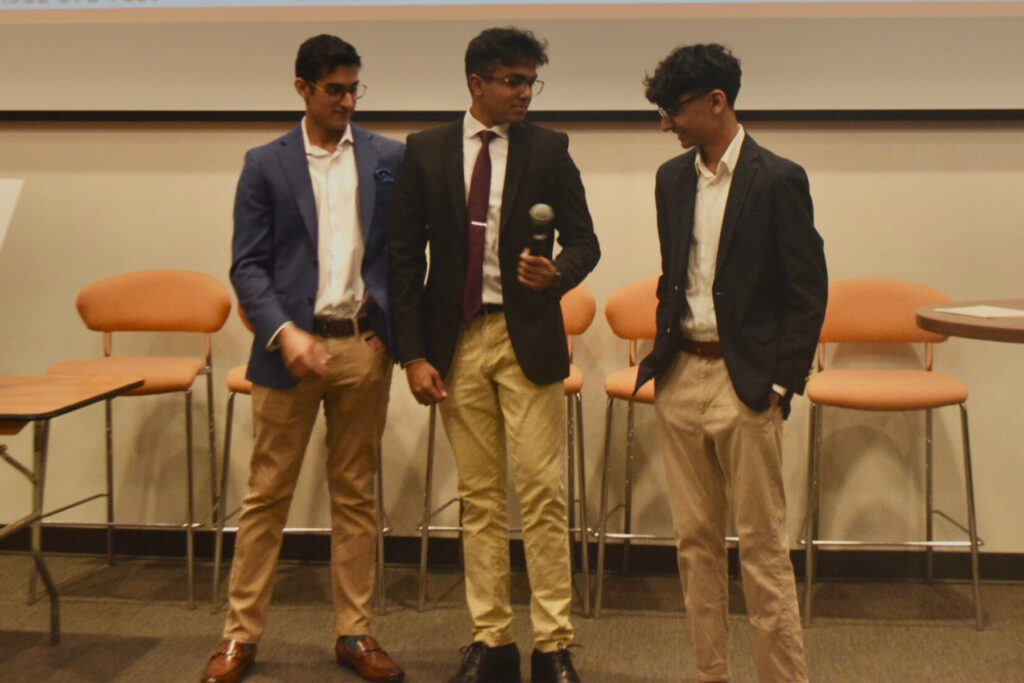
Additionally, their future goals include expanding the project to more schools and community groups, diversifying by involving more Mercer University students, and creating a Spanish language version of the presentation. They gave a keynote speech about their program at Macon Mental Health Matters on May 10.
Patel said because mental health issues aren’t going away anytime soon, she plans to take steps to ensure the program continues after students graduate from Mercer. Ideally, she would like to align the program with specific courses at Mercer.