

WARNING: This article reports on mental health and suicide issues.
When a person is experiencing a mental crisis, encounters with police can be intimidating, frightening, and potentially dangerous. In Madison, a relatively new type of paramedic program is trying to reduce the risks associated with these encounters.
The City’s Community Alternative Response Emergency Services Program, CARES, was established in 2021 to reduce direct police response to mental health crises and replace police officers with trained crisis responders and community paramedics. . CARES operates as a partnership between the Madison Fire Department and Journey Mental Health and is designed to assess and respond to individuals experiencing a mental health crisis.
Dispatched from the Dane County Public Safety Communications Center in response to 9-1-1 calls, two-person CARES teams work to de-escalate crises, connect individuals with resources and develop safety plans.
The CARES fleet consists of three vans stationed at three different fire stations, each with a “Madison Fire Department” label on the side of the vehicle, and the trunks are packed with emergency blankets, water bottles, medicine, food and other supplies that may be useful during a call.
CARES team employees are equipped with tools and training aimed at providing relief to people in mental health crises. Paramedics and crisis workers are each trained to have basic knowledge about mental illness and effective crisis intervention.
“Helping people is what I do best. I’m a suicide survivor and I’ve lost family members to suicide, so it’s a personal connection,” said Eric Kinderman, a CARES crisis worker who has worked with the program since 2022.
Since he was 18 years old, Mr. Kinderman has been working to alleviate personal crisis situations. During his college years, he worked at the House Crisis Stabilization Center in Jackson, Rock County, Wisconsin’s first crisis care center, and then at Journeys, where he began working in the Mental Health Crisis Unit.
“We train our teams in suicide risk assessment, safety, and de-escalation,” said Sara Henrickson, CARES crisis clinical team manager at Journey. “CARES personnel are incredibly skilled, empathetic and really good at working with people in crisis.”
Across the country, there is growing concern that law enforcement is not the best resource to help individuals experiencing a mental health crisis and those around them.
“Even the most empathetic, trauma-informed, calm and kind police officers are still representatives of law enforcement,” Henrickson said, adding that in the midst of a crisis, even the most well-trained police officers are still representatives of law enforcement. encounter a uniformed police officer with a gun, which he added could be a trigger for someone.
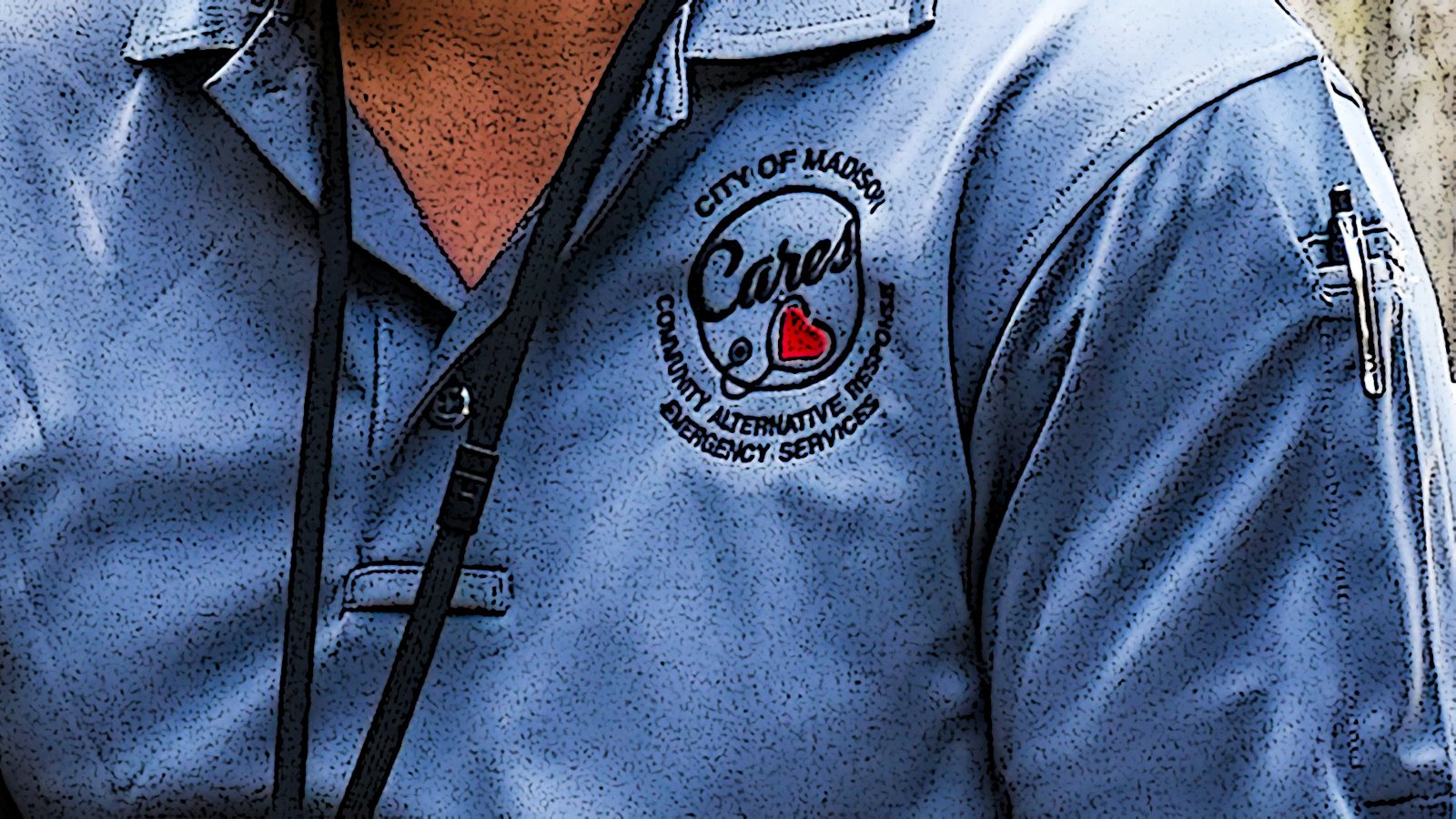
That’s why CARES doesn’t wear military-style uniforms or carry guns — they wear gray polo shirts with the CARES logo, and while the Madison Fire Department van is equipped with a light rack and siren, it’s rarely used.
CARES paramedic Amy Jörg Meinholz said that when people in crisis realize that first responders are not police, their entire attitude often changes.
“They may have these preconceptions or personal experiences that are not favorable to law enforcement,” she says.
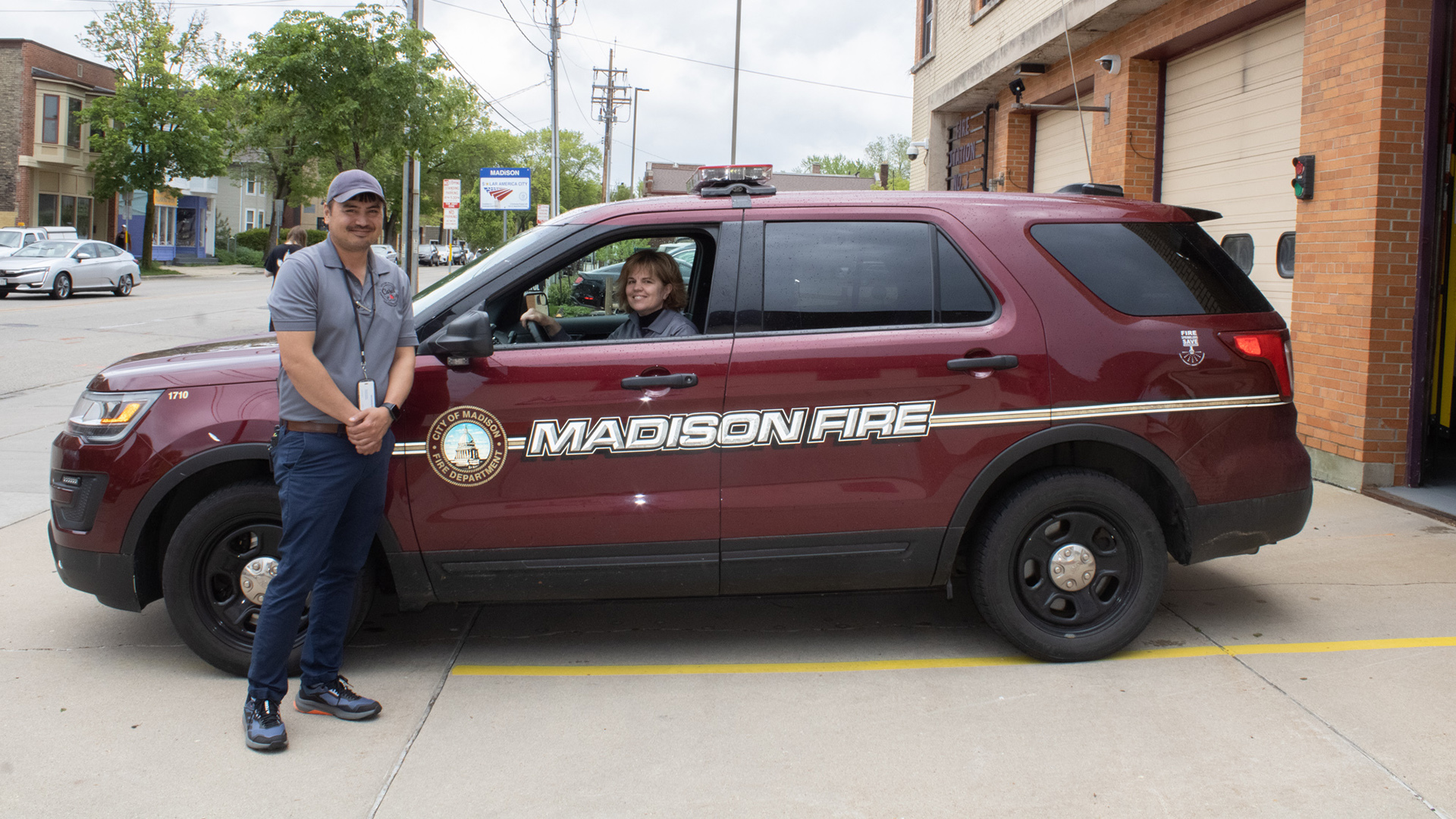
Madison CARES Emergency Responder Eric Kinderman appears outside the Madison Fire Department Station 3, located at 1217 Williamson Street, on May 7, 2024, in a Madison driven by Madison CARES Paramedic Amy Jörg Meinholz. Standing next to a fire department vehicle. The Community Alternative Response Emergency Services Program has been operational since September 2021 and responds to support people experiencing mental health crises. (Credit: Hannah Ritvo/PBS Wisconsin)
CARES became active in Madison six years after the death of Tony Terrell Robinson, a 19-year-old mixed-race man who was shot and killed by Madison Police Department Officer Matt Kenney on March 6, 2015. Kenney responded to a 911 call about Robinson acting erratically and during a chase, shot and killed the boy, who was unarmed and under the influence of THC, psilocybin mushrooms and Xanax.
Advocates believe that had a mental health crisis unit like CARES existed at the time, Robinson might still be alive.
Henrickson said CARES was not developed specifically in response to Robinson’s death or the killing of George Floyd in Minneapolis in 2020, but he said CARES was developed to help communities develop better, more human-centered and safer policies. He said the program was created out of recognition that there is a way to respond to mental health crises.
“When you have a truly tragic incident, it makes you want to move forward and make sure you’re really doing your best,” she said. “A negative impact from police response anywhere in the country forces all of us to reexamine what we could have done better.”
When CARES answers the phone
When CARES arrives on scene, team members assess the individual in crisis and provide support as needed. After mitigating the crisis, they determine what resources the individual needs and the level of care required.
Each member of our team is expected and trained to have a deep understanding of mental health crises and knowledge of helpful and sometimes life-saving services.
If additional support is needed after the crisis is over, the CARES team can transfer the individual to another location where they can receive further care. While ambulances can only go to hospitals, CARES vans can transport individuals to overnight or daytime shelters, detoxification centers, inpatient psychiatric hospitals, or other supportive and safe locations.
“The team has the autonomy to determine the best course of action for that call and can take as much time as they need to reach that action,” Henrikson said.
Kinderman said having the freedom to decide where to route calls is extremely beneficial.
“We solve a lot of situations just to keep people out of the hospital or out of jail,” he said.
CARES calls are free to those in crisis, and team members can devote as much time as they need. Jörg Meinholz says his colleague once spent more than nine hours with one of his girlfriends.
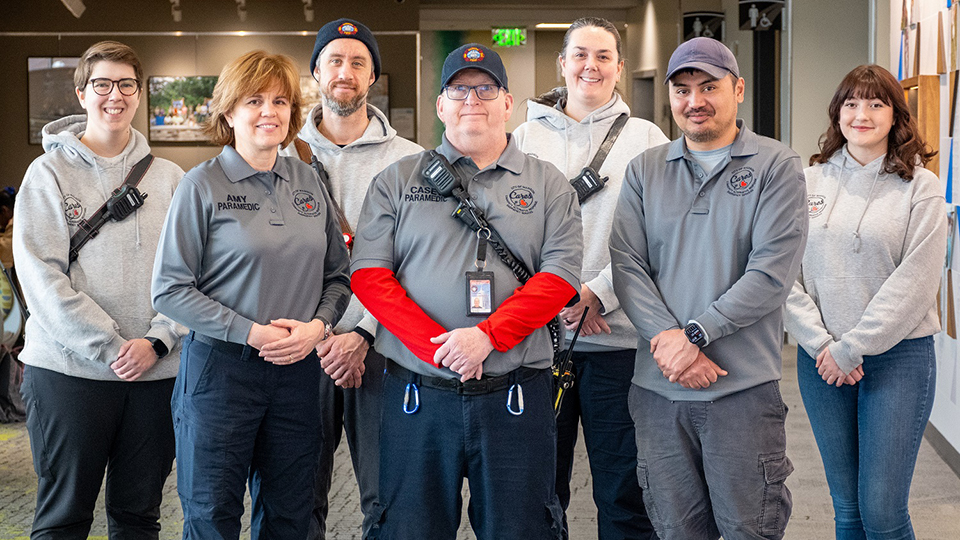
The City of Madison’s Community Alternative Emergency Response Service, called CARES, deploys a two-person team of paramedics and mental health crisis counselors. (Credit: Provided by Madison Fire Department)
“There’s no one quick fix for every problem, and no two people or behavioral crises are the same,” Meinholz says. “The book hasn’t been written yet. That’s one of the wonders of the brain.”
After alleviating an immediate crisis, the CARES team connects individuals with programs and other resources in Dane County to help them navigate the mental health system. As well, it provides information about housing and shelter, free or low-cost clothing, free places to eat, low-cost health care, and more.
The CARES vans are loaded with handy information packets similar to the mental health packets distributed by the National Alliance on Mental Illness, which contain 32 pages of phone numbers connecting to resources, recreational, volunteer and social opportunities, and peer support and assistance options.
CARES team members regularly field safety calls from people who don’t show up to work, or from family members who haven’t been heard from in days, and they also provide safety follow-up for people who were supposed to contact their case managers by phone.
Other calls involve people experiencing hallucinations, acting strangely, lying on the street in distress, and people with schizophrenia or bipolar disorder experiencing delusions and paranoia. There is.
Mr. Kinderman responded to one call involving a suicidal individual. After arriving on scene, the CARES team learned that the person did not have money to pay rent. Mr. Kinderman connects the person to the Tenants Resource Center, which helps members of the Dane County community with their rental issues, and helps the person fill out an application, create a safety plan and call a doctor. I helped.
CARES is open seven days a week, 8 a.m. to 9 p.m. on weekdays and 10 a.m. to 8 p.m. on weekends and holidays. All services provided by CARES are voluntary and individuals may opt out of the team if they wish. But CARES team members say most people in crisis appreciate their work, and some 911 callers have begun requesting their presence.
CARES has rapidly expanded its services over the last three years and continues to grow. It initially operated only in downtown Madison on weekdays but has now expanded to provide services citywide, seven days a week. Between September 2021 and April 2024, CARES responded to approximately 5,000 calls for service.
The 2024 Dane County budget set aside $200,000 for CARES to expand services and build new partnerships with communities outside of Madison. This funding was made available through a grant application process conducted in Spring 2024.
“The community has really welcomed CARES,” Henrickson said. “When we first started, the long-term goal was to one day have CARES implemented countywide 24/7.”
It is also not uncommon for Madison Police officers to respond to a call and then request CARES assistance once they determine the scene is safe, and CARES officers can also request police assistance if necessary for safety reasons.
In many cases, CARES responders simply connect individuals in crisis with a variety of resources, resolve financial issues, schedule doctor visits, create safety plans, and persist. realize that they can alleviate the crisis.
“Just giving the person a chance to explain themselves and share their experiences can be helpful,” Kinderman says.
If you or someone you know is struggling with mental health or substance abuse issues and/or suicidal thoughts, please call the free and confidential 988 Suicide & Crisis Lifeline or the National Suicide Prevention Lifeline at 800-273-8255. You can also text HOPELINE to 741741 to access the free and confidential Crisis Text Line.
