

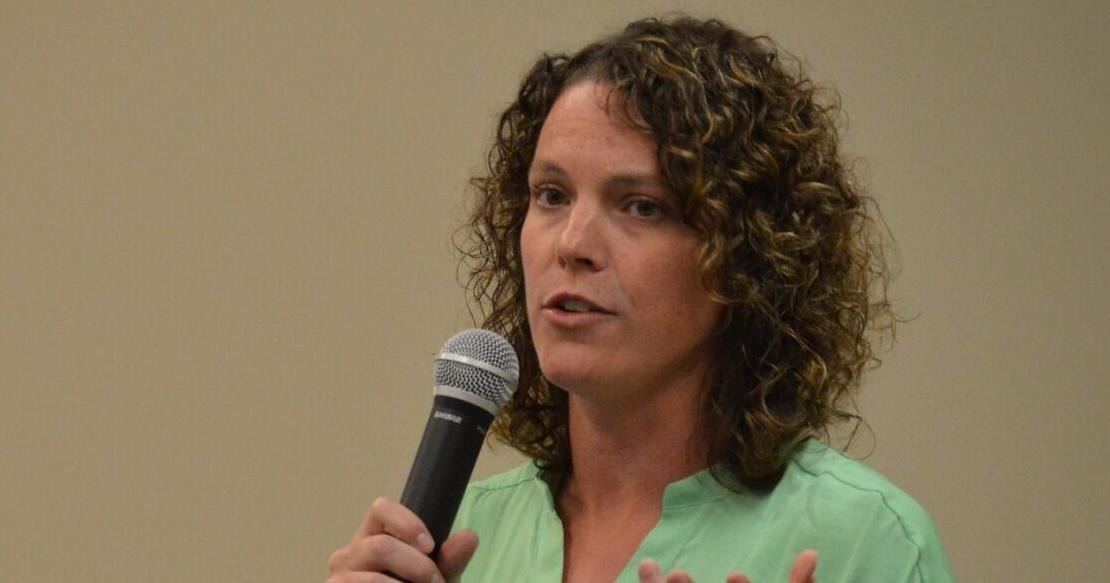
Sibley — Osceola Regional Medical Center in Sibley hosted a lunch-and-learn Wednesday with the goal of eliminating the stigma surrounding the need for mental health services.
Amanda Ten Napel, a therapist at Interconnections Therapy in Sibley, said she tried to give a general overview of getting help rather than discussing specific mental illnesses.
“The biggest thing they wanted me to tell people was to let people know it’s okay to ask for help,” Ten Napel said.
After sharing some brief background on the different types of therapists, she outlined five misconceptions about mental health.
- “Mental health issues don’t affect me.”
Ten Napel said one in five adults experience some kind of mental illness in a given year. One in six young people experience depression, some as young as 5 or 6. One in 20 Americans has lived with a serious mental illness that usually requires medication to treat.
“Another statistic that really stood out to me was that over 48,000 people died by suicide, which was almost double the number of homicides,” Ten Napel said.
- “People with mental health issues can’t keep working.”
“There’s a stigma that people with mental illness are unambitious, unmotivated or stupid. Some may perceive them as incompetent, unable to handle stress, too ill or potentially dangerous,” Ten Napel says. “In reality, they are just as productive as other employees.”
- “People who seek therapy have serious mental illnesses.”
“I hope that’s not true at all,” she says. “The majority of my clients don’t have a diagnosable illness. They just come in looking for help and someone to talk to.”
- “Ask for help makes you weak, especially as a man.”
“These statistics are a bit scary,” says Ten Napel, “but we often hear from male suicide victims that they feel it would be more of a burden to continue living. Seeking help should be seen as a sign of strength.”
In 2021, men were four times more likely to commit suicide than women, but women with mental illnesses were more likely to seek help. The suicide rate for men was highest among those aged 75 and over.
- “There’s nothing we can do for people with mental illness.”
“Only 10% of adults receive professional counselling or therapy,” Ten Napel says.
Friends and family can have a huge impact on someone struggling with their mental health by offering support, helping them access services, treating them with respect and acknowledging them as a person rather than a diagnosis.
Patient Access
“Outpatient mental health treatment does not require a physician referral,” she says.
Most health insurance companies cover mental health sessions, but we encourage you to check with your respective insurer if you have any questions.
In January, Medicare expanded the categories of licenses it approves to provide the treatment.
“For rural communities that didn’t have much access to Medicare, it’s huge for people to be able to see a therapist,” she said.
Private payment is a popular option, and many therapists strive to work with clients on private payment plans.
“At the end of the day, we all get into this job because we want to help people,” Ten Napel says, “so when they say there’s no money, it’s pretty hard to say no.”
She also mentioned checking the availability of employee assistance programs, which are benefits through which employers offer free therapy sessions to employees.
Finding the right provider can make a big difference in patient satisfaction.
Across a variety of therapy types, medical conditions, and age groups, the strongest predictor of treatment success is the patient’s perception of the quality of their relationship with their therapist.
Ten Napel specializes in cognitive behavioral therapy, eye movement desensitization therapy, and reprocessing therapy, and also teaches couples and family therapy, but ultimately sees patients of all ages.
“The range is varied, but we live in rural Iowa,” Ten Napel says, “so I get to try everything and I really love it.”
She shared her own practice but emphasized that the most important goal of her presentation was to help people feel comfortable receiving help, regardless of where they are receiving it.
“This isn’t about me,” Ten Napel says. “I want it to be about someone going out and looking for help and finding someone to help them.”
