

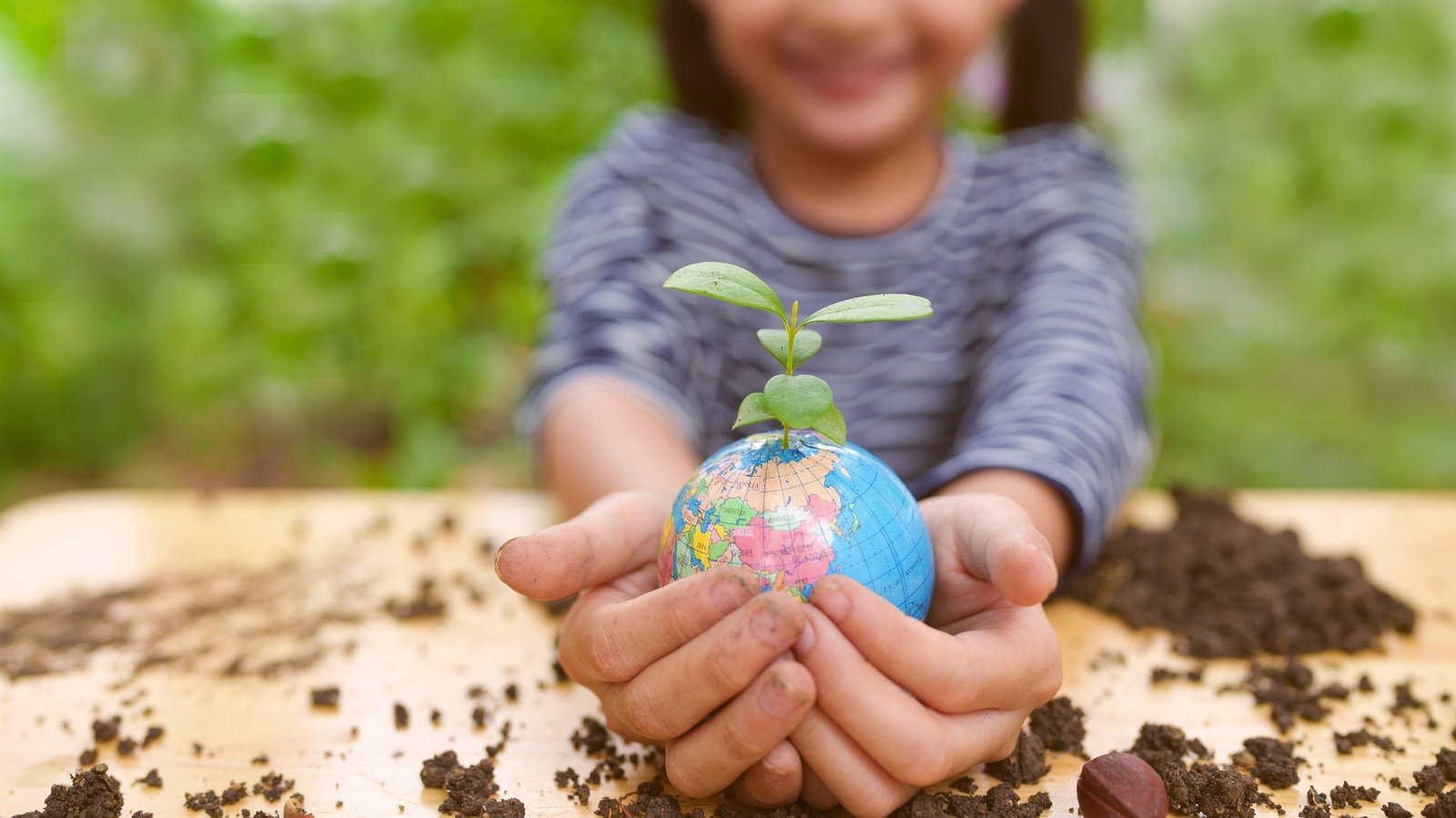
In a recently published review article, The Lancet Child and Adolescent Health, Public health experts discussed the crucial importance of health policies that incorporate child-specific adaptation measures to address children’s increasing vulnerability to climate change.
An analysis of 160 adaptation policies found that only 72% included child-related measures, mainly in the areas of education, nutrition and community engagement, but none addressed children’s mental health needs.
 Study: Prioritizing child health in national adaptation policies to climate change: An analysis of policy documents from 160 countries. Image credit: SUKJAI PHOTO / Shutterstock
background
Children are particularly vulnerable to the effects of climate change because they are dependent on caregivers, have specific physiological characteristics, and are exposed to the long-term effects of climate change over their lifetimes.
Climate change affects children’s health directly, through extreme weather events, and indirectly, through factors such as malnutrition, air pollution and infectious diseases, yet national policies often fail to adequately address children’s needs.
Earlier frameworks such as the National Adaptation Programme of Action (NAPA) and its successors, the National Adaptation Plan (NAP) and the Health National Adaptation Plan (HNAP), aim to strengthen climate resilience and adaptation of health systems, but few incorporate child-specific considerations.
International organizations have highlighted the need to integrate children’s perspectives into climate policies, but little research has been done on the extent to which national adaptation policies focus on children’s health, leaving significant gaps in understanding and action.
About the Research
The study explored the extent of integration of child health as a goal in national adaptation policies and identified key adaptation areas such as education, community engagement and nutrition, while highlighting the neglect of the mental health needs of this population.
The researchers collected national adaptation policies from 218 countries, prioritizing documents with strong health-related content. These policies were collected from Google, government websites, UN databases and the European Climate Adaptation Platform, and included documents in a range of languages, translated into English where necessary.
The analysis followed a thematic framework, whereby the researchers conducted a line-by-line analysis of the HNAP to identify child-specific adaptations and inductively defined relevant terms.
Three researchers coded the HNAPs and resolved disagreements through discussion.The resulting codebook was then applied to the entire sample of policy documents.
For broader analysis, additional NAPAs and NAPs were coded using HNAP keywords. Emerging themes, clustered by domain and country, were ranked based on the extent to which they included child-specific measures in terms of their ranking on the Child Climate Risk Index. This study also explored different conceptualizations of children in these policies using a lens-based approach grounded in contemporary childhood theory.
Investigation result
The study analyzed 160 national adaptation policies on child-specific health measures related to climate change, identifying policies in 160 of 218 countries. The documents included 22 HNAPs, 119 NAPs, and 19 NAPAs.
While the majority of these documents come from middle- and high-income countries, the highest proportion of available adaptation policies was found in low-income countries.
The analysis identified 19 adaptation themes, 16 of which were child-specific, including strengthening public health infrastructure, disaster preparedness, disease surveillance, environmental pollution control, and improving water, sanitation, and hygiene (WASH).
Education and awareness was the most commonly mentioned theme in 63% of countries.
However, the scope of child-specific interventions varies widely by country’s income status, with low- and middle-income countries prioritizing health infrastructure, equity, water and sanitation and poverty alleviation, while high-income countries focus on urban planning and environmental monitoring.
Only five countries – Austria, Jordan, Samoa, Sudan and Timor-Leste – included comprehensive, multi-domain child-specific adaptation strategies. In contrast, 44 countries had no child-specific strategies.
Conclusion
The study highlights the need to better integrate child-specific health measures into national adaptation policies to effectively address climate change-related risks.
The survey results reveal significant gaps in national adaptation policies regarding the integration of child health considerations, with only 3% of countries revealing substantial child-specific adaptation initiatives.
The majority of countries have little or no mention of children in their plans, and the study highlights several significant shortcomings, including a lack of child-focused mental health programs, the perpetuation of harmful gender roles, and a failure to recognize children as active agents of climate adaptation.
The study highlights the need for a systematic approach that integrates children’s health needs into all adaptation policies and advocates for a comprehensive framework that addresses different areas such as health systems, food security and sanitation.
The findings highlight the importance of involving children in policy-making, recognising their diverse needs and roles, and enabling them to participate as co-creators of adaptation efforts.
Future research should focus on evaluating the implementation of these policies and exploring effective strategies to protect children’s health in the context of climate change.
By addressing these gaps and promoting a child-centred approach, policies can better protect and empower children, contributing to a more resilient and equitable response to the challenges of climate change.
Journal References:
- Prioritizing child health in national adaptation policies to climate change: An analysis of policy documents across 160 countries. Zangerl, KE, Hoernke, K., Andreas, M., Dalglish, SL, Kelman, I., Nilsson, M., Rockloev, J., Bärnighausen, T., McMahon, SA. Child and adolescent health (2024). DOI: 10.1016/S2352-4642(24)00084-1, https://www.thelancet.com/journals/lanchi/article/PIIS2352-4642(24)00084-1/fulltext
