

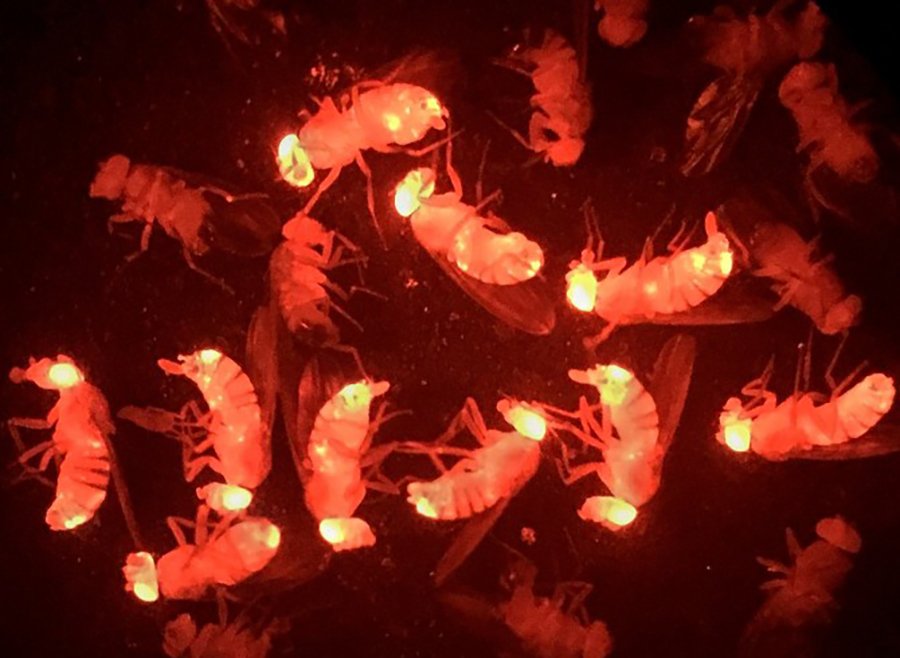

A new gene associated with longevity has been discovered. A group of Chinese researchers functionally validated that a non-mitochondrial targeted nuclear gene, CG11837, is conserved across animals and influences lifespan. agingThe researchers also discovered a human gene, DIMT1, that is 93 percent identical to this gene.
CG11837 is strong Evolutionary rate covariation (ERC) Deletion of the mtOXPHOS gene severely affected mitochondrial morphology. Knockdown of CG11837 shortened lifespan in six diverse organisms, while overexpression extended lifespan in Drosophila and C. elegans.
the study Published in the journal on June 4th Natural agingThe lead author is Mei Tao from the Zhejiang Provincial Key Laboratory of Crop Pathogens and Insect Biology.
Oxidative phosphorylation is essential for energy metabolism, is involved in regulating lifespan, and involves mitochondrial and nuclear genes. “Although the function and evolutionary rate covariation (ERC) of these genes have been extensively studied, little is known about whether other nuclear genes that are not targeted to mitochondria interact evolutionarily and functionally with mitochondrial genes,” the authors write.
The team systematically surveyed ERCs of mitochondrial and nuclear benchmark universal single-copy ortholog (BUSCO) genes from 472 insect species and identified 75 nuclear genes that are not targeted to mitochondria. To find these genes, the team examined 1,283 segments of insect DNA and discovered a previously unknown gene, CG11837, that controls insect lifespan.
They found that a single gene, CG11837, determines whether certain insects die young: knocking down the gene shortens the average lifespan of five different insect species and earthworms. Nematode (Nematode), overexpression of which extends the median lifespan of Drosophila Nematode and enhances the activity of oxidative phosphorylation genes.These data provide insight into the ERC of mitochondrial nuclear genes and suggest that CG11837 may regulate whole animal lifespan. When the researchers increased the activity of this gene, fruit flies’ lifespan increased by up to 59 percent.
Given that overexpression of CG11837 extends lifespan, the research team analyzed the correlation between the expression level of the CG11837 gene and lifespan in 43 insect species representing nine orders, and found that the relative expression level of CG11837 was significantly positively correlated with lifespan.
The researchers also When the gene was searched against human databases, it was found to be a 93 percent match to the human gene DIMT1. Both DIMT1 and CG11837 alter mitochondria, which play a role in balancing the oxidative stress that promotes aging. Mitochondria produce the ATP that cells need to function.
The team conducted in-vitro studies using human cells that produced more DIMT1. The modified cells grew at the same rate as unmodified cells, but when they exposed both groups to cell-damaging X-rays, differences emerged. In the lab studies, human cells were exposed to radiation, causing damage somewhat comparable to the age-related deterioration that occurs in humans. They found that cells with increased DIMT1 genes “aged” 65 percent slower than unmodified cells.
“Lifespan-extending genes have been reported in a variety of species, from fungi to mammals. For example, Sir2, a member of the sirtuin family, has been reported to extend lifespan in yeast. However, studies on the effect of Sir2 on lifespan extension in nematodes and flies have yielded conflicting results,” the researchers wrote.
