

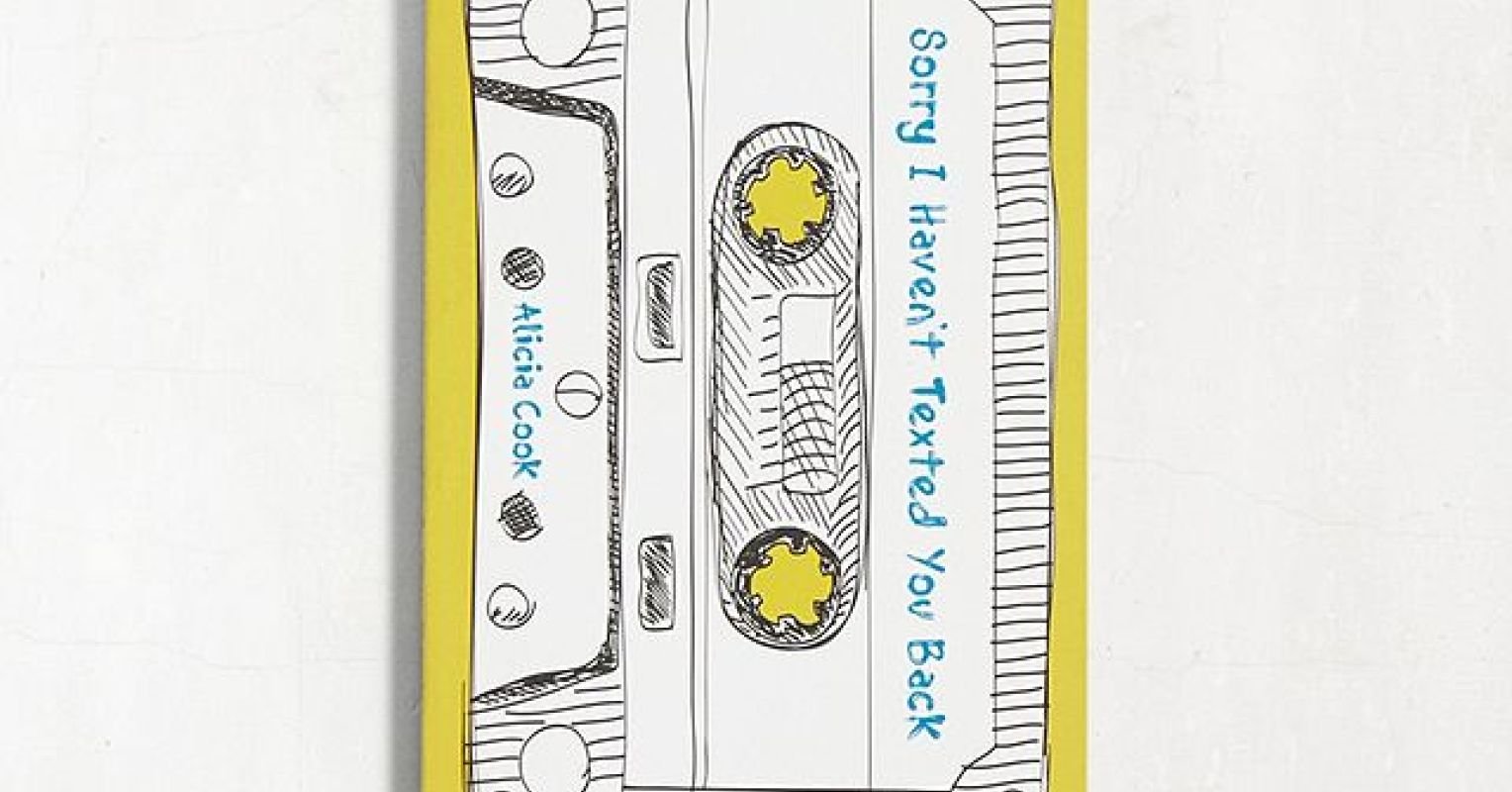
Alicia Cook, an award-winning author and mental health and addiction awareness activist, has found poetry to be an important tool for healing. I’m sorry I haven’t been able to reply to your messages lately, so please don’t let me off the hook. and The music just got better and better, Her writing focuses on addiction, mental health and grief.
“I’ve always been a storyteller — or maybe it’s more accurate to say a documentarian — and most of what I write is rooted in reality and based on my life experiences,” Cook said. “In 2006, my cousin Jessica died of a heroin overdose, and after years of dealing with it personally and struggling to find a voice on the issue that I could relate to, I began to shine a light on the issue. As an essayist and speaker, my work fighting the opioid epidemic is far-reaching.”
Alicia Cook is an author and activist who is passionate about fighting the opioid epidemic.
Source: John Romano/Used with permission
Research shows that between 2000 and 2018, drug overdose deaths in the United States have more than tripled (Singh GK, et al., 2019). In fact, the U.S. Department of Health and Human Services reports that 1.6 million people had opioid use disorder last year (U.S. Department of Health and Human Services, 2022).
While headlines about the opioid crisis are common, understanding its connection to a lack of mental health care is not. One large, nationally representative survey showed that individuals with mental, personality, and substance use disorders (SUDs) are at higher risk for nonmedical use of prescription opioids, and 43% of individuals receiving treatment for SUDs with nonmedical use of prescription painkillers also have a diagnosis or symptoms of a mental disorder, specifically depression or anxiety (NIDA, 2022).
Despite the need for mental health treatment to prevent self-medicating with substances, over 56% of adults with mental health issues do not receive treatment, meaning over 27 million people suffer alone (Mental Health America, 2022). Whether it is due to social stigma, lack of economic access, or a shortage of service providers, many people with mental health issues are forced to cope without support.
For Cook, poetry has raised awareness of these issues, provided a valuable avenue for processing her own pain and connecting with others who are suffering. “Poetry and writing have always been a part of me. They act as a release valve for my pain in many ways,” she explained. “Getting my thoughts out on paper helps relieve anxiety, tension, pain, and sadness… and keeps them from building up in my brain.”
In an exclusive interview, Alicia Cook shared the thoughts behind her poem.
Q: Each of your poems is paired with a song, what role has music played in your mental health journey?
A: Just as others find solace in reading my poetry, I listen to music to process my thoughts. There is a song for every emotion.
As a child, my father always listened to music. His love for music had a profound impact on me. He would always explain the meaning of songs to me. There is a line in the lyrics of Bright Eyes that says, “If I had someone else’s voice, I could have been a famous singer.” I truly believe that if I could sing, I would have pursued a career as a songwriter and musician. Since I cannot sing, I can create the same magic for others through poetry. At the end of the day, we are all storytellers.
Q: Your poems dance between dark days of despair and hope for a brighter future. How have you embraced the beauty of “Mosaic” amid its broken pieces? How can others struggling with grief or mental health issues stay hopeful?
A: My mother always told me, “You have bad days and you have good days, but there’s no such thing as a normal day.” At least for me, the first step was acceptance.
Must-read books on addiction
We didn’t want this, we didn’t deserve it, but it was happening and nothing could change the fact that it was happening.
And I had to accept that even though one part of my life was shattered under my feet, there were still moments of joy in another part of my life. And I told myself not to feel guilty for smiling or laughing in those moments, because it doesn’t negate the pain, it’s there at the same time. That’s how I learned to balance my life. What I’ve been feeling lately“We need both. We need the good and the bad to be who we are” (Track 78).
Q: Part of your research explores the impact of living with anxiety and depression on relationships. What challenges does this pose for maintaining relationships? How can friends, partners and family members better understand and support a loved one struggling with mental health?
A: It’s my second poetry mixtape. Sorry I couldn’t replyexplores in depth the difficulties of maintaining relationships when living with depression and anxiety. These mental illnesses can impede effective communication, trust, and emotional intimacy, making it difficult to maintain healthy relationships. It’s difficult, but not impossible.
Most of the people around me have experienced these feelings too, so they are in a good position to understand me and what I need in that moment (e.g. space, connection), and I vocalize my feelings so they don’t have to guess.
Supporting a loved one suffering from anxiety or depression requires understanding, patience and compassion, but there are also usually gaps in education and information.
For example, for years people close to me thought I was “lazy” because I slept too much, when it was probably depression. I was often told I was “too sensitive.” By educating ourselves and fostering an environment of open communication and support, friends, partners and family can play an important role in helping our loved ones get through what they’re going through.
Source: Brian Erickson/Used with permission
Q: What do you want readers to take away from reading your poems?
A: I hope my writing reaches those who are just a little further behind me on this journey. My hope is that they will feel less alone, knowing that there are others who have faced similar struggles and emotions. When you are in a debilitating mental condition or anything similar, it is very easy to believe you are on a desert island.
After all, art, whether it be poetry, visual art, music or dance, has magical, healing properties and an uncanny ability to bring people together.
