

Scientists at Karolinska Institutet in Sweden conducted a systematic review and meta-analysis to determine the relationship between dietary antioxidant intake and risk of type 2 diabetes.
The research will be published in a journal advances in nutrition.
 Review: Vitamins C, E, beta-carotene and risk of type 2 diabetes: a systematic review and meta-analysis. Image credit: alicja neumiler / Shutterstock
background
Type 2 diabetes is a serious metabolic disease characterized by decreased or impaired insulin secretion and subsequent elevated blood sugar levels (hyperglycemia). Insulin resistance and pancreatic beta cell dysfunction are her two main features of this disease.
Currently, more than 10% of the world’s population has type 2 diabetes. Its prevalence is rapidly increasing worldwide, mainly due to the increasing trend towards unhealthy eating habits and sedentary lifestyles.
Among various lifestyle factors, diet plays an important role in regulating the body’s metabolism. Evidence shows that increasing adherence to a healthy diet, such as the Mediterranean diet or DASH (Dietary Approaches to Stop Hypertension), can significantly reduce the risk of type 2 diabetes. A fundamental feature of these diets is an increased intake of plant-based foods rich in antioxidants such as vitamins C, E, and beta-carotene.
In this systematic review and meta-analysis, scientists evaluated whether dietary intake of vitamins C, E, and beta-carotene can reduce the risk of type 2 diabetes.
research design
Researchers searched various electronic databases to determine dietary intake, blood levels, or supplementation of vitamin C, E, and beta-carotene in non-diabetic patients and the incidence of type 2 diabetes or insulin resistance/sensitivity. We identified studies that investigated the association with and beta cell function. .
The final screening identified 25 prospective observational studies and 15 randomized controlled trials. Moderate and severe risks of bias were observed in 21 and 4 observational studies, respectively. Thirteen of the randomized controlled trials had a low risk of bias and two had some concern.
important findings
This study found that moderate intake of vitamins C, E, and beta-carotene can reduce the risk of type 2 diabetes.
vitamin C
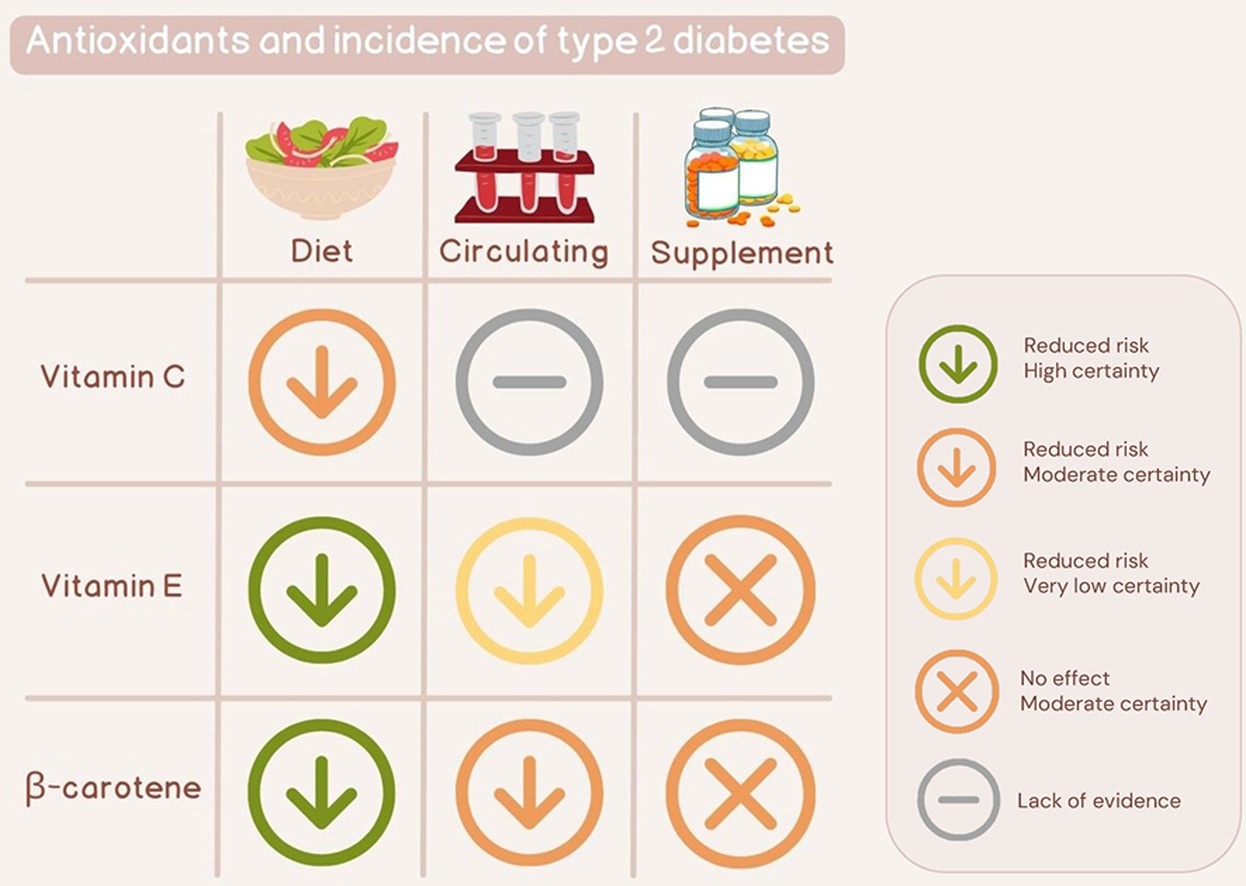
A meta-analysis of observational studies found that intake of up to 70 mg of vitamin C per day can reduce the risk of type 2 diabetes by 24%. However, no further risk reduction was observed when consumed above this level.
An inverse relationship was observed between dietary intake of vitamin C and insulin resistance. Vitamin C intake was also shown to have a positive impact on beta cell function.
vitamin E
A meta-analysis of observational studies found that intake of up to 12 mg of vitamin E per day can reduce the risk of type 2 diabetes by 28%. Similar to vitamin C, no further risk reduction was observed when taken above this level.
A meta-analysis of randomized clinical trials revealed that vitamin E supplementation is not effective in preventing the development of type 2 diabetes. However, vitamin E supplementation was shown to have a positive impact on insulin sensitivity.
beta carotene
A meta-analysis of observational studies found that intake of up to 4 mg of beta-carotene per day could reduce the risk of type 2 diabetes by 22%. Beyond this level, no further risk reduction was observed.
A meta-analysis of randomized controlled trials revealed that beta-carotene supplementation does not reduce the risk of type 2 diabetes. It was also observed that circulating beta-carotene may reduce insulin resistance and increase insulin sensitivity.
Significance of research
This systematic review and meta-analysis found an inverse association between dietary and circulating vitamins C, E, and beta-carotene and risk of type 2 diabetes. However, no protective effect of these antioxidant supplements on his type 2 diabetes has been observed.
The powerful antioxidant properties of these vitamins are primarily responsible for their antidiabetic effects. Vitamin C is a water-soluble vitamin commonly found in fruits and vegetables. It scavenges free radicals in the hydrophilic compartments of the body and regenerates vitamin E from its oxidized form.
Vitamin E is a fat-soluble vitamin commonly found in nuts, seeds, and vegetable oils. Prevents lipid peroxidation and protects lipid parts of the body such as cell membranes. Beta-carotene is a fat-soluble provitamin A carotenoid commonly found in fruits and vegetables. Like vitamin E, beta-carotene protects the lipid parts of the body from free radical-mediated damage.
Article revision
- March 27, 2024 – Added graphical abstract illustrations.
