

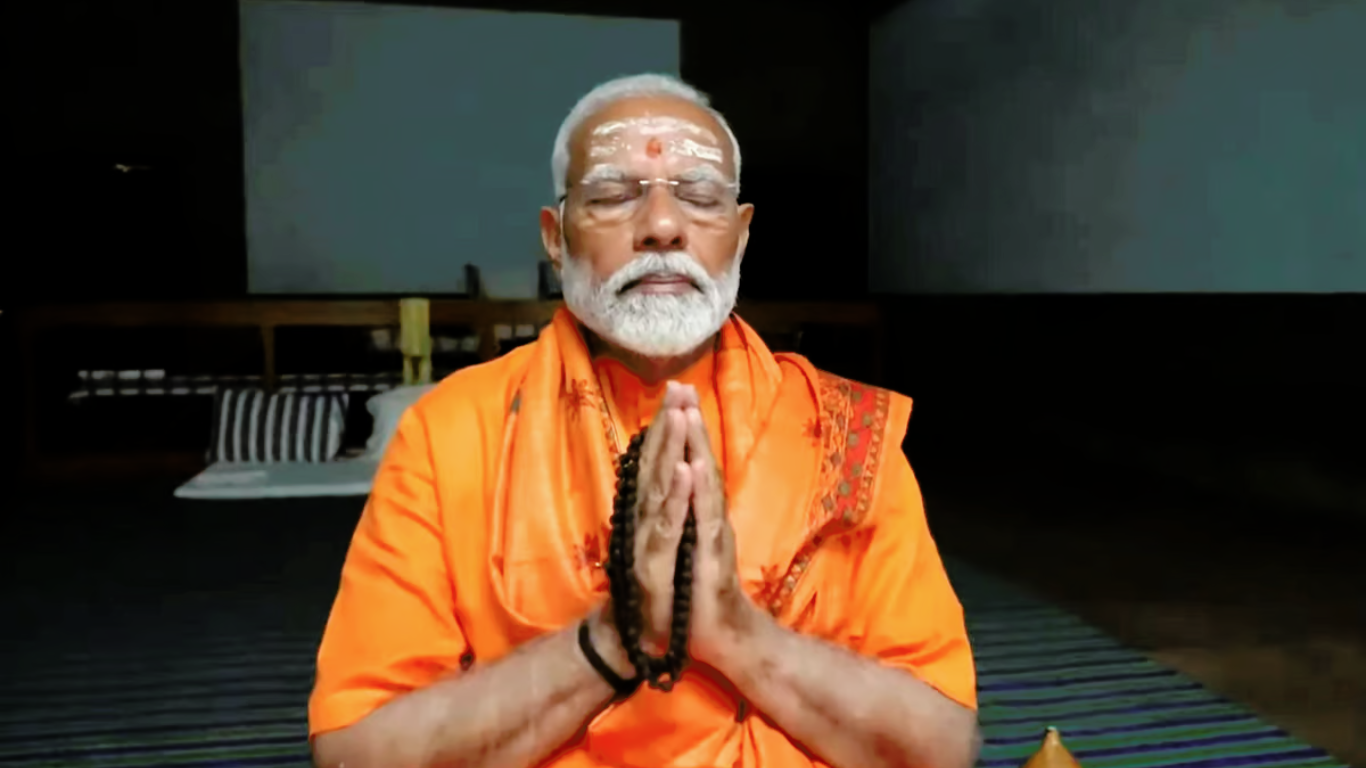
In the tranquil confines of the Vivekananda Rock Memorial in Kanyakumari, PM Modi is taking a meditative break from his busy Lok Sabha election campaigning schedule.
He arrived in Kanyakumari on Thursday and began a 45-hour session at the Vivekananda Memorial, but this has infuriated Modi’s rivals, who have alleged irregularities.
On Wednesday, the Indian National Congress filed a complaint with the Election Commission of India (ECI), demanding that the Prime Minister’s visit should be rescheduled keeping in mind the rules of the Model Code of Conduct for elections or its broadcast should be banned.
So what rules is the MCC Congress talking about? And why is PM Modi’s meditation break being called a violation of election rules?
PM meditation plan, ECI action, multi-phase elections, Anubhuti Case Law 2019, Opposition grievances, Vivekananda Rock Memorial, Article 126, Representation of People Act, Model Code of Conduct, Silence Period, Model Code of Conduct, Modi Kanyakumari. PM Modi, Narendra Modi, Swami Vivekananda, Vivekananda Rock Memorial, Kanyakumari, BJP, 2024 Lok Sabha elections, Modi meditation trip, Modi in Tamil Nadu, Modi visit to Tamil Nadu, Modi at Vivekananda Rock Memorial, 2024 Lok Sabha elections, BJP South, Narendra Modi meditation, Kedarnath temple meditation, Tamil Nadu elections, South India BJP strategy, Hindu philosophy enlightenment, Modi news, Silence Period, Election Commission, Silence Period in polls, Silence Period in elections
To answer these questions, let’s first understand what a quiet period is.
The quiet period is based on Section 126 of the Representation of the People Act, 1951 and is a 48-hour period during which all election candidates and political parties must cease all political campaigning activities that may influence voters at the last moment.
These actions include public meetings, use of loudspeakers, political advertising through electronic and social media, and door-to-door campaigning.
Opposition claims
However, the Congress approached the Election Commission on Wednesday, alleging that the Prime Minister’s act of meditation violated the silence period.
“We have told the Election Commission that no one will be allowed to campaign directly or indirectly during the 48-hour silence period,” Abhishek Manu Singhvi, a senior Congress leader, told reporters after meeting Election Commission officials at the Election Commission office in Delhi.
West Bengal Chief Minister and TMC president Mamta Banerjee had told the Election Commission that if the Chief Minister’s meditation in Kanyakumari was televised, it would be a violation of the model code of conduct.
But why is the televised broadcast of the Prime Minister’s meditation act not considered a violation of the Model Code of Conduct despite cries of “injustice” from the Opposition?
Since the Prime Minister does not speak during meditation, it would not be considered a violation.
“The chief minister had undertaken a similar meditation in the Kedarnath caves after the 2019 election campaign, which was not in violation of the MCC,” legal experts said.
EC response
Modi had made a similar trip to Kedarnath in the 2019 Lok Sabha elections ahead of the final phase of voting in Varanasi.
At that time, several opposition parties had also filed complaints with the Election Commission, but the latter had given the green light to the chief minister and had “cautioned” his office not to violate the Model Code of Conduct.
