

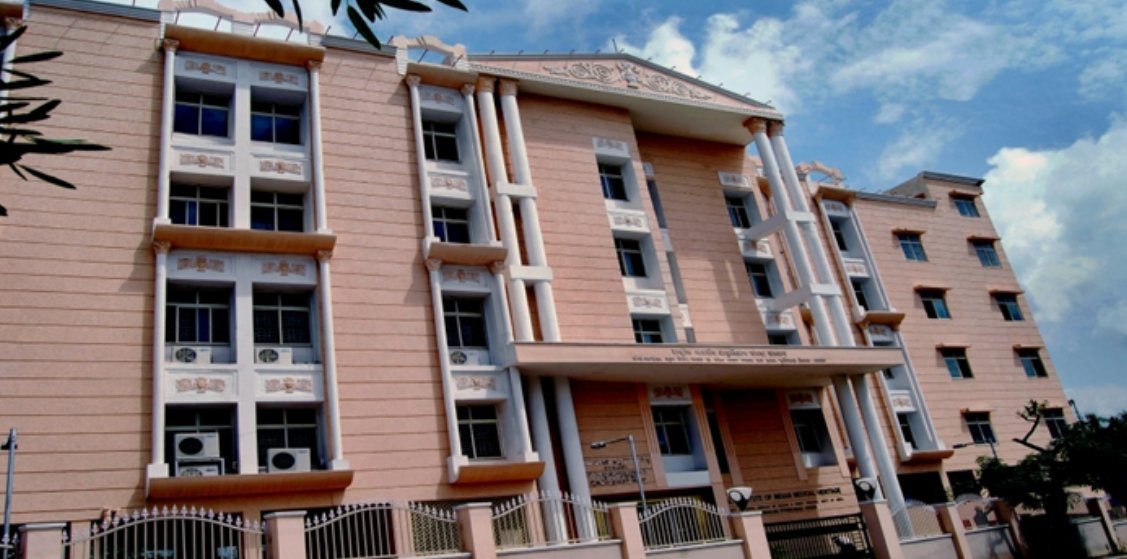
NIIMH is the first WHO Collaborating Centre for “Basic and Textual Research in Traditional Medicines”.
The World Health Organization (WHO) has appointed the National Institute of Medical Heritage, Hyderabad (NIIMH) under the Central Council for Research in Ayurvedic Sciences (CCRAS), Ministry of Health, India, as a WHO Collaborating Centre (CC) for “Basic and Literary Research in Traditional Medicines” (CC IND-177). The accreditation is valid for a period of four years, starting from June 3, 2024.
Founded in 1956, NIIMH, Hyderabad is a unique institution dedicated to documenting and presenting medical history research in Indian Ayurveda, Yoga Naturopathy, Unani, Siddha, Sowa Rigpa, Homeopathy, Biomedicine and other allied healthcare disciplines.
India has around 58 WHO Collaborating Centres across various fields of biomedical and allied sciences. Notably, CCRAS-NIIMH, Hyderabad, has joined as the third WHO Collaborating Centre in the field of traditional medicine after the Ayurveda Education and Research Institute, Jamnagar and Morarji Desai National Institute of Yoga (MDNIY), New Delhi.
As the first WHO Collaborating Centre for ‘Basic and Textual Research on Traditional Medicine’, NIIMH has been tasked with assisting WHO in standardising Ayurveda, Unani, Siddha and Sowa Rigpa terminology and updating the Traditional Medicine Module II of the International Classification of Diseases, 11th Revision (ICD-11).
In addition, WHO Collaborating Centres will assist Member States in developing research methodologies for traditional medicines.
