

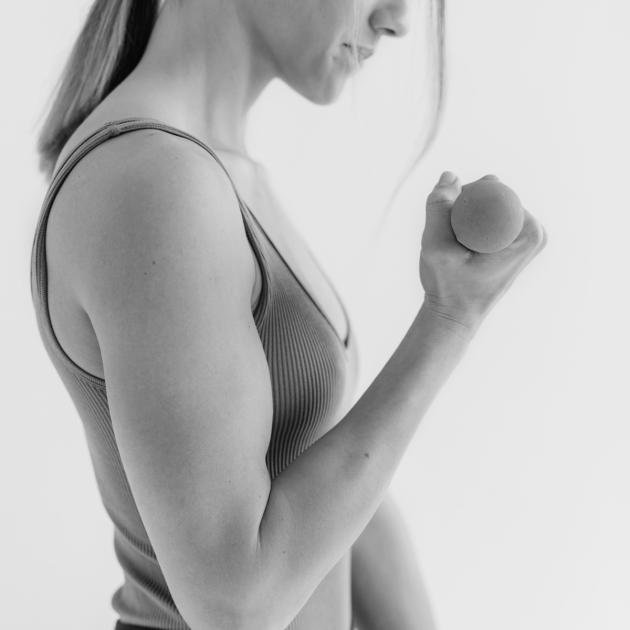
How often should this type of training be done?
Exercise is very individual, in other words, what works for one person may not be right for another. That’s why it’s important to listen to your body and find the right exercise for you. “As you get older, the frequency of weight, strength or resistance training will depend on a number of factors, including your fitness level and overall health,” advises Amy. “In general, I recommend strength training at least two days a week, focusing on all major muscle groups and full-body movements. It’s important to get proper rest and recovery between sessions to avoid overexertion and injury. As you get older, it takes longer to recover between sessions.”
If you’ve been healthy for a while, expert advice is to keep at it: “An ideal week would consist of 5-10,000 steps walking each day, two sessions of strength training using weights and resistance, and two sessions of mat-based exercise such as Pilates or yoga,” says Gemma. “This will help you build overall strength, balance and mobility – and you’ll likely experience less aches and pains and a more positive feeling.”
If you’ve never exercised before, where should you start?
If you’re just starting out, it’s more effective and safer to start slowly and gradually increase the intensity. “Starting slowly and gradually increasing the intensity is key,” agrees Amy. “Start with low-impact exercises like walking, swimming and cycling, which are gentle on your joints and cardiovascular system. Once you’ve built up your stamina and confidence, you can incorporate strength training using your own body weight or light weights.” If you’re not sure where to start, exercising with a friend is a great idea, but be open-minded and don’t worry if they don’t enjoy the exercise. “There’s no need to force yourself to keep going,” says Gemma. “Research your favourite forms of exercise – anything from skills like handstands, team sports or more spiritual things like tai chi. There’s lots to explore.”
If all else fails and you’re really at a loss as to what to try, Gemma suggests doing some reflection: “Think back to the things you enjoyed and were passionate about as a child and get inspired from there.” Whatever you ultimately choose, it’s all about consistency, so make sure it’s something you can work into your lifestyle and daily routine without compromising. “Exploring different ways of moving is important to find a practice that suits you so it can become a consistent part of your routine,” advises Gemma. “It really needs to work with logistics and location, and you need to connect with your teacher and the physical practice to a level that you actually want to return to.”
If you dread going to the gym, how feasible is it to do this type of exercise at home?
Luckily, if you’re not a gym-goer, it’s easy to get in shape and lift weights without going to the gym. “We’re in the age of on-demand online workouts, so there’s all kinds of forms of training available and you can get started in the comfort of your own home,” says Gemma. “Find a certified instructor that’s right for you and try before you buy. Many online workouts have trial periods, so take advantage of them before you go live.” You don’t need much equipment to get started on a good fitness program. If you’re determined to stay fit without going to the gym, equipment doesn’t have to get in the way.
“Bodyweight exercises such as squats, lunges, push-ups and planks can be done in the comfort of your own home with minimal equipment,” says Amy. “Plus, resistance bands are portable and a versatile strength training tool.” You don’t even need to commit to a formal exercise regime if you want to slowly get toned and strong. “Engaging in daily physical activity is just as important,” says Gemma. “As we get older, we tend to look for things that are easier and more comfortable. If your partner offers to carry your luggage, politely decline. These are key, consistent exercise snacks to build strength, agility and confidence.”
What weight or resistance would be a good place to start?
“The amount of weight or resistance appropriate for weight training or resistance exercise will vary depending on your individual strength and fitness level,” says Amy. “I recommend starting with lighter weights or resistance bands and gradually increasing the load as you get stronger and more comfortable. This is called progressive resistance.” As a general rule, when weight training, Amy recommends choosing a weight that allows you to perform 8-12 repetitions with proper form before you experience muscle fatigue. “When using resistance bands, choose a band that provides the right level of tension on your muscles without forcing them to hurt or compromise your technique. Experiment with different weights and bands to find the right level of resistance for your workout,” adds Amy.
visit ShapePilates.com & to follow Amy Victoria Long
