

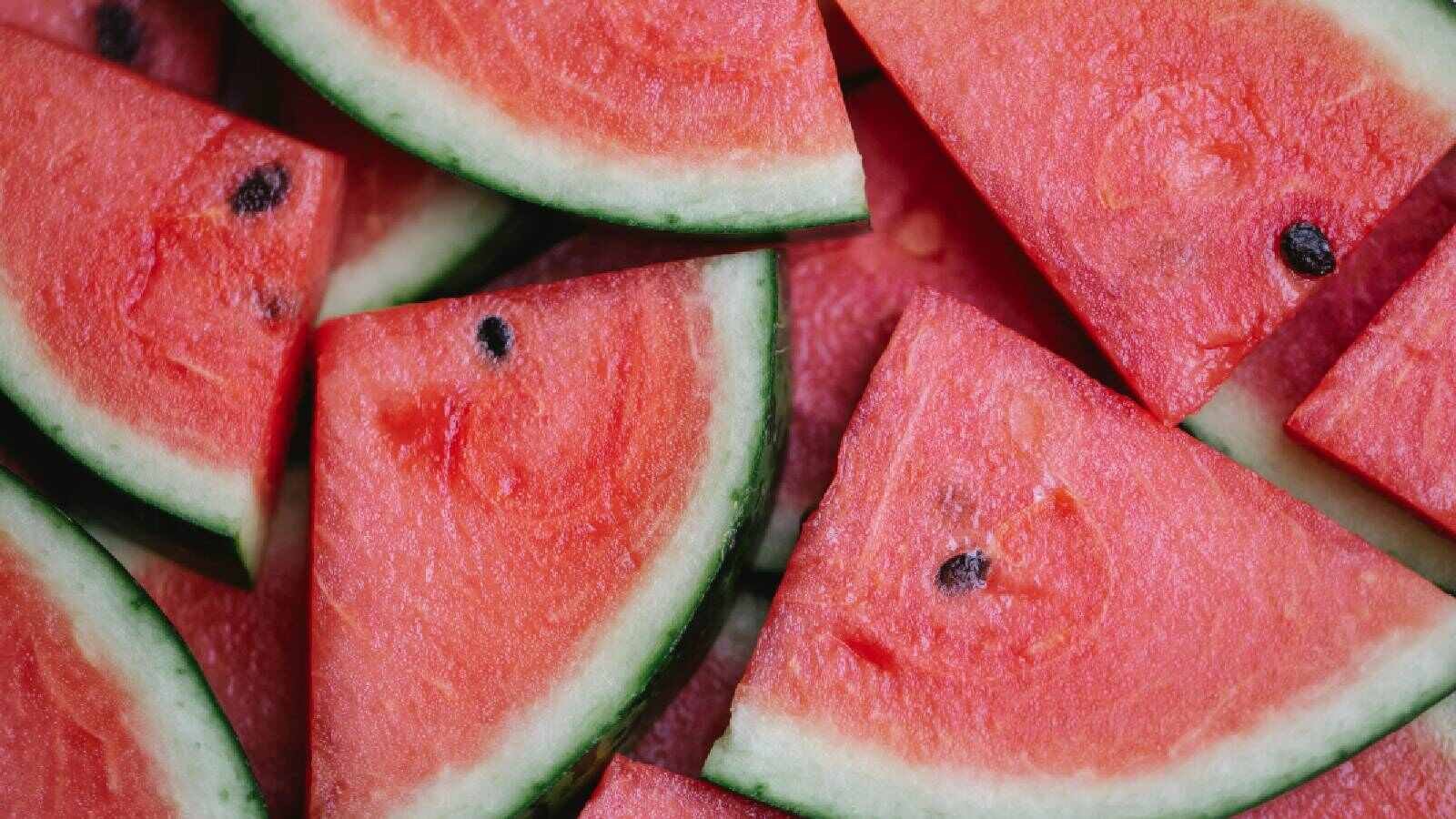
Watermelon rind is edible and has many health benefits as it is rich in dietary fiber, vitamins and minerals.
We all love eating a hearty serving of refreshing watermelon with a sprinkle of pink salt, but few know that watermelon rind is also extremely healthy and should not be thrown away. Watermelon rind is rich in Vitamin A, Vitamin C, potassium, and magnesium, providing numerous health benefits. It is also rich in dietary fiber, which helps in resolving various digestive problems. Watermelon rind is also good for your heart and helps in keeping cholesterol in check. Read on to find out how to eat watermelon rind and how it can benefit your body.
What is watermelon rind?
The best part of watermelon is the juicy red part that most people prefer, but the white part of the watermelon is also edible. Watermelon rind is the tough outer layer of the watermelon that is also edible. It is green on the outside and white on the inside. This rind is edible and has many health benefits. It can be eaten raw, but it is not as tasty. However, it can be boiled, fried, or added to a variety of recipes.
Health benefits of watermelon rind
The health benefits of watermelon rind include:
1. High in fiber
The most important benefit of watermelon rind is that it is rich in dietary fiber. A diet high in fiber helps keep bowel movements regular and prevents many diseases. It also keeps you full and aids in weight loss. A study published in Food Technology and Biotechnology analyzed the quality of high-fiber pasta cooked with watermelon rind powder. It was found that the total dietary fiber content of the watermelon rind powder samples was much higher than that of durum wheat pasta. The study states that watermelon rind contains high amounts of total dietary fiber as well as protein and minerals.
2. Rich in vitamins and minerals
Watermelon rind is a healthy food source, rich in many vitamins and minerals. According to a study published in Trends in Food Science and Technology, watermelon rind contains potassium, calcium, magnesium, and iron, which are essential for nutrition. Another study published in the Journal of Biosystems found that watermelon rind powder made from the light green rind portion contains the most protein (19.74%), while the dark green rind contains the most dietary fiber (13.35%).
See also

3. Lowers blood pressure
Watermelon rind can help lower blood pressure. A study published in the Journal of the American Society of Hypertension showed that watermelon rind can help lower blood pressure in obese patients. Watermelon rind is also known as a diuretic, meaning it increases the amount of fluid in the body, which also helps regulate blood pressure.
4. Improve your training
Eating watermelon rind may help you get more out of your workout: Watermelon rind contains citrulline, which helps deliver more oxygen to your muscles and improves athletic performance, says the study, published in the Journal of Applied Physiology.

5. Improved sexual performance
Watermelon rind contains an amino acid called citrulline, which may help improve erections without Viagra, according to a study published in Urology, and may also help increase semen quality and testosterone, according to a study published in JBRA Assisted Reproduction.
Side effects of watermelon rind
Although watermelon rind is very healthy, eating too much of it can be bad for you. Eating too much watermelon can cause indigestion, bloating, and gas. Also, watermelon rind is not as juicy as the flesh of the fruit, so it may not taste as good, but it can improve the taste of your recipes.
How to eat watermelon rind?
While you might not be keen on plucking the green skin off a watermelon, there are other ways to incorporate watermelon rind into your diet. You can also pickle it and enjoy it as a side dish. To do this, peel and boil the rind, take the white part with the light pink layer on top, and add spices.
Customize your feed by choosing the topics that interest you.
Customize now
Alternatively, you can sauté watermelon rind. Treating the rind like any other vegetable not only adds some much-needed crunch to your dish, but it also boosts its nutritional value.
Watermelon rind can also be juiced with other fruits or added to smoothies.

Recipe: Stir-fried watermelon rind
- 4 cups watermelon rind (tough green skin removed, cut into 1/2-inch pieces)
- 2 tablespoons of ghee
- 1/2 teaspoon cumin seeds
- 5 cloves of garlic (minced)
- 1 inch chopped ginger
- Serrano pepper, deseeded and finely chopped
- 1 teaspoon paprika
- 1 teaspoon ground coriander
- 1/2 teaspoon dried green mango powder
- 1/4 teaspoon turmeric powder
- ½ teaspoon salt
- ¼ cup water
- 1/4 teaspoon garam masala
Instructions
- Melt the ghee in a frying pan over medium heat.
- Add the cumin seeds and when they begin to pop, add the ginger, garlic and serrano pepper.
- After a minute, add the paprika, coriander powder, anchovies, paprika, turmeric and salt.
- Add the watermelon rind and water and mix well.
- Cover and cook for 10 to 12 minutes, stirring halfway through.
- Once the skin is soft and most of the water has been absorbed, remove the lid and add the garam masala.
- Mix well and cook for another 2 minutes.
- Remove from heat and enjoy.
FAQ
Which part of the watermelon rind is best eaten?
You can eat the whole skin, but the white part is the richest source of the amino acid citrulline, which aids in muscle building and blood flow.
What does watermelon rind taste like?
The white part of the watermelon rind tastes similar to cucumber so you can add it to salads. When cooked, it tastes like carrot. The rind has a very neutral taste and you can customize the taste by adding spices.
