

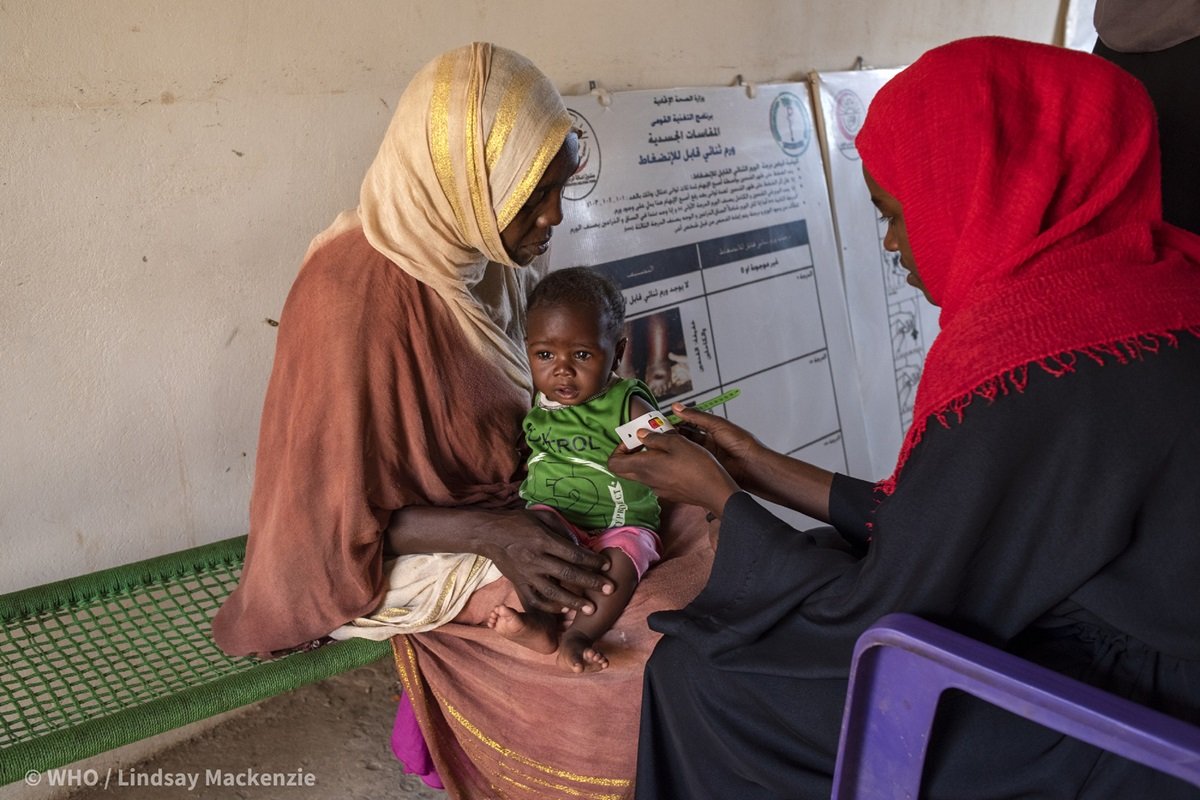
Three United Nations agencies today issued a stark warning that signs point to a dramatic deterioration in the nutritional status of children and mothers in war-torn Sudan. The lives of Sudan’s children are at risk and urgent action is needed to protect an entire generation from malnutrition, disease and death.
Recent analyses conducted by the United Nations Children’s Fund (UNICEF), the World Food Programme (WFP) and the World Health Organization (WHO) highlight that the ongoing fighting is exacerbating the causes of malnutrition among children, including lack of access to nutritious food, safe drinking water and sanitation, and increased risk of disease. The situation is further exacerbated by large population movements as large numbers of people flee the conflict. Sudan is increasingly at risk of conflict-induced famine, which will have devastating consequences, particularly in terms of loss of life for young children.
The year-long war has also severely affected humanitarian supplies, leaving countless women and children without vital food and nutritional supplies. Aid agencies are struggling to deliver nutritional products as increasing violence and bureaucratic red tape prevent access to conflict zones.
Malnutrition among children in Sudan is at emergency levels. In Central Darfur, acute malnutrition rates among children under five are estimated at 15.6%, reaching nearly 30% in Zamzam refugee camp. The situation has worsened in recent months and shows no signs of improvement due to ongoing conflict and severe obstructions to humanitarian access. Acute malnutrition is life-threatening, with malnourished children up to 11 times more likely to die than well-nourished children. Malnutrition and disease feed off each other: sick children are more likely to be malnourished, and malnourished children are more likely to get sick and sicker. Even if a child recovers, malnutrition can have lifelong effects on their physical and cognitive development. Sudan is at risk of a lost generation, with serious implications for the country’s future.
The level of malnutrition among pregnant and breastfeeding mothers is particularly worrying. For example, tests carried out by Doctors Without Borders last month in the Zamzam refugee camp in North Darfur found that more than 33 percent of pregnant and breastfeeding women were malnourished, indicating that they are likely sacrificing their own needs to feed their children. This situation poses a great risk not only to the health of the mothers, but also to the next generation of children in Sudan. As 30 percent of malnutrition in children begins in the womb, children born to malnourished mothers are likely to be malnourished already.
“Children in Sudan have experienced horrific violence, displacement and trauma, and now they face the possibility of famine,” said UNICEF Executive Director Catherine Russell. “When children suffer from severe malnutrition, it can impair their physical and cognitive development and leave lifelong damage. Parties to the conflict must urgently allow humanitarian access so children have access to food, water, health care and shelter. But above all, children need peace.”
“Mothers and children across Sudan are wasting away from malnutrition. As war continues, they are being deprived of everything they need to survive: food, medical assistance and shelter. They need immediate and safe access to reach them with the humanitarian assistance they desperately need. Without it, this crisis risks becoming the world’s largest hunger emergency,” said WFP Executive Director Cindy McCain. “Millions of lives are at risk, and unless the international community acts now, an entire generation of children could be lost.”
“Malnutrition is not a one-time crisis. Malnourished children face lifelong developmental challenges, poor health and are more likely to die from infectious diseases,” said WHO Director-General Tedros Adhanom Ghebreyesus. “The clock is ticking as mothers and children in Sudan move closer to starvation. WHO and partners are on the ground working to prevent and treat acute malnutrition, saving precious lives, but this requires sustained humanitarian assistance and adequate financial support.”
The report acknowledges that data is lacking due to the difficulties in accessing conflict zones. Nevertheless, agencies are concerned that the situation is extremely serious and continues to deteriorate. The lack of data itself indicates a lack of critical humanitarian access to the worst-affected areas. All options must be used to deliver assistance to those most in need.
The situation for Sudan’s children and mothers is only set to worsen in the coming months. The rainy season begins in June, isolating communities and raising rates of disease. Sudan also enters a lean season in which food reserves are depleted between harvests. This has been particularly true this year, and already reports suggest that insecurity and displacement have led to lower than average agricultural production in 2023.
“The agencies call for immediate, unhindered and sustained access through all available cross-border routes with neighbouring countries to communities suffering the worst effects of the brutal and protracted conflict, as well as de-escalation in El Fassial and a nationwide ceasefire. They also expect new and significantly increased support from donors. The window of opportunity to avert the worst is closing fast.
