

While many craft breweries are pushing the boundaries of beer with innovative recipes and techniques, some are turning back the clock and releasing beers using traditional ingredients and recipes from Australia’s brewing history.
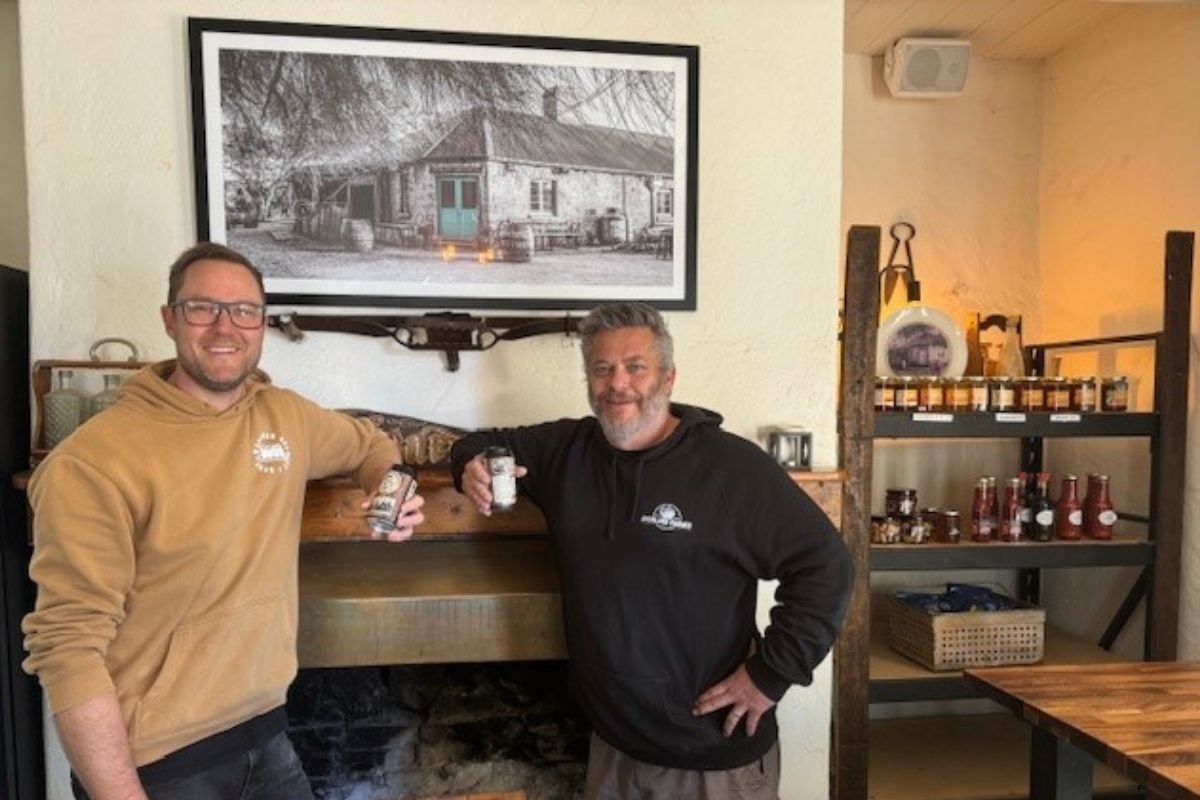
More recently, Overland Corner Hotel and Woolshed Brewery teamed up to create the Original Porter, based on the beer first served in 1859 by the original owners of Overland Corner Hotel.
Brad Flowers bought the South Australian hotel in 2021 after leaving his Queensland-based beer distribution business, but the hotel’s importance to the region forced Mr Flowers to dig into its past.
“Overland Corner Hotel is the oldest building in the Riverland, with over 160 years of history. During Covid I’ve been taking some time off at the pub to renovate, clean, build, paint and look at the record books. It’s a building that means a lot to everyone in the area so I’ve been soaking up its history.”
“As I was looking through the records, the Bland family who built the hotel came to mind. They were from Kent in England and worked in the hop fields. By talking to them and historians and looking through history books, I was able to understand what they brought back from the hop fields,” he said.
Flowers discovered that hops were brought to Australia not only for beer making, but also to infuse drinking water to prevent scurvy during voyages from England. Inspired by this brewing connection, Flowers researched the hotel’s beer traditions further and discovered that although rum was preferred at the time, the Overland Corner Hotel served English porter for celebratory occasions.
Flowers asked Jack Bevis, head brewer at Woolshed Brewery, to recreate the porter.
“Jack went to some pretty extreme lengths – we got Kent Goldings hops sent to us from the actual hop fields where the Brand brothers worked. Jack also contacted Fuller’s Brewery in the UK and got hold of the malt they used. The most amazing thing is that a company in South Australia where Jack works called Ferbeo contacted the World Yeast Library and asked for a yeast strain similar to the one the Brand brothers used. The Yeast Library said we have the actual yeast strain,” Flowers said.
Overland Corner Hotel launched its Original Porter three weeks ago. Served in an original 1800s hand pump flown in from the U.K., the beer sold out within three days. A second batch is currently in the works, and Flowers is already digging through recipes from the brewery’s past.
Earlier this year, Otherside Brewing Co. also released Gilded Ale, a traditional beer based on a 1913 recipe and brewed for the Washington State Library’s exhibit, “Liquid Gold: A Taste of Washington State Brewing History.” Reese Lopez, the head brewer at the time and who has since started his own nanobrewery, Evil Mega Corp, used a recipe from a brewer’s journal stored in the State Library’s personal archives. Lopez spoke about the differences between brewing today and brewing 100 years ago.
“The development process was difficult, mainly because it required translating handwriting, interpreting technical terms and shorthand. It got easier once we realised the grain was measured in bushels, but we still had the problem of using the brand names of malt manufacturers and agricultural regions that are now out of business, rather than the names of hop varieties.”
“Breweries seemed to be using multiple malt sources in one recipe, which I interpreted as a hedge against batch-to-batch fluctuations in quality. They were also using incredible amounts of sugar. Working backwards to the original gravity was a bit of a mood-dependent situation. All this research was heavily facilitated by the collaboration of Roger Bussell, Ken Arrowsmith and Hugh Dunn, all old-school Western Australian brewers of the ’70s and ’80s,” he said.
As Flowers discovered with his Original Porter, traditional beers have the opportunity to appeal to a wider range of beer drinkers than craft breweries typically attract.
“Apart from the usual craft beer enthusiasts, we’ve also attracted a lot of interest from the older local generation who are interested in history.
“Beers like this take us back to a traditional style made with great ingredients. They use unique ingredients so they still have that X-element of craft beer, but they bring the beer back to its roots,” he said.
Braden Roeder, general manager of Otherside Brewing Co., said traditional beers have a strong story that consumers can relate to.
“I’m a beer marketer at heart, so I love a good story. It’s pretty rare to have a new product with a real history behind it. So to not only be able to revive this 100-year-old recipe, but also to tie it in with an experience that celebrates the history of beer, is pretty special.”
