

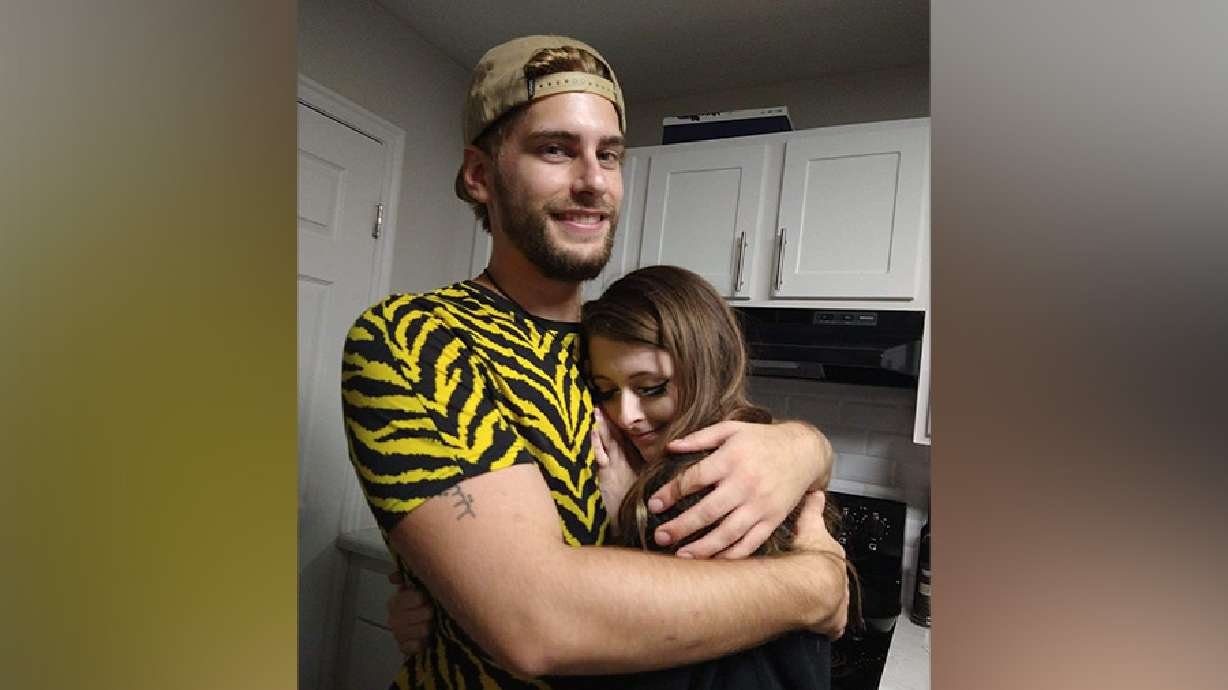
KEARNS — When Augie Marie met Joe in 2020, things hit it off immediately.
“He had such a big heart and every day was an adventure,” she said. “It was like the fairy-tale romance and love that every girl wants.”
Just months before he was scheduled to graduate from college in 2021, Joe took his own life.
“He just disappeared,” Marie recalled.
She said she had no idea her boyfriend was in pain – to her, he was the happiest, most loving man.
“I can play the ‘I wish’ game all day long, but I wish he’d said something, reached out, and I wish I’d said something. Those are the two sides of the same coin,” she said.

Research shows that one in 10 men experience depression or anxiety, but less than half receive treatment.
“Men are often taught not to talk about this and just have to bear it and put up with it. We have to be strong,” says Jeffrey Ainsa, licensed social worker and clinical director of Evolved MD.
Ainsa said the pressure to “act manly” could make men feel the need to hide their feelings and cause them to lose hope, and it could affect them at any age.
According to the CDC, men over 75 have the highest suicide rates overall.
“Some of our older patients are talking about things for the first time in their lives,” Ainsa says.
‘It’s very difficult’: RSL’s Diego Luna opens up about mental health struggles
Ainsa suggested looking for signs that your loved one is withdrawing or losing interest. Give them space to open up – even a simple question like, “How are you?” can go a long way.
“If people can see that we genuinely connect with them and that all we’re trying to do is connect and spend time with them, then maybe that will put people at ease a little bit and make them think, ‘OK, this is safe and I can talk to you,'” Ainsa said.
Grieving has been a long process for Marie, but she continues to keep the promise she made at the funeral to live life to the fullest — and spread a message of hope.
“You’re not alone, even if it feels or seems that way at times,” she said. “You may be nearing the end of a chapter in your life, but you don’t want to let go of your book.”
If you or someone you know needs emergency help, please call or text the 988 Suicide Crisis Lifeline.
If you or someone you know is having suicidal thoughts or showing warning signs, please call, text or chat with the 988 Suicide and Crisis Lifeline at 988. Huntsman Institute of Mental Health crisis counselors are available 24/7. All calls to the former crisis hotlines, including the former National Suicide Prevention Hotline at 1-800-273-8255, will also be connected to Huntsman Institute of Mental Health crisis care providers.
Suicide Prevention Resources
If you or someone you know is struggling with suicidal thoughts, please contact the 988 Suicide and Crisis Lifeline by calling 988.
Crisis Hotline
- Huntsman Mental Health Institute Crisis Line: 801-587-3000
- SafeUT Crisis Line: 833-372-3388
- 988 Suicide and Crisis Lifeline 988
- The Trevor Project LGBTQ Teen Hotline: 1-866-488-7386
Online resources
What to do if you see signs of suicide
- Don’t leave the person alone
- Remove any firearms, alcohol, drugs, or sharp objects that could be used to commit suicide.
- Call the National Suicide Prevention Lifeline at 800-273-TALK (8255).
- Take them to an emergency room or seek help from a medical or mental health professional.
Information from the American Foundation for Suicide Prevention.
