

~2.jpg)
By Rosama Thomas*
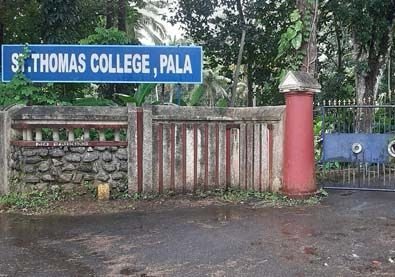
Pala city in Kottayam district, Kerala, is about 25 km from the district headquarters. St. Thomas College in Pala is currently hosting a three-day workshop on knowledge systems, bringing together philosophers, sociologists, homeopathic and Ayurvedic health practitioners (one from Nepal) and guests from Europe. Discussions on the first day focused on knowledge systems, power structures and epistemic diversity. French researcher Jacquiline Decalpentry, who represents a unique researchers’ cooperative, some of whom are not affiliated to any formal institution, addressed the audience via internet to lay the groundwork.
Sociologist V. Sujata of Jawaharlal Nehru University pointed out some concerns and raised some questions: how to decolonize knowledge, how to promote structural pluralism in medical knowledge systems, what are the core features of Ayurveda and Siddha, and how can we envisage the process of transformation of these systems as they interact with other systems?
She pointed out that in Ayurveda the patient is already the knower of his illness, and his sense of illness is the first step in treatment.Given that multiple medical systems were operating simultaneously in India, and the lived experience of the effectiveness of other systems, it is probably a mistake to think that “modern Western medicine” is necessarily the most scientific.
However, given the mass production of medicines extracted from scarce natural resources and the increasing reliance on pharmaceuticals in traditional healing practices, they question whether traditional systems are still being practised sustainably.
The JNU professor pointed out that one of the key differences between the Western medical system and the traditional Indian system is that while the Western system studies cadavers to understand life and health, there is no room for vivisection in the Indian system.He also pointed out that health is mysterious, poorly understood and defined as the absence of disease, whereas in the Western system, pathology seems to be the dominant path to understanding health.
She pointed out that in the Indian system, patient experience is fundamentally essential to define the disease, but questions remained unanswered about asymptomatic illnesses, a major issue that has caused immense confusion during the COVID-19 pandemic.
She also raised the important question of who pays for treatments when they fail. She mentioned one person she interviewed as part of her research who worked as a traditional healer, and who sometimes received payment in drumsticks.
However, in modern medicine, patients and their relatives have to pay not only for the medicines, but also for the years of training that doctors spend to acquire their expertise. They are required to pay even if the treatment is not successful. And even if the treatment goes wrong and a medical error causes a death, the patient’s relatives are often forced to pay.
Vaidya M Prasad of Snetri Clinic, Thrissur explained the basic principles of Ayurveda, how all Ayurvedic texts are written in Sanskrit, how Ayurvedic universities in India do not focus on the texts and end up teaching “about Ayurveda” rather than Ayurveda itself, etc. He also spoke about his own training in the Gurukul system for 21 years and his time working with Dr K Rajagopalan, who was trained in Ayurveda as well as modern medicine.
In modern medicine, patients must pay not only for their medicines, but also for the years of training that doctors spend to gain the expertise they need.
Vaidya Prasad had extensive experience as a teacher and principal of an Ayurvedic college. He spoke about how those trained in Ayurveda in Kerala are not allowed to practice allopathy in Kerala but can in other states. The number of students studying Ayurveda has declined in recent times due to the perception that the system is not “scientific”.
Vaidya Prasad spoke about how Ayurveda teaches that humans and the universe are a continuum, how traditional texts often describe what happens to the human body in terms of volcanoes, tornadoes and mountains, and the lack of self-awareness in the people he meets as patients: “When I ask them if they are hungry, they say they don’t know. People eat at different times, but they don’t know if they are hungry or not.”
Vaidya Prasad explains that in Ayurveda there are three pathways through which disease progresses, which can be intertwined and complicated, but knowing the pathways can help you understand how to intervene and address the situation.
Portuguese sociologist Boaventura de Sousa Santos, addressing the gathering via internet, praised India’s traditional practitioners for preserving traditional knowledge at a time of widespread “epistemological destruction” — when knowledge systems were being rapidly displaced by the wave of Western science. He warned of the state’s tendency to promote homogenization and standardization, fostering a monoculture.
He emphasized that there are many ways to do science, citing sociologist Shiv Viswanathan’s work showing that Indian science exists. He reminded his audience that humans make up only 0.01% of all life on Earth, that time is irreversible, and that diversity may be closer to reality than a monoculture that tends to think of linear development as progress. He warned against thinking that the global is necessarily better than the local.
Homeopathic physician Dr Praveen T. Dharmaratnam gave an interesting presentation on the Kerala Public Health Act, 2023, which threatens practitioners of traditional systems by giving coercive powers to authorities during public health emergencies. This is a subject that requires scrutiny in the national media and a more detailed explanation of the presentation will be available on this website in the coming days. Significantly, the Act was passed in 18 seconds without any debate whatsoever in the state assembly.
—
*Freelance journalist
