

As I approach my 40th birthday next year, I find myself bombarded with targeted ads everywhere I go online. All of which brag about how to make me look younger, healthier, and more beautiful.
We’ve reached an age where women start hating our faces and bodies. We’re sure that in exchange for her time and money, she’ll soon have the latest anti-aging products and procedures to look like she’s 20 years old again, and she’ll be addicted to grooming and looking youthful.
To be honest, I feel conflicted by the messages I receive about my age. After spending a lot of time with women my age and older, I realized that my feelings were very similar. It seems that the period after the age of 40 is filled with many contradictions. On the other hand, many women report feeling like they’ve finally found their true selves as they end their 20s and 30s, discovering their authentic selves, free from the anxieties and expectations of their youth. (Casado Gual, Dominguez, Worsfold, 2016; Greer, 1991; Stonchikaite, 2021). On the other hand, some women feel abandoned, marginalized, or ignored as they age (Calasanti & Slevin, 2001; Gullette, 2004). No longer objects of constant sexual desire as they were when they were younger, they struggle to find a new identity that allows them to live without the constant male gaze.
Like many women, I find myself torn between the glow and ever-increasing confidence I feel as I age and the sometimes crushing weight of anxiety that comes with changes in my body, face, and skin. I can’t seem to help but pinch the unwanted rolls and new wrinkles. The urge to pull out the ever-growing number of gray hairs is strong.How can I feel more of both? and Have you lost confidence at the same time?
woman behind the mask
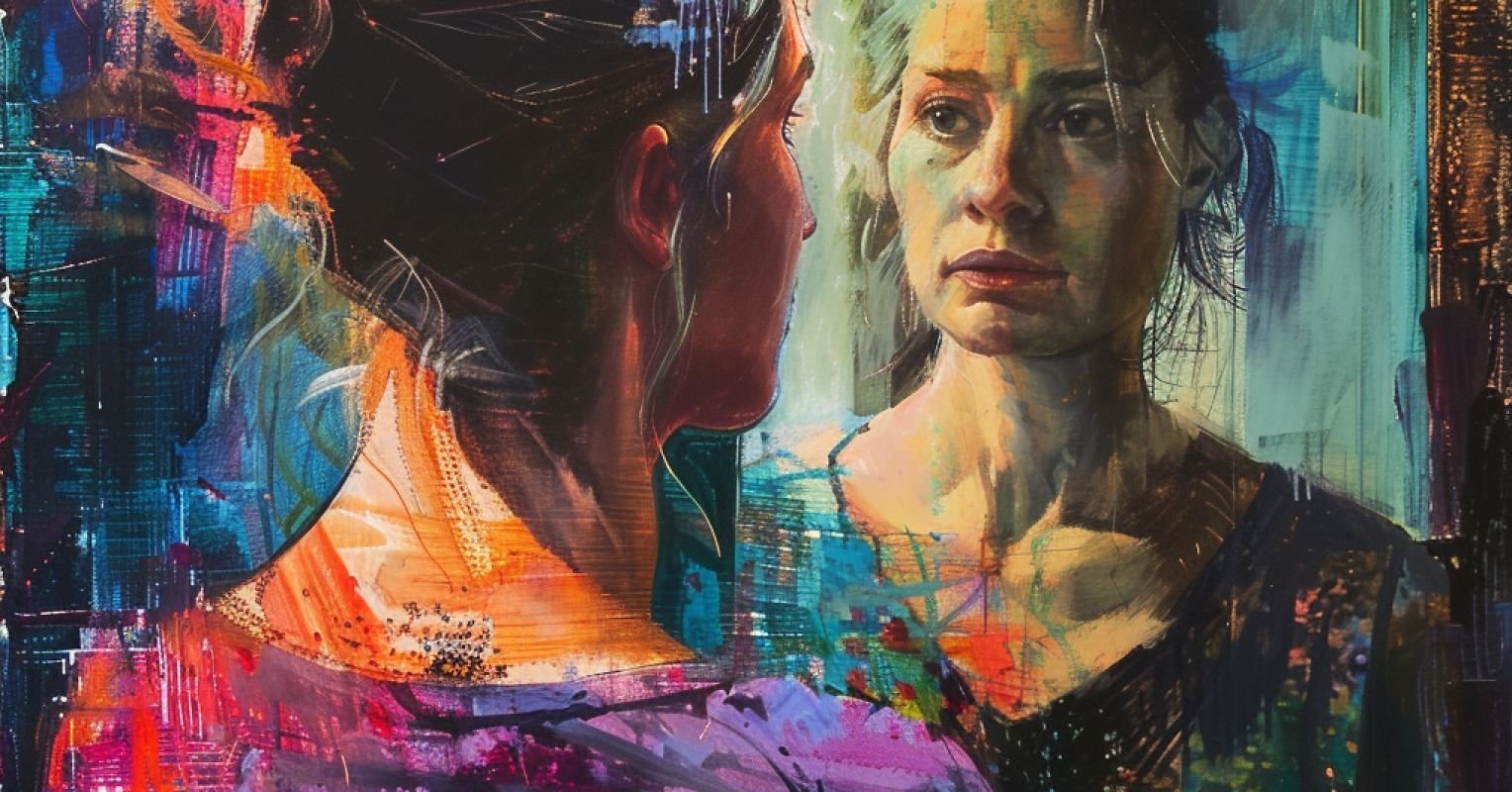
There’s a decades-old term I recently learned that helps explain this strange contradiction. It has been called the mask of aging (Featherstone & Hepworth, 1999). The mask of aging describes the phenomenological experience of some women as they age, their inability to reconcile their youthful inner self with their aged outer surface. This contrast between how they feel and how they look can be disorienting and upsetting. Inwardly, you are young and full of energy. They have also benefited from the wisdom that life experience brings, so they now feel both young and wise, a great combination that is sure to boost their self-esteem and self-image.
But when you look in the mirror and see a woman who looks very smart but not very young, it is difficult to accept the discrepancy. Their reflection of this older woman is a betrayal of the younger woman to whom their inner identity is tied. This discrepancy becomes a threat to their self-esteem.
I think this is why many of us, myself included, worry about our appearance as we get older. We live in a culture that insists that if we do not maintain eternal youth, we will lose our worth (Gullett, 2004). Because we still feel youthful, the idea of being seen as less valuable than we were in our 20s is unacceptable. So we endure expensive and painful cosmetic procedures, overcommit to time-consuming skin care, and try to squeeze our changing bodies into clothes that no longer fit. Instead of embracing the freedom that comes with finding our true selves as we grow older, we regress into futile anti-aging efforts that just buy us time. They will never turn back the clock and they will never actually bring about the positive self-image that we seek.
Your 40s and beyond can be a time of great liberation. Freed from the constant sexualization of young people, we can turn all our outward focus inward. We can begin to heal our hearts and minds, make time for interests we ignored in our youth, invest in connections with loved ones, and perhaps for the first time also connect with the innermost parts of ourselves. Probably. But that commitment means letting go of patriarchal conditioning about our worth and values as we grow older.
change the story
It’s time for feminist women to reshape the narrative around aging. And perhaps that job is an inside job. I sometimes wonder if many of us need deep healing in our own self-image and self-esteem before we can begin to change the stereotypes about women that have long been ingrained in our culture as we grow older. You may. As with any kind of advocacy, the first step may be to free ourselves from the brainwashing we have been subjected to since our youth. To achieve that, you must accept the following truths:
- The male gaze is oppressive and says nothing about our actual worth.
- Freedom from sexual objectification is not a symbol of our diminished worth, but rather of our culture’s toxic obsession with youth.
- There’s nothing wrong with noticing a discrepancy between our inner feelings and our outward appearance. Although our bodies and faces change with age, our inner psychological world can remain young for as long as we want.
- Despite what the multibillion-dollar anti-aging industry tries to tell women, aging is healthy and normal.
- Speaking up about our needs and experiences is a way to normalize healthy attitudes toward aging women and end discrimination, marginalization, and erasure.
If we learn to untangle our identity and self-worth from our culture’s pathological obsession with youth, we will become better advocates for ourselves and women more broadly.
We will never be invisible. we will be free.
References
Calasanti, T. M., and Slevin, K. F. (2001). Gender, social inequality, and aging. Walnut Creek, CA: AltaMira Press.
Casado-Gual, N., E. Dominguez, B. & Worsfold, J. (2016). Literary creativity and older women writers: A collection of critical essays. Bern: Peter Lang.
Featherstone, M. & Hepworth, M. (1999). The mask of aging and the postmodern life course. Pages 371–389. Featherson, M., M. Hepworth, and B. Turner (eds.). The body: social and cultural theory. London: Sage.
Greer, G. (1991). Changes: Women, aging, and menopause. London: Hamish Hamilton.
Garrett, M. M. (2004). Aging by culture. Chicago, IL: University of Chicago Press.
Stonchkaite, I. (2021). Age, gender, and feminism: Addressing the gap from a literary and cultural perspective. Gender is Vizcum, twenty two(1), 59-77.
