

In the 1950s, American food enthusiast Evelyn Neitzert settled in Casablanca. She lived with her husband, an American engineer who was stationed at Nouassar Air Depot, a US Air Force base, from 1951 to 1963.
He is a freelance journalist,Amateur Chefshe quickly found a new passion. The Colorado-born housewife discovered the treasures of Moroccan cuisine: couscous, pastilla, tajine and many other delicacies. But as a journalist, she needed a written recommendation.
Evelyn searched high and low for a Moroccan cookbook that she could read and share with other American expats, but when she couldn’t find one, she decided to write the first English-language cookbook exclusively of Moroccan recipes.
But Evelyn’s Moroccan Cookbook was no ordinary cookbook: According to a 1957 article about the project, its recipes were tested and adapted to American tastes.
50 Moroccan Recipes Adapted for American Tastes
To gather recipes for her favorite Moroccan dishes, Evelyn “visited many homes, accompanied by several Moroccan friends,” reports The Sunday Star in its July issue, which adds that the American mother “traveled into the desert to get recipes from Berber tribes.”
Evelyn traveled throughout Morocco to gather the 50 recipes that would later be included in her cookbook, and then, with the help of her Moroccan housekeeper, “tested and adapted the recipes to American tastes and cooking techniques.”
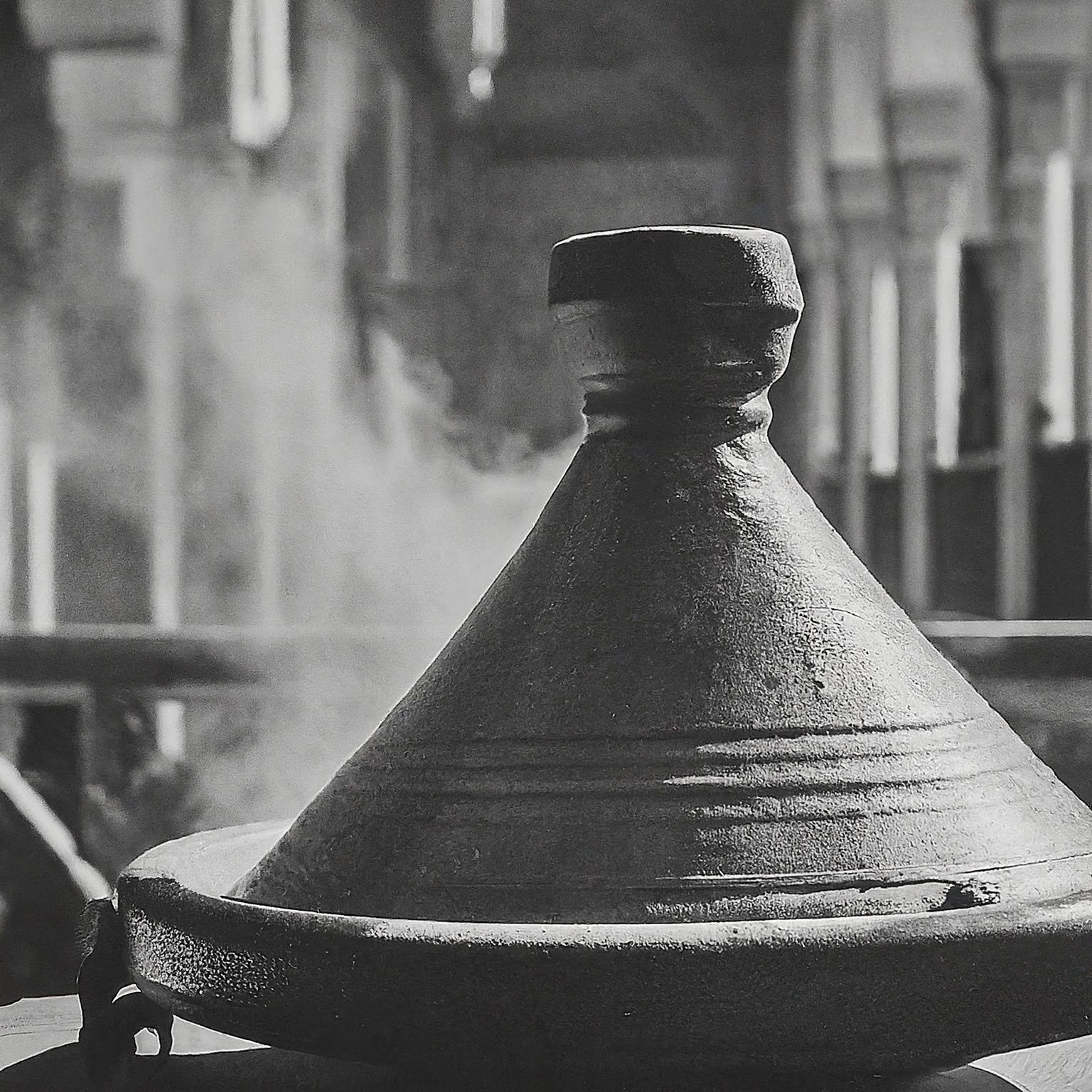
She believed that cooking food slowly in glazed ceramic dishes called tajine pots over small charcoal fires was a lesson in Moroccan patience “that some American housewives don’t have.”
After collecting, sampling, and adapting Moroccan recipes, the American expatriate struggled to publish a cookbook, due in large part to the political situation in Morocco in the mid-1950s.
“The country was in the midst of a guerilla war with the French,” according to the article. Evelyn told the Sunday Star that the owner of a publishing house in Casablanca that had been hired to publish her cookbook was “unpopular with the government.”
.jpg)
Although Neitzert was French, her publishers “were sympathetic to the local people,” and so when Neitzert “came in to proofread the book, the room was often locked,” so her books were printed without proofreading, she explains.
That’s why “there’s quite a bit of misinformation out there,” she told the Washington, D.C., newspaper. “And I had to ride in a bulletproof jeep from the base to Casablanca, never knowing who was going to get shot next,” she recalled.
To illustrate her story in the Sunday Star, Evelyn was photographed wearing a Moroccan kaftan, holding embroidered slippers and sitting next to traditional Moroccan brass kitchen utensils.
The Sunday Star article was the only mention of her book, “Moroccan Cooking,” in which Evelyn said she hoped to include more than 50 Moroccan recipes in volume two. That dream never came to fruition.
Today, “Moroccan Cookery”, published in 1954, is one of the oldest English-language books on Moroccan cuisine and is sold on antiquarian platforms.
