

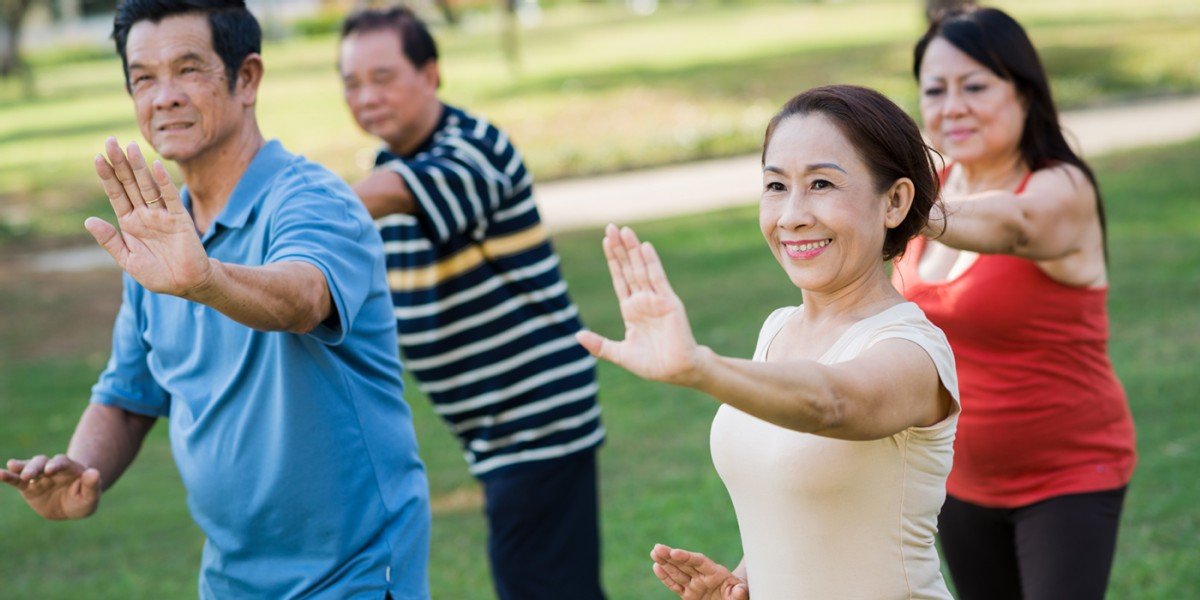
From a Western perspective, aerobic exercise is touted as the main preventive and therapeutic option when it comes to blood pressure regulation. Very often, antihypertensive drugs are also prescribed, either alone or in combination with exercise recommendations. Eastern alternative: tai chimore Western practitioners and institutions should adopt this following the publication of new research results. JAMA network open.
The randomized clinical trial by Dr. Zinye Li and colleagues enrolled 323 adults aged 18 to 65 with a diagnosis of prehypertension (systolic blood pressure 120-139 mmHg and/or diastolic blood pressure 80-89 mmHg). The study was conducted at two tertiary hospitals in China and randomly assigned patients to one of two groups of essentially equal numbers. tai chi groups and aerobic exercise groups.
Patients underwent either intervention four times per week for 12 months based on randomization. Each session he lasted one hour. Primary outcome assessed: systolic blood pressure at 1 year. Secondary outcomes included systolic blood pressure at 6 months. Diastolic blood pressure after 6 and 12 months. and ambulatory blood pressure at 12 months.
Main findings: As the researchers stated, “After 12 months, the change in office SBP was mean (SD) -2.40 (95% CI, -4.39 to -0.41) mm Hg (P = 0.02) between groups. ) was significantly different. ) -7.01 (10.12) mm Hg change in the Tai Chi group versus -4.61 (8.47) mm Hg change in the aerobic exercise group. Similar analysis of office SBP after 6 months The result was (-2.31 [95% CI, −3.94 to −0.67] mmHg; P = .006). In addition, 24-hour outpatient SBP (-2.16 [95% CI, −3.84 to −0.47] mmHg; P = .01) and night walking SBP (-4.08) [95% CI, −6.59 to −1.57] mmHg; P = .002) was significantly decreased in the Tai Chi group compared to the aerobic exercise group. ”
reference
- Li X, Chang P, Wu M et al. Effects of tai chi and aerobic exercise on blood pressure in prehypertensive patients: a randomized clinical trial. JAMA Net Open2024;7(2):e2354937.
