

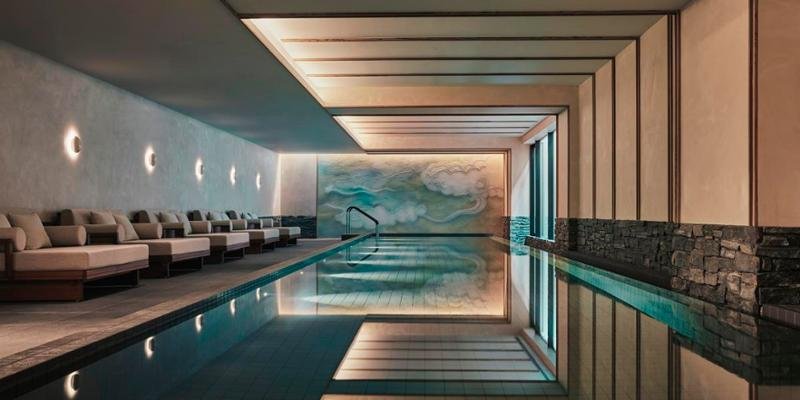
Six Senses has introduced a brand new urban hotel and spa retreat in Kyoto, Japan.
The hotel’s Six Senses Spa combines ancient healing traditions with modern scientific advances.
Full of facilities including an authentic hot spring bath, biohack recovery lounge, sauna, steam room, Wazu pool, and tea lounge.
In addition to a menu of traditional spa treatments, Six Senses Spa Kyoto offers a comprehensive wellness program focused on sleep, detox, yoga and fitness.
Six Senses Kyoto opens today, marking the eco-luxury hotel and spa operator’s entry into Japan and the newest addition to its urban collection.
Located in the historic Higashiyama district, this 81-key hotel offers guests the urban tranquility of Kyoto, considered the cultural and historical center of Japan and famous for its temples, shrines, tea rooms, cherry blossoms, and mountains. It is designed to.
Hotel GM Nicholas Black said: There is no better place than Kyoto in Japan’s cultural capital, where age-old traditions of sustainability flourish and well-being is deeply rooted in the way of life. ”
A holistic wellness journey
Inspired by Kyoto’s Zen philosophy, the hotel’s spa integrates traditional healing techniques with modern science.
Bright and airy, Six Senses Spa Kyoto features minimalist interiors and soothing wood and stone details.
Therapy takes place in four sensory-inspired treatment suites. one for couples (scent) and three for single treatment suites (sound, sight, taste).
Facilities include men’s and women’s changing rooms with wet areas, sauna, steam room, showers, lockers, and hot spring baths. To support guests’ health goals, a sensory studio and biohack recovery lounge for yoga, meditation, and aerial yoga are also available.
Six Senses has completed the facility with a welcome area featuring a Japanese and herbal tea lounge, an indoor pool, a Watsu pool, a 24-hour gym, and a spa boutique.
Guests can begin their journey with a signature wellness screening. This screening analyzes key health biomarkers in minutes, allowing wellness practitioners to create personalized recommendations tailored to an individual’s needs and goals.
Program highlights include comprehensive wellness programs for both hotel guests and external visitors, ranging from half-days to six days, with a focus on sleep, detox, yoga and fitness.
design inspiration
The hotel’s design draws inspiration from the Heian period (794-1185), when Heiankyo (now Kyoto) was the capital of Japan and considered by many to be a golden age of art and culture.
This tradition is reflected in the hotel’s contemporary interpretation, which incorporates elements of traditional art to create an elegant atmosphere. The hotel’s biophilic design is evident in the use of wood and natural materials, along with winding paths within the Japanese garden, further connecting guests to nature.
This design story extends to the rooms and suites, providing guests with a sanctuary for contemplation.
All bedrooms feature Sleep With Six Senses, which promotes a peaceful night’s sleep through custom-made organic mattresses, temperature-regulating pillows, duvets, and organic cotton sheets.
For those looking to further optimize their rest, sleep aids and programs are also available through personalized sleep consultations that combine insights from guests’ sleep trackers with calming spa treatments, nutritional guidance and low-intensity training. .
sustainability and community
Sixth Sense has taken great care to ensure that our commitment to sustainability permeates every aspect of our facility. From eco-centric design to operational practices and community partnerships, sustainability is at the heart of Six Senses Kyoto.
Guests can take sustainability tours, experience interactive workshops in the Earth Lab, and create natural body products in the Alchemy Bar. All of these are designed to foster a deeper understanding and connection to local culture and sustainable practices.
In addition, a dedicated sustainability fund has been set up to support 0.5 percent of hotel revenues, and community-based organizations Biotope Network Kyoto and the Kyoto Traditional Forest Culture Council support restoration, conservation and forestry restoration. We support the education of younger generations. Its cultural value.
