

“When I talk to food startups, they often say they have a unique recipe that was passed down from their grandmother and they’re looking to make millions,” says Valentin Chernokov, CEO of Zina’s Fine Foods in New Jersey. “So when I ask them about the recipe, they say they won’t tell me. What if I steal it? That’s the mindset in the food industry right now. But the reality is, there’s very limited protection for food, from packaged foods to restaurant meals.”
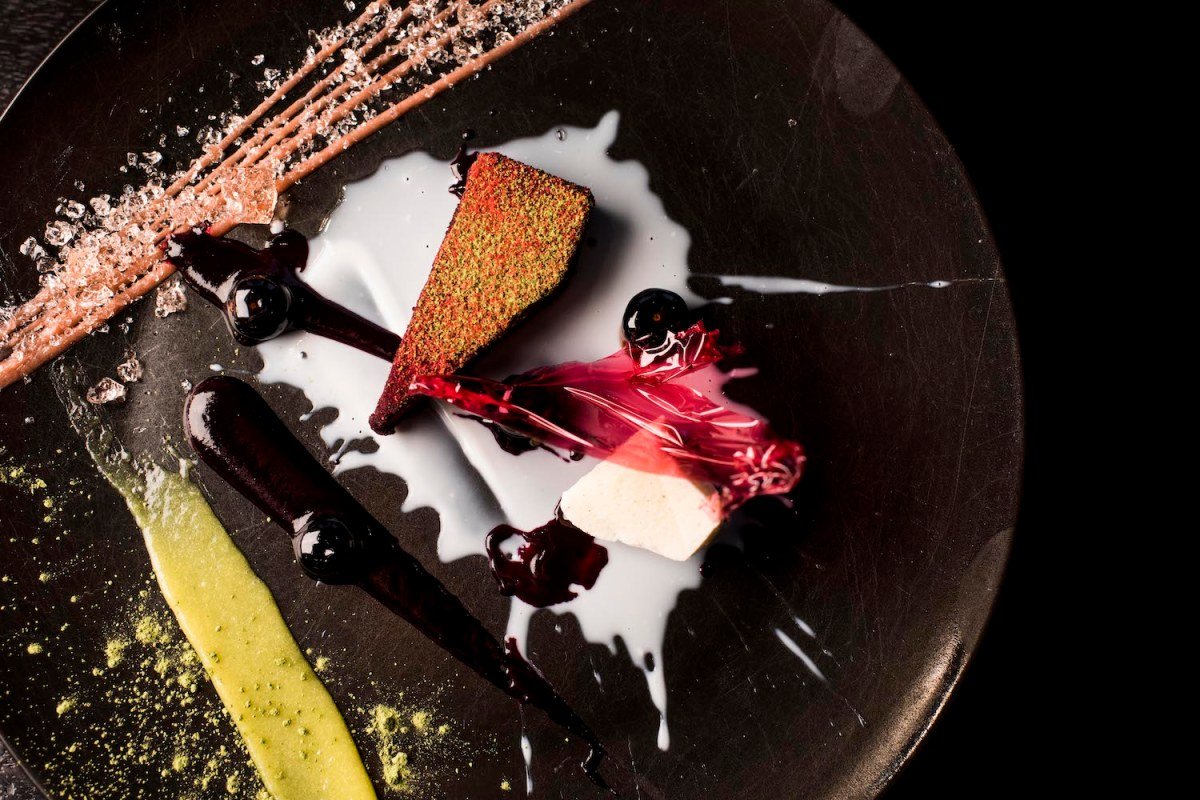
Of course, that doesn’t stop the question from arising: why combining different ingredients (mediums) to create a particular dish and presenting it in a particular way on a plate (the finished “creative work”) doesn’t deserve protection by law? “We’ve developed a lot of recipes and seen attempts to copy them, some of which are quite blatant,” Chernokov says. “We haven’t lost business, but we would like to denounce them.”
Some chefs have been more outspoken on the issue. A few years ago, several chefs, including Heston Blumenthal, Daniel Boulud and David Chang, began strongly discouraging customers from taking photos of their food. Alexandre Gautier of La Grenouillère restaurant in La Madeleine-sous-Montreuil even went so far as to include a crossed-out camera icon on his menus, partly because it was distracting to other diners, but also to protect his work from copycats. As Gilles Goujon, chef at the three-star Michelin restaurant L’Auberge du Vieux Puy in Fontjoncouze, said at the time, photos “take away the surprise” of his dishes and “take away part of my intellectual property.”
In an increasingly competitive market (restaurants are now opening and closing at an alarming pace), and one where a chef’s name recognition, reputation, and talked-about signature dishes are as much a part of a restaurant’s appeal as the quality of its food, they may be right to seek the same protections as others working in creative industries. “The idea of protecting food as a creative work is very interesting, even if it’s difficult to manage,” says Steve Smith, a Michelin-starred chef who trained under Jean-Christophe Novelli. “But in terms of tackling plagiarism, it’s great. We try really hard to have an identity in everything we do. You want people to come and eat what you’ve made, so to just steal it and serve it somewhere else makes everything very difficult.”
“Intellectual property rights, as a patchwork, tend to work fairly well at striking a balance between protecting intellectual property and allowing freedom of expression, but it is an incredibly complex area of law,” said Louise Sargent, a lawyer in the intellectual property group at international law firm Bird & Bird.
There are nuances from country to country and are subject to local politics, international treaties, and other influences, but patents, which protect inventions and new processes, and copyright, which protects the expression of an idea but not the idea itself, tend to cover most areas. Patents could in theory be applied to recipes, provided a chef can demonstrate that the recipe and presentation are novel and non-obvious – a challenge that’s no small feat. Doing something clever with dry ice might work, but adding strawberries to cassoulet probably wouldn’t, since a thorough search of recipes around the world would show that it’s probably been done before.
Copyright, on the other hand, covers literary, dramatic, musical, cinematic and artistic works, but not culinary works. According to the U.S. Copyright Office, “the mere description of an ingredient is not protected by copyright law.”


That is, if it appears in a cookbook. Copyright typically protects the written word, which includes recipes. In 2022, pastry chef and prolific cookbook author Nick Margieri, founder of the baking program at the Institute of Culinary Education in New York, found his panettone recipe reproduced “almost word for word” on a blog, but the publisher decided not to complain. A few months before Singaporean chef Sharon Wee accused fellow Singaporean chef Elizabeth Hague of “copying or paraphrasing” recipes and other text from Wee’s book, Hague’s book was subsequently retracted.
Indeed, the work of a high-end chef is now a brand-building endeavor, and while it’s hard to claim secrecy about some aspects of the business, others are very public. French chef Claude Bosi points out that while being imitated can be frustrating when you’re starting out, it’s a joy once you’re established.
“The actual recipe can be protected as a trade secret,” says Sargent. Brands like Coca-Cola, McDonald’s, and KFC all do. This is often favored by mass-produced food manufacturers, since the process of filing a patent itself means sharing your invention with the world. “But in an industry with high staff turnover like the restaurant industry, it can be very hard to keep it a trade secret,” Sargent adds. “That is, unless the chef has a contract that prevents them from taking the idea to other restaurants. It gets complicated quickly. Sure, you could argue that a plated dish is a work of art, especially since the presentation is now often so elaborate, but it just doesn’t seem to fit neatly into the art category. [that are protected by law]. “
Still, people continue to try. In one of the most high-profile lawsuits to date, chef Rebecca Charles of New York’s Pearl Oyster Bar filed a lawsuit against chef Ed McFarland of Ed’s Lobster Bar in 2007. She claimed that McFarland’s Caesar salad was based on a recipe passed down from her mother, who gave it to McFarland on the condition that he never use it anywhere else. McFarland claimed that his Caesar salad was his own recipe.
Other efforts proved to be, well, too much effort: Homaro Cantu filed patents for a number of culinary inventions, including a way to print photographs on edible paper, and David Burke, then chef at David Burke and Donatella, briefly tried to protect a trademark on his “swordfish chops” but found it too tedious to track down infringers.
But some people, aware of the legal hurdles, still take precautions: British chef Michael Caines keeps meticulous records of every recipe he creates in a secure database, as a way of reminding his clients that their “work,” as he calls it, remains with them when they hire him as a consultant. his Collection of works.
He found a kindred spirit in Atul Kokra, the first Indian chef to win a Michelin star. “I consider my recipes my intellectual property,” he says. “I get angry when people copy my dishes in their entirety. Sometimes they don’t even change the name. It’s like I’ve built a house and now someone else is living in it. The creative work of chefs is definitely an area that needs protection. It’s going to be a bigger issue. It could get pretty messy.”
Indeed, just because culinary creations don’t fall within the category of legally protected creativity today doesn’t mean they won’t in the future. Laws evolve and adapt to changing social mores and expectations. Fashion, for example, used to be a grey area. It was widely understood, if not always accurately, for mass-market brands to steal high fashion designs, tweak them slightly, and claim the result as new designs even when the inspiration was obvious. Now, it’s much harder to do that. So could food eventually follow fashion?
“It’s possible, but it’s a completely different industry,” Sargent says. “There’s a culture of chefs traveling the world to gather ideas to incorporate into their cuisine. It’s not like copying a handbag.”
It’s a harsh reality chefs have faced before. In the 1980s, chef Jacques Maxime proposed starting an organization to protect chefs’ creations. It drew mixed reactions; some supported the cause, while others thought it impossible to achieve. Chef Paul Bocuse said he was “perplexed” because all chefs “take inspiration from others,” adding that one of his signature dishes was borrowed from a little-known chef, “an older man,” from the south of France.
“That’s the problem,” agrees Ben Wilkinson, head chef at The Path, a Michelin-starred restaurant in South Lodge, England. “Chefs are always drawing inspiration from different sources. Sometimes you’ll have an idea and not know if it’s your own or something you’ve seen somewhere.”
Perhaps one might compare it to the creative process of the litigious music industry: Paul McCartney woke up with the melody for “Yesterday” floating around in his head, but it was so perfect that he thought it was just a song he’d heard somewhere before and shelved it for a while.
“I know chefs who value their creations very much, and even in rare cases, certain styles seem to belong only to certain chefs,” says Wilkinson. “And with people increasingly talking about the restaurant industry as a ‘creative’ industry, no chef wants to be accused of plagiarism. We chefs have conversations on WhatsApp when copying is blatant, to the point that many cringe. But the reality is, when you start working, you tend to carry your ideas from job to job. Taking ownership of your ideas risks undermining progress in the industry as a whole.”
Valentin Chernokov goes further, arguing that for all those in the restaurant industry who want their work protected, cooking has inherent qualities that make it more than just difficult to protect. Especially since food is made to be consumed. Food doesn’t last long. That’s why you can protect a sculpture made of marble, but protecting a sculpture made of snow doesn’t work so well. “And then you have to define what a creative work is. [in a dish] “That’s not actually the case,” Chernokov says. “If you give two chefs the same ingredients and the same recipe, they’re likely to end up with two different dishes.”
But that doesn’t mean there’s no room for the industry to change for the better, Chernokov argues. Perhaps chefs could seek each other’s permission to use recipes and presentations, or some sort of co-branding scheme and associated royalties, he suggests. “Even that would be difficult,” he says. “It’s not hard to imagine a chef trying your recipe and not wanting to have anything to do with it. But I think chefs should get more credit where credit is due. For example, if you combine caviar with fried chicken, you should give credit to David Chang for the idea. It’s the same as a musician publicly acknowledging that he’s indebted to Jimi Hendrix. It’s honorable.”
Join our newsletter for America’s fastest growing spirits SpillUnlock all reviews, recipes, and delights. and Get 15% off award-winning La Tierra de Acre Mezcal.
