

Healthy habits:
Brazilian city enlists school cafeterias to help students discover classic fruits and vegetables and break reliance on processed foods
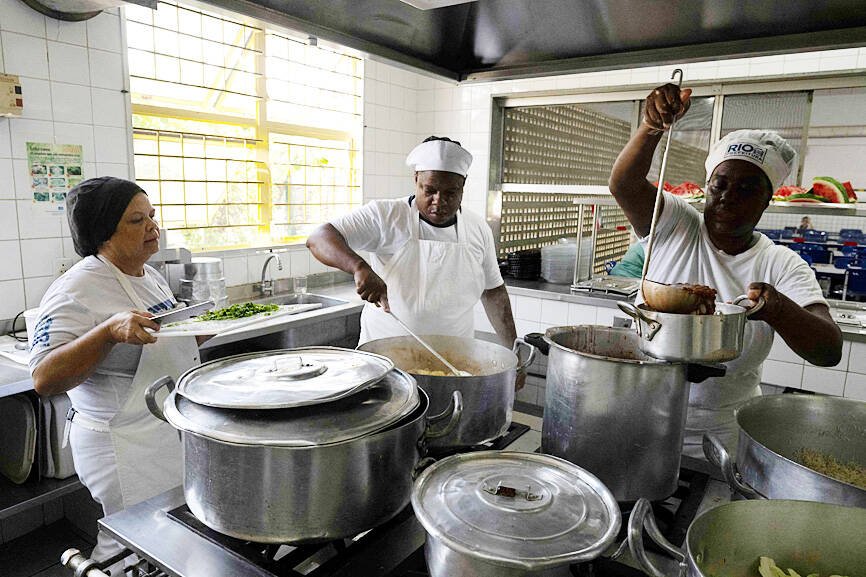
Chicken and potato, carrot and cabbage salad: It looks like a detox meal, but it’s on the menu at a school cafeteria in Rio de Janeiro, Brazil, which is looking for new ways to fight childhood obesity.
Nearly a third of Brazilian children are obese, and city health officials and community leaders are using innovative methods, including enlisting the help of school cafeterias and taking the message of healthy eating to the streets. I’m trying to deal with it.
“Cake? There’s no cake here,” laughs chef Neide Oliveira as he chops onions for 650 students at Burr Marx, a public school in Rio’s western Kritica district.
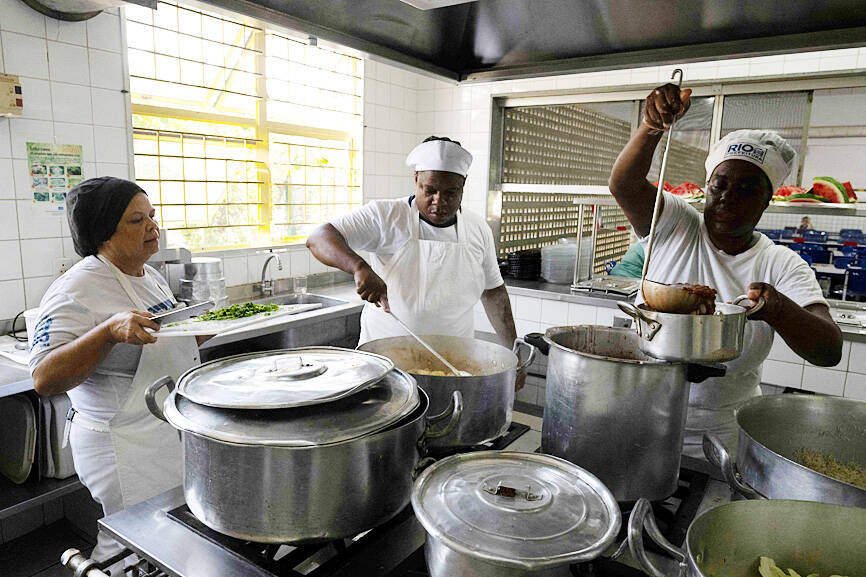
Photo: AFP
Snacks and cookies laden with additives are also on the market after city officials banned ultra-processed foods in schools this year.
Instead, students are discovering traditional Brazilian fruits and vegetables that are often overlooked these days, such as yams, okra, and persimmons. Many children mistakenly thought it was a tomato at first.
The program appears to be working, judging by the way students eat their lunches.

Photo: AFP
“I like everything we make here, and it’s good for my health. At home, I often eat junk food like pizza and hamburgers,” said Guilherme, 15.
“Childhood obesity is an epidemic not only in Brazil but all over the world,” said Marluz Fortunato, a nutritionist with the Rio city government.
The city has implemented programs in public and private schools that require teachers to educate students about healthy eating habits.
Thirty-one percent of Brazilian children and teens are overweight or obese. A recent study by the Desiderata Institute found that more than 80 percent of 5- to 19-year-olds reported eating at least one ultra-processed food such as sausage, soda, or pastry in the previous day.
“Science shows that these products are extremely harmful to our health and are responsible for 70 percent of chronic diseases worldwide,” said pediatrician Daniel Becker.
For children, it can cause the dual problems of obesity and malnutrition, which can damage their ability to learn and concentrate, he said.
However, changing your eating habits is difficult.
Ultra-processed foods are made with ingredients designed to “addict the taste buds” and have a market advantage over natural products given their mass distribution and cheaper prices, Becker said.
Sitting next to Guilherme, his friend Lucas, 14, eats chicken, rice and beans. However, he admits that he regularly goes out to buy crisps after school.
Fortunato said the school needs the help of parents.
“It’s easy to educate young children. Once a person’s way of thinking is fixed, it’s difficult to introduce new concepts,” she said.
She gave the example of a father who complained to the school because his son started asking for more expensive natural juices than the ones with lots of sugar and additives at home.
Still, some adults manage to change. When her grandmother Vera Lucía Pereira was in her 60s, she discovered and fell in love with organic vegetables.
“Not only is it healthy, it’s delicious,” she said.
“My 7-year-old granddaughter is already eating better than previous generations,” she said.
Pereira is one of 160 women taking part in a project called Organic Favelas, which was launched 13 years ago to change the diets of poor communities in Babylonia.
In addition to holding workshops for residents, the project also takes creative approaches, such as graffitiing healthy recipes on neighborhood streets.
Founder Regina Cherry also works with schools. Her mission is to plate her children with her five colors of natural foods.
“We teach people how to make avocado butter and make ‘Barbie eggs’ dyed red with beets,” she said.
The 42-year-old entrepreneur is the author of a cookbook that last year won Brazil’s top literary award, Jabuti, in the creative economy category.
At a national level, a high-profile advertising campaign launched last month aims to raise awareness of the health risks of ultra-processed foods, enlisting celebrities and experts to help spread the word.
The campaign, called “Sweet Poison” (doce veneno in Portuguese), calls for governments to tax ultra-processed foods and use the proceeds to subsidize healthy food.
“Change is difficult, but that doesn’t mean people have to become addicted to your ideas,” Pereira says.
“For our future, we have to open their minds to food,” she said.
Comments are moderated. Please keep your comments relevant to the article. Speech containing abusive or obscene language, personal attacks of any kind, or propaganda will be removed and the user will be banned. The final decision is at the discretion of Taipei Times.
