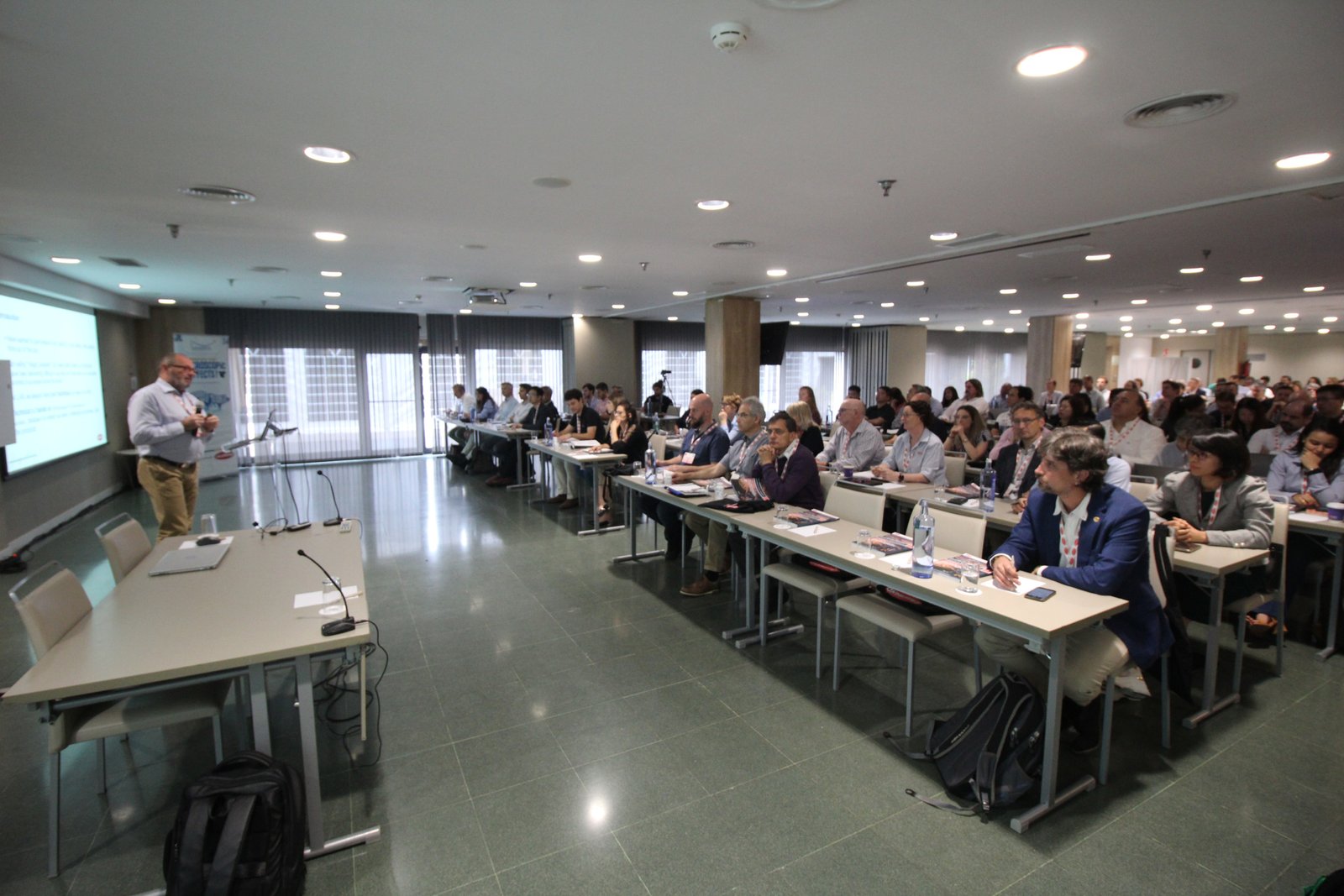
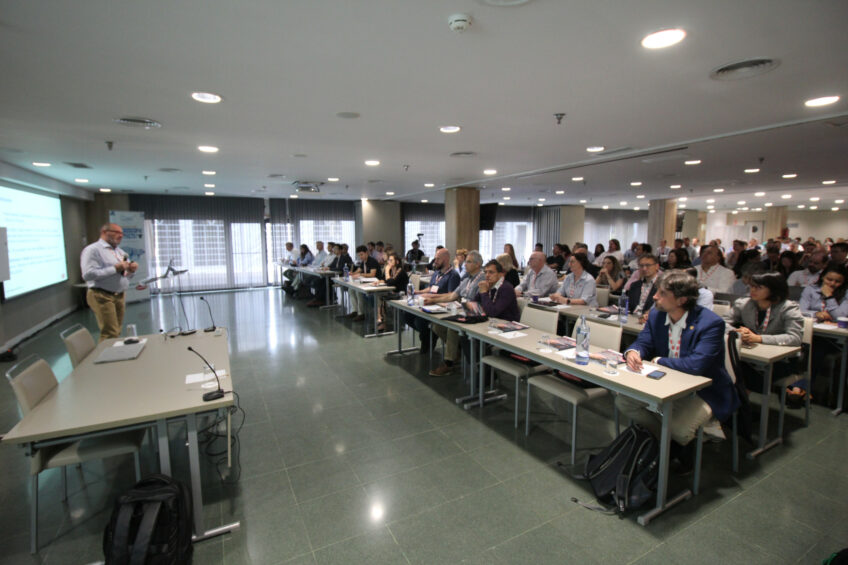
It is well known that yeast and yeast derivatives are beneficial for pigs of all ages. But exactly how beneficial is a question that has vexed and puzzled researchers and the swine nutrition community. With time and scientific advances, the pieces of the puzzle seem to be slowly falling into place. An update was presented June 19th in Madrid, Spain.
This has become a tradition at Lallemant Animal Nutrition: the yeast producer, which operates globally, regularly invites nutritionists and pig experts from around the world to learn about the latest research developments. The company invests a lot of money and effort into research, often in collaboration with research institutes around the world, and from time to time new findings are passed on to the relevant contacts.
We’ve known for years that adding yeast or yeast derivatives to pig nutrition is good for them. In some ways, that’s not surprising at all: after all, yeast was likely part of the diet of our distant wild relatives, and they occasionally encountered fungi when eating fermented apples or nibbling on carcasses.
What has fascinated Lallemand as a yeast producer is how Yeast can be beneficial. After all, yeast products are not like antibiotics in that the compound’s mechanism of action is not easily demonstrable — it just kills bacteria. Yeast, on the other hand, is more subtle, often acting in a roundabout way, with indirect effects, some of which are only being uncovered bit by bit. But as both time and science and technology advance, the mechanism of action of yeast will gradually become clearer.
As it has been quite a few years since the last Swine Technology Conference (2019), the menu for the 2024 edition, held in Madrid, Spain on June 19th, included many updates. The result was an intensive session with a wide variety of technical presentations. The following review focuses on common insights regarding the application of different yeasts in different pig types.
Yeast and sows (and piglets)
Fernando Bravo de Laguna He is the Pig Research and Development Project Leader at Lallemand Inc. His presentation revolved around a well-known and well-studied concept in the yeast world: feeding the sow so that it can pass on positive effects to her offspring, or “maternal imprinting.”
Supplementing sow diets with probiotic live yeast Saccharomyces cerevisiae boulardii CNCM I-1079 (sold as Levucell SB) will enhance piglet well-being at weaning through various mechanisms of action, he said. He focused on three aspects:
- Improved piglet quality, i.e. improved piglet vitality and growth performance.
- Microbiota composition affected before and after weaning.
- The immune response is modulated, for example, by how the lungs respond to inflammatory processes.
As for the “why” behind all this, he noted that this type of yeast leads to reduced stress, increased concentrations of immunoglobulin G (IgG) in colostrum, and also briefly touched on the gut-lung axis, which was not the only “axis” presented during the conference.

Yeast and preweaned piglets
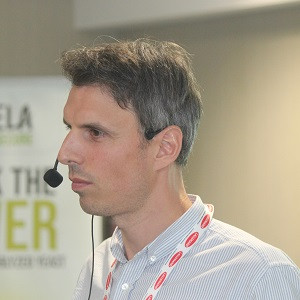
Another axis that attracted attention was Ignacio Ifaraguerrea senior scientist at the University of Kiel in Germany. He spoke about the “gut-liver axis,” but in the context of the function of bile acids, which, judging by the audience’s reaction, is not a common topic in the nutrition world. Simply put, bile acids are produced from cholesterol in the liver and have a variety of effects on digestion.
He used the aforementioned yeast strain (S. boulardii) has been observed to have several effects on bile acid function, so he concludes with the question: “Could perinatal imprinting be a target for intervention?”
Yeast pigs and weaned pigs
With clear presentation of piglets Bruno BerthoudTechnical manager for yeast derivatives and swine solutions at Lallemand, he highlighted the beneficial effects of hydrolyzed yeast, a process in which yeast cells are digested by specific exogenous enzymes, fragmenting proteins and acids into very small (digestible) peptides. He described this as a functional feed ingredient (sold as Yela Prosecure). He presented the results of trials using it to partially replace soybean meal and to completely replace fishmeal or plasma.
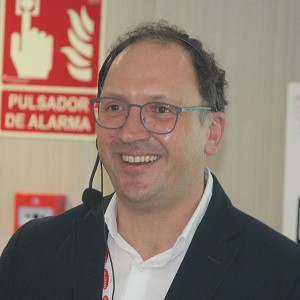
The use of yeast in antibiotic-free weaning feed is covered by Lallemand David SaornilHe was originally Professor Qiao Shiyan The key message after conducting three experiments at China Agricultural University: S. Boulardi When combined with an inactivated yeast fraction (sold as Yang), it can increase resistance to enterotoxigenicity in piglets. E. coli Infections. This can occur, for example, by improving the intestinal barrier function, modifying the composition of the gut microbiota, and modulating the inflammatory response.
Yeast and fattening pigs
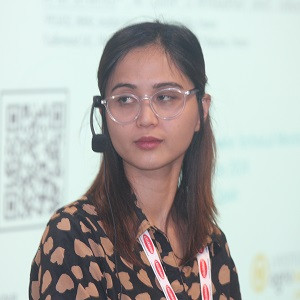
Two speakers spoke about the use of yeast products in pig fattening. Dr. Ira Servient A postdoctoral researcher at the Swiss Federal Institute of Technology in Zurich, known in Switzerland as ETH Zurich, during her doctoral studies she focused on a specific breed of fattening pigs that suffer from heat stress.
Her aim was to see if she could replicate a previously reported study, which used live yeast (S. boulardii) to fattening pigs mitigates the effects of heat stress in pigs. Knowing that fattening pigs suffer most from heat stress during and immediately after meals, she tried to test this phenomenon by increasing the feeding frequency. The results were somewhat contradictory. Yes, she said, “Increasing the feeding frequency improved feed intake and had a positive effect on energy retention in heat-stressed pigs.” She also showed that supplementing pigs with live yeast improved insulin sensitivity, which in turn changed the pigs’ feeding behavior and improved their adaptation to heat stress.

Pierre Lebreton“We are pleased to be able to offer this treatment to patients with rheumatoid arthritis who have been diagnosed with rheumatoid arthritis for more than 20 years,” said Dr. Gregory B. Schneider, Global Category Manager, Gastrointestinal Medicines, Lallemand, who summarized the study. He said: S. boulardii One advantage in fattening pigs is improved energy retention.
Other speakers at this year’s International Swine Congress included Spanish veterinarian Alberto Morillo, Spanish Swine Veterinary Consultant Luis San Joaquin and Professor Walter Gerrits from Wageningen University in the Netherlands.
Join 18,000+ subscribers
Subscribe to our newsletter for the latest on everything you need to know in the pig farming industry delivered three times a week.