

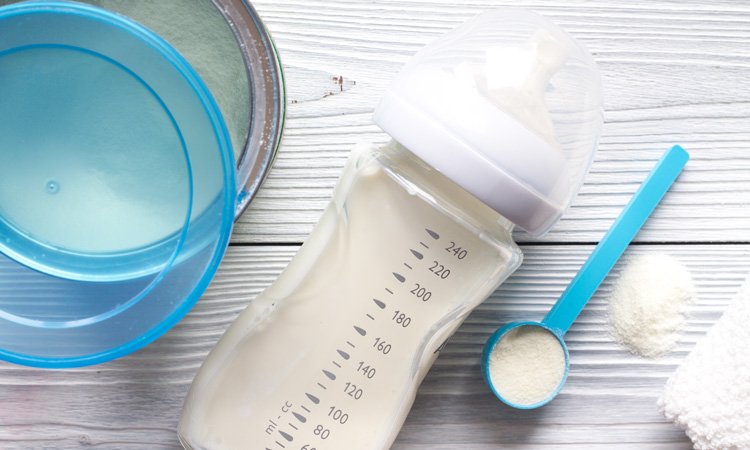
Researchers at the University of California, Berkeley and the University of California, Davis, have modified the plant that produces the sugar found in breast milk, potentially revolutionizing infant formula nutrition.
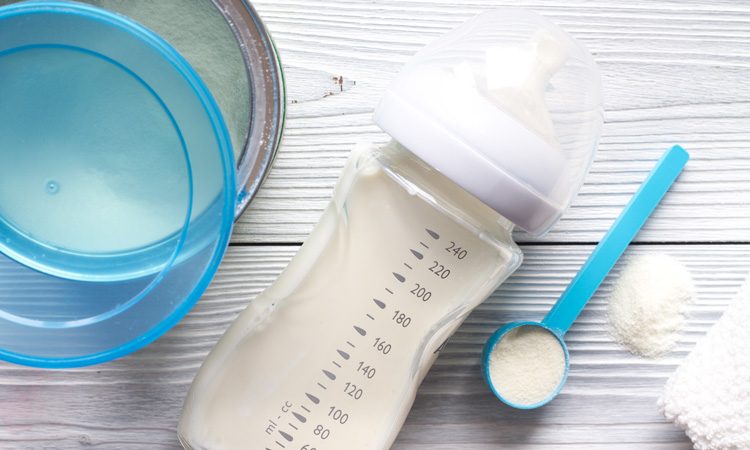
A new study led by scientists at the University of California, Berkeley and the University of California, Davis finds that genetically modified plants could help close the nutritional gap between breast milk and infant formula by producing breast milk oligosaccharides, sugars essential for maintaining healthy gut bacteria and preventing disease.
It is well documented that human breast milk contains a unique blend of prebiotic sugars that are difficult to directly replicate in commercial infant formulas.
Worldwide, approximately 75 percent of babies drink infant formula during the first six months of life. Some caregivers feed their babies formula as their baby’s sole source of nutrition, while others use infant formula to supplement breast milk.
The researchers acknowledge that “while formula is an essential source of nutrients for a growing baby, it does not currently fully replicate the nutritional profile of breast milk.”
The researchers say part of the reason is that breast milk contains a “unique blend of around 200 prebiotic sugar molecules that help prevent disease and promote the growth of healthy gut bacteria,” although most of these sugars remain “difficult, if not impossible, to manufacture.”
The new study was published in the journal Nature Food The research team set out to reprogram the plant’s sugar-making machinery to produce a variety of human milk sugars, also known as human milk oligosaccharides.
The researchers say their findings could lead to the development of healthier, more affordable formulas for infants and more nutritious non-dairy plant-based milks for adults.
“Plants are amazing organisms that can take sunlight and carbon dioxide from the atmosphere and use it to make sugars. And they don’t just make one type of sugar, they make a whole range of sugars, from simple to complex,” explained Patrick See, lead author of the study and assistant professor of plant and microbial biology and research scientist at the Innovative Genomics Institute at UC Berkeley.
“Plants already have this basic sugar metabolism, so we thought we could repurpose it to make breast milk oligosaccharides.”
Formula shortages affecting U.S. infant health, study finds
All complex sugars, including human milk oligosaccharides, are made up of building blocks called monosaccharides. These monosaccharides combine to form a variety of chains and branched structures. What characterizes human milk oligosaccharides is the specific set of bonds or rules for joining these monosaccharides together within the molecule.
To get plants to make breast milk oligosaccharides, lead study author Colin Burnham engineered the genes that code for the enzymes that form these specific bonds. Then, in collaboration with Daniela Barile, David Mills, and Carlito Lebrilla at the University of California, Davis, he introduced the genes into Nicotiana benthamiana plants, a close relative of tobacco.
The genetically modified plants produced 11 known human milk oligosaccharides as well as a variety of other complex sugars with similar linkage patterns.
“We made all three major groups of human milk oligosaccharides, and to my knowledge, no one has demonstrated the ability to make all three groups simultaneously in a single organism,” Shi said.
Following this, Burnham worked to create stable lines of N. benthamiana plants optimized to produce a single breast milk oligosaccharide called LNFP1.
“LNFP1 is a human milk oligosaccharide made up of five monosaccharides that is thought to be very beneficial but, so far, cannot be produced at scale using traditional microbial fermentation methods,” said Burnham, who completed the research as a graduate student at the University of California, Davis. “We thought that if we could start producing the larger, more complex human milk oligosaccharides, we could solve a problem that the industry is currently unable to solve.”
Currently, only a very small amount of artificially produced human milk oligosaccharides is produced. E. coli But separating the beneficial molecules from other toxic by-products is a costly process, and only a few infant formulas incorporate these sugars.
In their study, Shi and Burnham, in collaboration with Minlian Yang of North Carolina State University, estimated the cost of producing human milk oligosaccharides from plants on an industrial scale and found that it is likely to be more cost-effective than using a microbial platform.
“Imagine if we could make all of the human milk oligosaccharides in one plant. We could grind up that plant and extract all the oligosaccharides simultaneously, and add it directly to infant formula. There are many challenges to implementation and commercialization, but this is the ambition we’re aiming for,” Shih concluded.
