

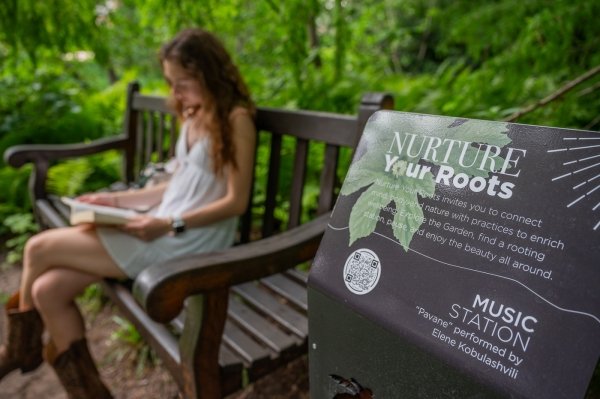
The “Nurture Your Roots” program includes QR codes around the Beale Arboretum that students, faculty, staff, and other garden visitors can scan to practice wellness and self-reflection. Each station has content posted by community members.
michigan state university
2023 Student Voice Survey Inside higher education When College Pulse asked students about their health-related goals, 43% of respondents said they wanted to work on spending more time outdoors and 36% wanted to practice mindfulness more often. I did.
Michigan State University established a program on five acres of garden space to promote healthy living for learners and other community members.
The Nurture Your Roots program includes guided nature walks, mindfulness practices, and yoga to help individuals connect with mind, body, and nature through holistic practices.
garden: Beale Arboretum and Campus Arboretum, a well-known facility on MSU’s campus, is the longest continuously operating university botanical garden in the United States and will celebrate its 150th anniversary in fall 2023.
After the COVID-19 pandemic and remote learning, campus leaders wanted to do something different with the garden space, and based on feedback from community members, they chose to focus on wellness.
According to MSU’s website, the garden is “based on research that shows that being outdoors supports physical and mental health by increasing activity and promoting connection, relaxation, and healing. The purpose is to promote the well-being of the community.”
Alan Prather, interim director of the Beale Arboretum, said that in 2022, garden staff will create an interdisciplinary internship program called Beale Scholars, with participating students leading some of the development of the wellbeing program. He explains.
“One of our first student scholars, Elliott Pancholi, created a nature journal for visitors with prompts that intentionally connect health and nature,” Prather says. “Having witnessed the power of diaries in practice, we are confident that the storytelling format and other types of activities featured in the garden and created by people across our community will give visitors a chance to connect with nature. It got me thinking about what could be a powerful way to encourage people to explore connections, gardens, and their own well-being. ”
Find health: “Nurture Your Roots” invites visitors through a series of self-navigated experiences at various “rooting stations” within the garden, focusing on health and interconnectedness. Each experience was developed by members of his MSU community leveraging health research and expertise.
At the entrance to the garden, visitors can pick up a pocket journal created by Pancioli. This encourages introspection and grounding yourself in the present moment.
Inside the park, you can participate in each activity by reading the QR code at each spot. Routing exercises include adaptive stretching exercises, guided meditations, poetry readings, or sitting on a bench and meditating while listening to music, all taught in video format by students, faculty, and staff. Each webpage also includes short biographies of contributors and their thoughts on happiness, art, and nature.
The gardens are free and open to the public, so visitors are free to enjoy them.
Impact: Since Nurture Your Roots’ founding, community members have expressed an appreciation for its offerings because they are “diverse, unique, and important to campus,” the school said. says Angelica Bajos, Community and Sustainability Coordinator.
In the future, Prather said garden staff plans to rethink the rooting station each year and continue to innovate and experiment with different campus creators. “That’s part of what we feel makes this program so dynamic, the content is created by artists and health professionals on our campus.”
Staff also hopes to expand the program’s reach. Curriculum partnerships with faculty to incorporate nature and well-being into courses have grown to 38 in the past year, including the university’s new African American and African Studies program. Each course involves some form of garden visit, increasing students’ awareness of how gardens can benefit health.
Another consideration going forward is to be able to offer it in all seasons. “As you can imagine, there are months in Michigan where it’s more difficult to spend time outdoors,” Prather said.
Beal piloted a virtual green space project in campus residence halls last year to help students immerse themselves in a nature-like environment with welfare activities and therapy dogs. Mr Prather added that it was also an ambition of the staff to carry out forest therapy training within the team, as the campus also includes an arboretum with over 20,000 trees.
Get content like this straight to your inbox every weekday morning. Subscribe here.
