These articles on “Nutrition is Medicine” were published in the Spring 2024 issue of UNMC Connect. Follow this link to view the online version of the publication.
What we eat matters.
But fast food and ultra-processed foods are too often the staples of Americans’ diets.
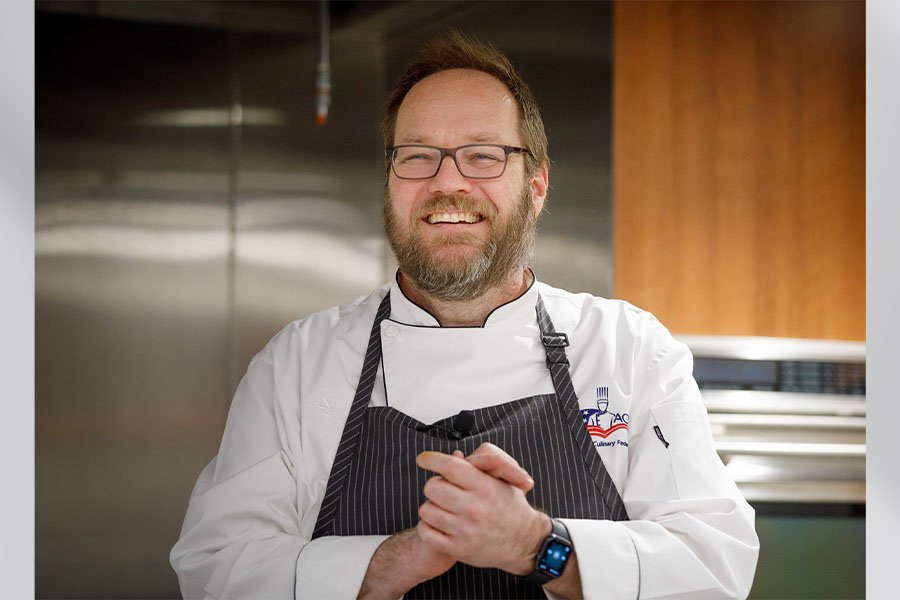
Now Steven Wengel, MD, assistant vice chancellor for health at UNMC, is working with others to promote healthy eating through healthy cooking.
“How much you exercise and how much you eat are very important issues,” Dr Wengel said. “This project is intended to provide busy people with healthy cooking classes that are practical and satisfy the palate.”
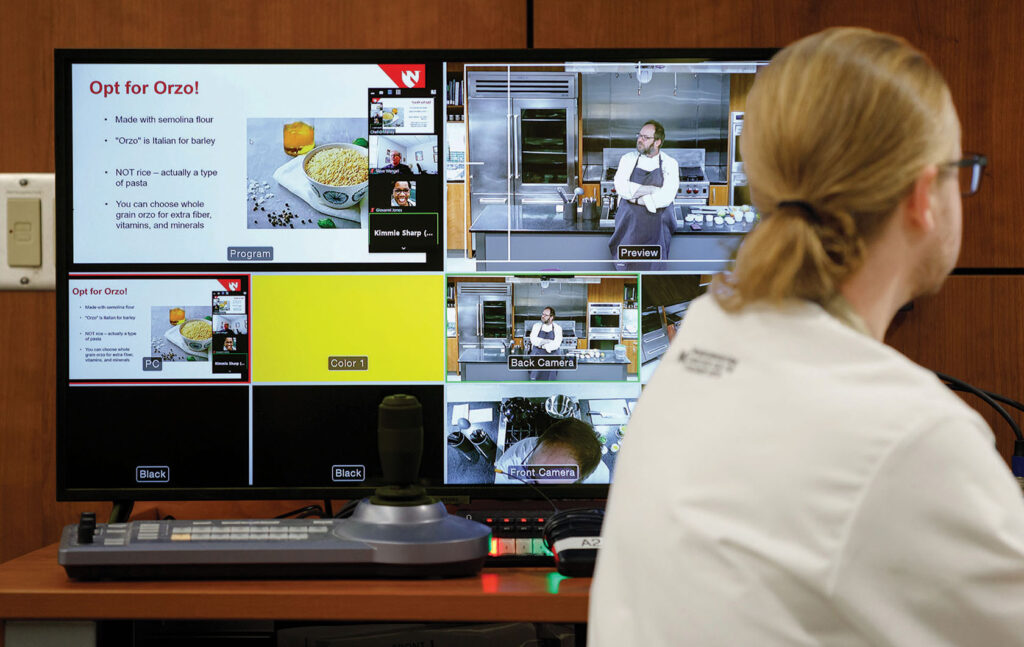
In 2020, Dr. Wengel helped launch “Keep Calm and Cook On,” a series of virtual presentations for UNMC faculty and students that included cooking demonstrations, nutritional information and question-and-answer sessions.
The project, supported by the Monarch Fund, is a collaboration between UNMC Human Resources, UNMC Health Promotion Programs and Medical Nutrition staff, and Metropolitan Community College Culinary Arts Institute Open Kitchen Workshops. In addition, UNMC’s food service partner, Sodexo, is providing a limited menu at the medical center’s cafe.
Dr. Wengel thanked MCC’s Brian O’Malley and Sarah Rogers for their culinary assistance, Mariah Jackson, assistant professor of medical nutrition at UNMC, for providing nutritional highlights during each demonstration, and Giovanni Jones from the Human Resources Department for creative and logistical support.
Participants will learn how to make healthy (and easy!) recipes that don’t require hours of cooking in the kitchen or large amounts of expensive ingredients. Past presentations have focused on how to make Minnesota Wild Rice Soup, Lemon Chicken Orzo, and Turkey and Black Bean Chili.
“There’s a growing body of research about the negative health effects of ‘ultra-processed’ foods,” says Dr Wengel. “One way to combat this is to cook at home using healthier ingredients.”
Dr Wengel, the geriatric psychiatrist, said there is growing evidence that lifestyle choices can influence and potentially prevent diseases such as Alzheimer’s. “It’s becoming increasingly clear that lifestyle choices, like how much exercise you do and what you eat, are important,” he said.
Additionally, the report says that some psychiatric disorders, such as obsessive-compulsive disorder and severe depression, are linked to disruptions to the microbiome. “We don’t know if it’s cause or effect, but some preliminary studies suggest that people with depression and obsessive-compulsive disorder have different microbiomes,” Wengel said. “Can diet affect that? We don’t know, but maybe we can.”
One thing he knows, he said, is that there is no downside to eating healthy.