

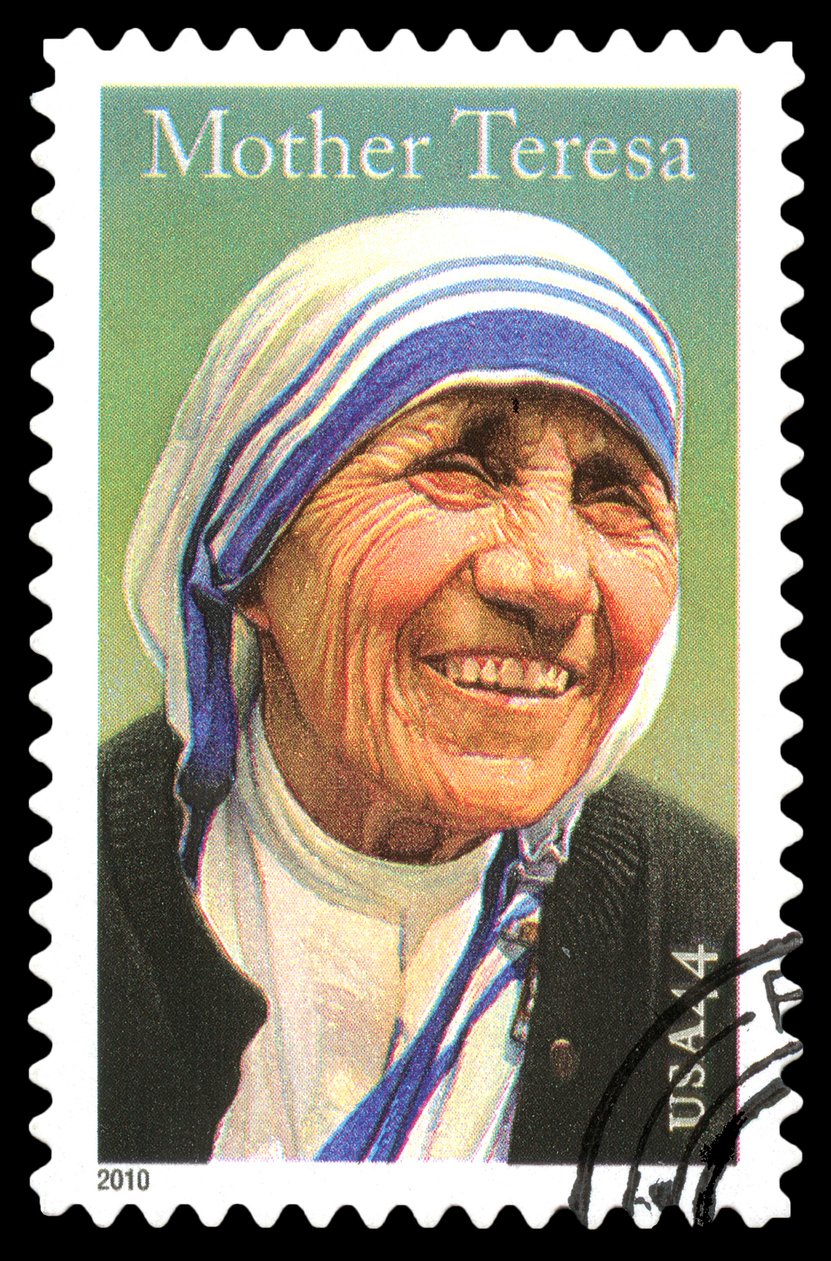
For many Christians, she is considered a living saint, and her service to the poor in India demonstrates a life dedicated to the teachings of Christ. But a new study from the University of Birmingham explores the doubts and struggles Mother Teresa struggled with throughout her ministry and life, revealing a human side that many believers can relate to.
The study, published in the journal Critical Studies of Religion, delves into the “dark night of the soul” revealed in the book. Be my lightis an edited collection of her personal writings from 1929 to 1994, published ten years after her death. At the time of its publication, the book surprised both her supporters and opponents with its revelations about her experiences of deep loneliness and her struggle to find God in a world of pain and suffering.
“In Roman Catholic spiritual theology, the concept of the ‘dark night of the soul’ refers to a period of extreme spiritual anguish that ultimately leads to complete mystical union with God,” said Dr Gedim Alpion, associate professor of sociology at the University of Birmingham and author of the study.
“Mother Teresa has always been a controversial figure, Be my light This perception increased significantly with the publication of “The Scriptures of Jesus Christ,” primarily because her lifelong struggle with faith was revealed and the image that many had of her as a devout and steadfast servant of God was shattered.”
Having studied Mother Teresa’s complex personality for over 20 years, Dr. Alpion has used both biographical and new sociological approaches to explore how this long-term crisis of faith affected her work with the poor and suffering in the slums of Kolkata.
The study argues that her desire to find God motivated her to recruit a large number of helpers, including the poor, former students, nuns, and volunteers. Teresa also struggled with guilt about her motivations for priesthood, acknowledging that her service to the poor was primarily “for my soul” and expressing discomfort with the idea that she was “deceiving” those who worked for and trusted her.
“Teresa’s struggle with her faith was a major motivation for her activism and continued as she grew older. This is clearly seen when she wrote in 1953 that her ‘darkness’ became so ‘terrible’ that she felt ‘everything inside of me’ had ‘died,'” Dr Alpion said.
“Her subsequent decisions to expand her work across India in the 1950s and abroad from the 1960s were aimed at alleviating this pain.”
These revelations about her continuing distress have raised questions about her mental state, and scholars are divided as to whether she should be diagnosed with depression.
“Her defenders resist the idea that her struggles with her faith were a symptom of depression, while a few acknowledge that her writing shows signs of someone with depression. The unwillingness to acknowledge the link between dark nights and depression speaks to the prejudice and stigma surrounding mental health within Catholic and Christian communities,” Dr Alpion said.
By the late 1950s, Teresa seemed to have given up on living with this burden, writing in 1962, at the peak of her spiritual crisis, that if she became a saint it would be a burden of “darkness”. Hoping that the burden would at least lessen, she spoke less about it from the 1970s onwards, and expanded her missionary work to Communist countries (including her native Albania in 1989), seeing this “godless” region as her last hope of dispelling her doubts.
However, Dr Alpion believes that the existence of these struggles should not necessarily be seen as diminishing Mother Teresa’s faith legacy, but rather revealing the true depth of her spiritual journey.
“To discount Teresa’s struggle with faith is to belittle her efforts. This study outlines how her lifelong struggle with faith not only influenced her work, but determined her career choice and every decision she made thereafter, including the charisma of the Missionaries of Charity and her missionary phase,” he said.
“If Mother Teresa achieved anything in her life, whether spiritual or otherwise, it was her ability, like no other, to raise awareness of the sacred dignity of human life. No small achievement for someone who appears to have suffered so much.”
