

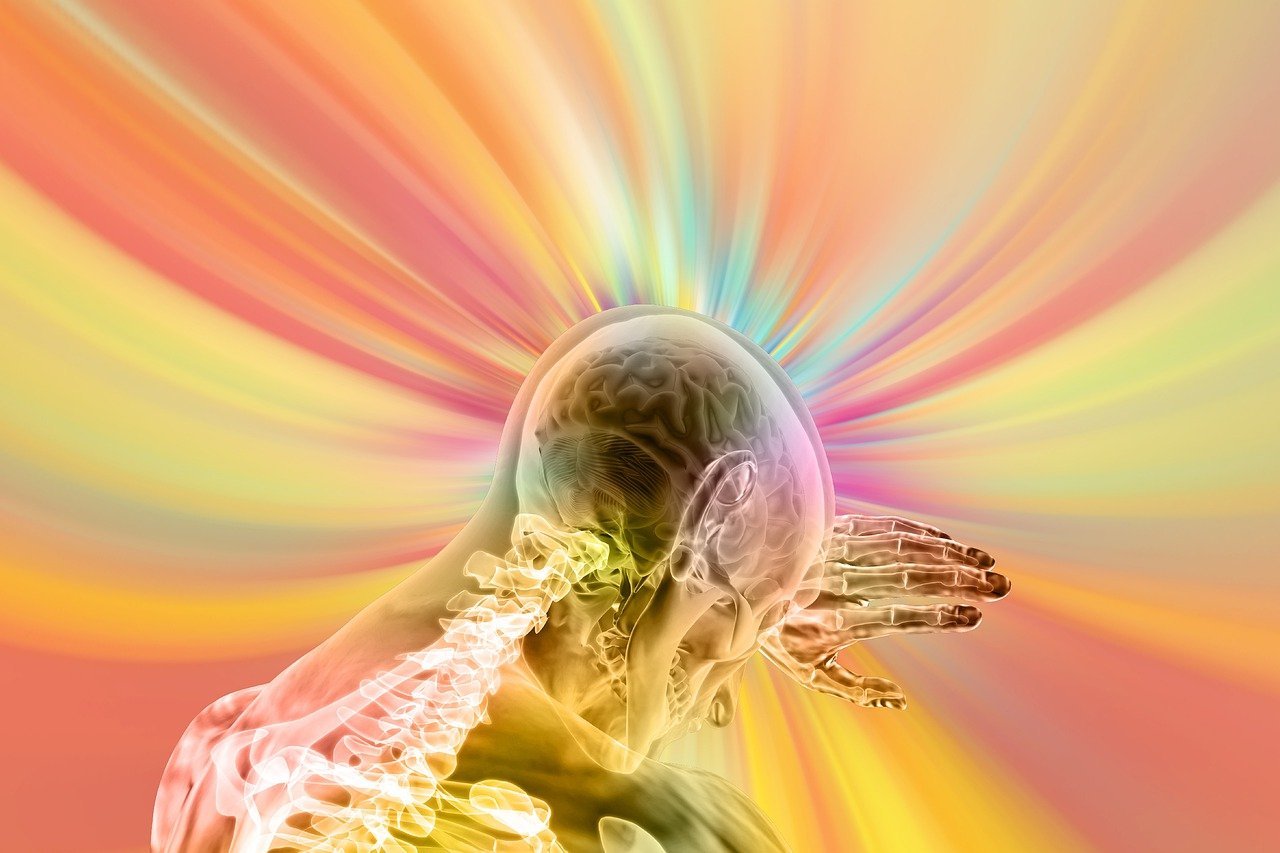
Have you ever had a spiritual experience that, on reflection, makes you wonder if it was all in your head? Neurotheology attempts to answer this.
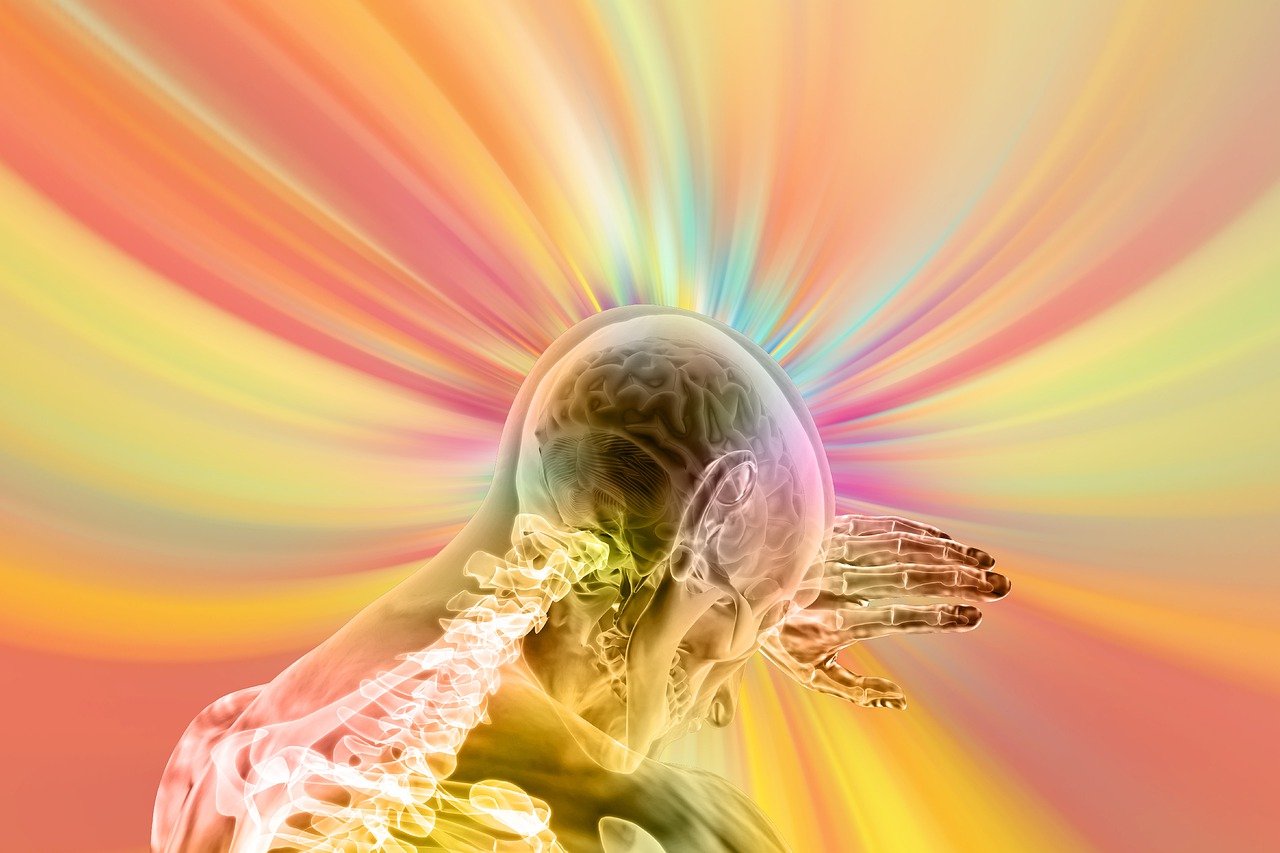
NPR’s May 14, 2024 edition On point, journalist meghna chakrabarti interview Dr. Andrew Newberg. as research director Marcus Institute for Integrative Health and professor thomas jefferson university and hospital, Newberg studies human brain activity during spiritual encounters. In his interview, Newberg talked about brainwave patterns he collected from people across the religious spectrum, from Catholic nuns and Muslim mystics to Buddhist monks and Brazilian mediums. His brain scan does not reveal which spiritual events are true and valid. It’s beyond the scope of science. Instead he shows brain activity common to humans who are having spiritual experiences.
neurotheology
pioneer of neurotheologyReflecting on his Jewish upbringing, Newberg credits his father for his curiosity. As a child, when he asked his father spiritual questions based on common tradition, his father responded with more questions. “What do you think?” his father would say. This led Newberg to seek answers himself, rather than accepting ideas handed to him.
Newberg acknowledges that his field cannot objectively determine what is real. But it helps us understand how the brain responds to subjective events in our heads when we touch something sacred.
According to Newberg, when people engage in spiritual events that involve concentration, the frontal lobes of the brain are activated. However, when a person has an experience in which they express that God or a spirit is doing something for them, in other words, when they become the object rather than the subject of the encounter, the activity of the frontal lobe decreases. Masu.
Newberg describes an event channeled by a medium in Brazil in which language centers in the brain fired that were not firing at baseline. This suggests whether the spiritual event gave her access to deeper language abilities than she normally has access to, or whether she is actually dealing with spiritual beings who communicate in a vocabulary different from her own. Some people wonder if they are connected. Using her brain scans, Newberg is not attempting to determine the validity of channeled experiences. He simply evaluates events in the brain.
Five characteristics of a spiritual experience
According to Newberg, neurotheology recognizes five important things that people tend to report when they have a spiritual experience. these are:
- Through spiritual events, people feel more connected to God and other people.
- After an event, people can recount details with surprising accuracy. Memories of spiritual events tend to be more detailed than other memories.
- People believe that spiritual events are more powerful and vivid than everyday events.
- People who have experienced spiritual events often say that they feel overwhelmed by a force or being greater than themselves. Although most people see these as positive events, some subjects speak of frightening spiritual encounters.
- People say that their spiritual adventures changed them in some way.
Damascus Road Experience
Christians often refer to such events in their lives as “the Damascus Road experience.” This comes from the Biblical account of Saul’s transformation from a faithful persecutor of the church to an apostle and evangelist. Acts 9:1-9 Related to this story:
Meanwhile, Saul, still intent on threatening and murdering the Lord’s disciples, went to the high priest and ordered him to go to the synagogue at Damascus so that he could bring any man or woman he could find who belonged to this way. I asked for a letter. They were bound to Jerusalem. Now, as he went forward and drew near Damascus, suddenly a light from heaven shone around him. As he fell to the ground, he heard a voice say, “Saul, Saul, why do you persecute me?” He asked, “Who are you, Lord?” “I am Jesus, whom you persecute. But rise up and enter the city, and you will be told what to do.” The men who were traveling with her heard voices but saw no one, so they stood speechless. Saul got up from the ground, his eyes were open, but he saw nothing. So they took him by the hand and led him to Damascus. For three days he was blind, did not eat or drink anything.
Paul experienced all five of these characteristics of a spiritual encounter. This vision brought about such a change that Saul changed his name to Paul. His complete surrender was such that his calling also changed. It was so intense that he temporarily lost his vision. This apparition was so vivid that Paul clearly describes the details many times in the New Testament. And his sense of connection with God and other people was so strong that he understood the persecution of the church as abuse against Jesus himself.
my own spiritual experience
Let me tell you about my own spiritual experience. Half a lifetime ago, I was a 25-year-old man trying to support my growing family through door-to-door sales. He recalls pounding the pavement for several days, only to return to the office empty-handed every night. My best friend at the time was the manager of the depot. At the time, he and I shared a common pentecostal/charismatic bent. He asked if I wanted him to pray for me. Nodding affirmatively, I had no idea what to expect when he placed his hand on my chest and began to pray.
The floor beneath me melted away. I hit the concrete like a wet rag, but I couldn’t even feel it. When my friend disappeared, I found myself transported and changed. I was no longer a grumpy young man. Instead, I was a baby in the arms of a Heavenly Father who sat in a chair and held me in His loving arms. I remember silently reaching out and stroking his long gray beard, just as my little grandson cradled and stroked my grandson yesterday. (I can still feel the texture of his beard in my memory.) The black-haired Jesus looked over his Father’s shoulder and smiled. As their gentle breath shook my blonde hair, I realized that the wind was the Holy Spirit. His were the only three words God gave me that day. These are words I will never forget. My father looked at me with his loving eyes and spoke to me in the voice of an old school bus driver.Photo actress Hattie McDaniel). The only three words spoken by God in a woman’s voice were, “You’re so funny!”
When I finally woke up from my dream, I knew three things.
- Despite my suffering, I was in the loving arms of God.
- My worries were cute to God, who already knew what I needed and already had a solution.
- Afterwards, I began to overanalyze my experiences, but God deftly ignored my theological categories.
According to Newberg’s five characteristics, this event appears to have been a “legitimate” spiritual encounter associated with connection, clarity, intensity, surrender, and transformation.
Was my religious experience all in my head?
Sometimes I ask myself, “Was my religious experience all in my head?” I’m an extreme overthinker and I evaluated this event theologically. I feel nauseous For many years. For example, does this vision really prove that God the Father is male and sits on a throne? Does this mean that Jesus had black hair? What does the invisible nature of the Holy Spirit mean? Did I create this vision because it provided the comfort I needed at the time?
I no longer feel the need to put God in a trinitarian box and identify the three persons that this vision represents. But I believe The Divine took the form I needed to see in order to receive the lessons I needed to learn. If you needed a gray-haired, bearded Sky Daddy, God was willing to oblige. However, I believe that this experience will not forever define my view of God.
A word from Dumbledore
I am reminded of a conversation I had many years ago with another dear friend who happened to be an atheist. I told her of many deep spiritual encounters and said, “I experienced these things very vividly. Are you saying that’s not real?” Her friend patiently reminded her of these words: JK Rowling‘s book Harry Potter and the Deathly Hallows.
After being killed by Voldemort, Harry ends up at the mysterious King’s Cross Station, where he speaks with his mentor, the great wizard Albus Dumbledore. During this exchange, the professor answers many of Harry’s questions. Rowling writes:
“One last thing, please,” said Harry. “Is this real? Or is this all happening in my head?”
[Dumbledore answered] “Of course it’s happening in your head, Harry, but what on earth does that mean it’s not real?”
in him On-point interviewDr. Andrew Newberg seems to agree with Dumbledore. Neurotheology can point to all the areas of the brain that light up when people experience spiritual events. It can show activity in the parietal region that accompanies an emotional response. This could explain how the hippocampus, which deals with spatial relationships, is activated and the mystic feels like he has moved into time and space. However, neurotheology cannot assess whether a subjective encounter is an objective fact.
Have you ever had a spiritual experience that, upon reflection, makes you wonder if it was all in your head? Neurotheology agrees with Dumbledore. “Of course it’s happening in your head…but what on earth does that mean it’s not real?”
