

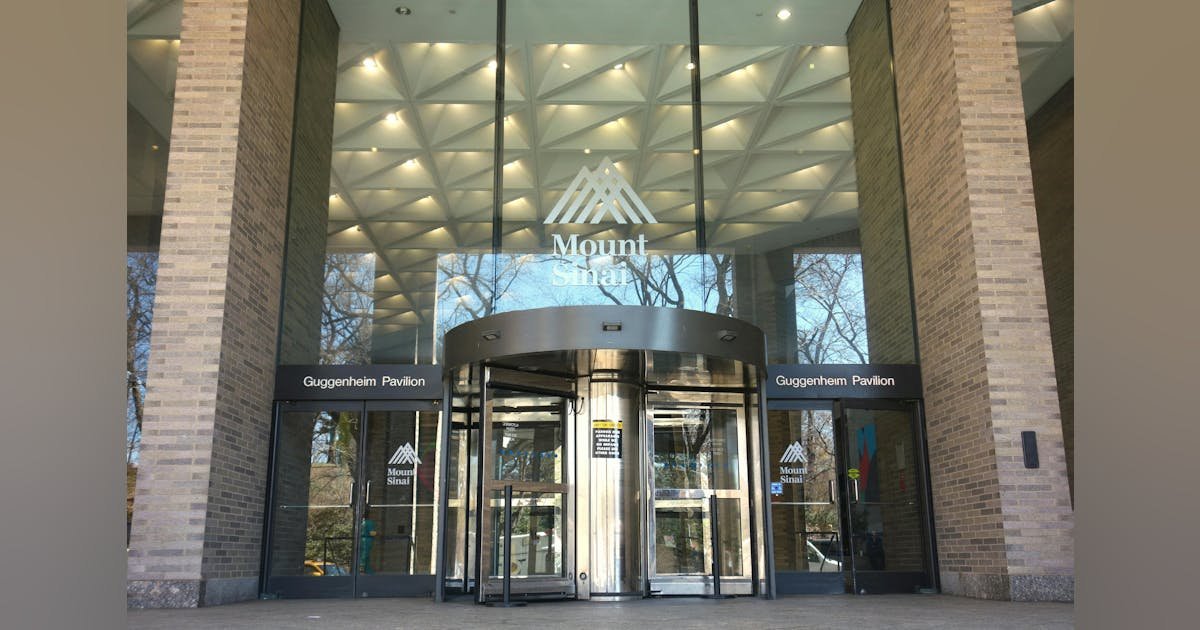
Mount Sinai Health System received the 2024 Hearst Health Award for its machine learning application, NutriScan AI, which enables hospitalized patients to more quickly identify and treat malnutrition.
The $100,000 award from Hearst Health and the UCLA SMART Health Center was presented June 4 at UCLA Health Data Day by Gregory Doane, M.D., president of Hearst Health.
Malnutrition is a highly prevalent condition that often goes undiagnosed in hospitalized patients and can significantly impact the course of recovery. The condition is associated with increased mortality, morbidity, risk of complications and length of hospital stay. Early detection and treatment with nutritional supplementation can prevent or reverse malnutrition, but standard screening tools lack accuracy and result in missed opportunities for intervention.
The Mount Sinai Health System launched a clinical data science team to develop a more reliable malnutrition screening tool. Using extensive historical cohort data, the team built a model with over 80 variables that significantly outperformed traditional rules-based models used in standard screening tools. Integrated directly into the electronic health record, NutriScan AI provides a way to accurately identify patients with a possible diagnosis. This allows registered dietitians to prioritize visits with these patients to confirm the diagnosis and begin treatment.
The Mount Sinai Health System has deployed NutriScan AI across six hospitals since 2019, resulting in increased resource utilization of registered dietitians, sustained improvements in malnutrition diagnosis rates, and a consistent return on investment. The Mount Sinai Health System is approximately 2.5-3 times more likely to identify malnutrition, contributing to increased reimbursement to hospitals and improved quality ratings of observed vs. expected outcomes.
“Receiving the Hearst Health Prize not only recognizes our efforts and provides resources to further this research, but also creates a platform to share what we learn and hopefully accelerate progress in other areas of medicine,” David L. Reich, MD, president of Mount Sinai Hospital and Mount Sinai Queens, said in a statement. “The development of screening tools like NutriScan AI is just one example of how artificial intelligence can help health care providers do their jobs more efficiently, but the possibilities are endless.”
The 2024 Hearst Health Awards competition received diverse submissions from across the United States, which were evaluated by UCLA judges and a panel of expert judges. Mount Sinai Health System’s programs received the highest overall score across six evaluation criteria, with particular recognition for demonstrated health impact and operational and financial sustainability.
Another finalist in the competition was The University of Texas MD Anderson Cancer Center, selected for their development of a data science pipeline in cancer research, specifically in the field of lung cancer. The team conducted research that shows the promise of deep learning’s capabilities in advancing cancer care and revolutionizing clinical trials, including identifying high-risk patients for lung cancer prevention, speeding up lung cancer diagnosis, and facilitating treatment decisions regarding personalized therapy for lung cancer patients.
The Hearst Health network includes FDB (First Databank), Zynx Health, MCG, Homecare Homebase and MHK. Hearst also holds a minority stake in precision medicine and oncology analytics company Aster Insights.
