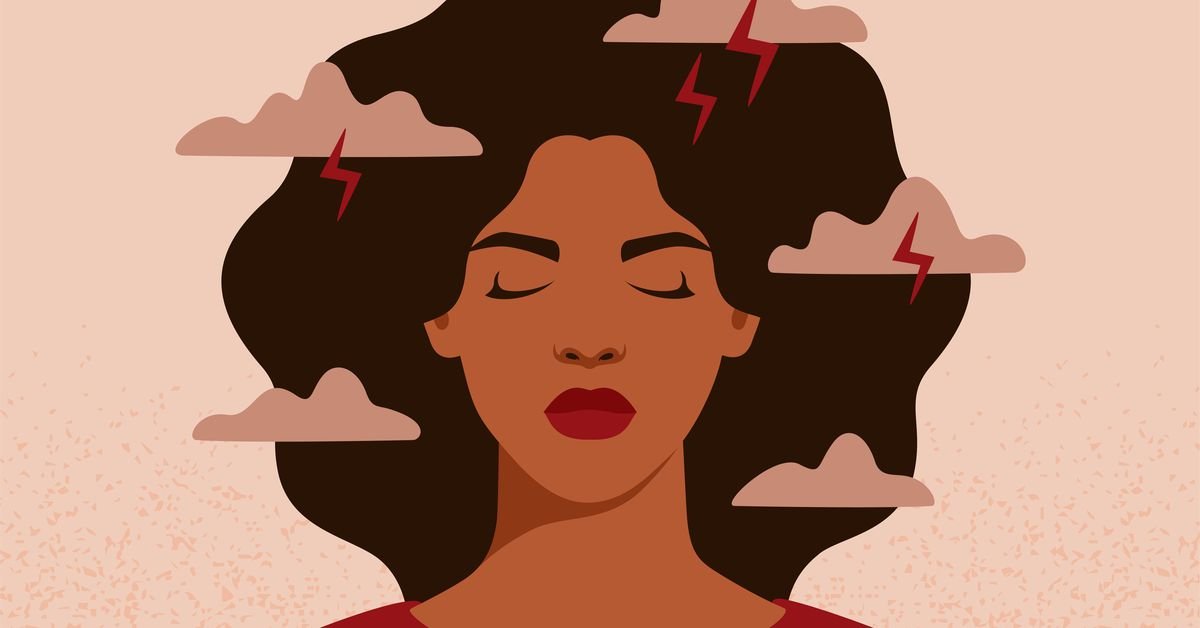
When you, like David H. Rosmarin, run a therapeutic practice called the Center for Anxiety, you encounter a variety of anxiety-related experiences. Sometimes, after speaking with a new patient, Rosmarin determines that their distress may not be related to anxiety at all, or may just be related to anxiety.
Rosmarin says that because anxiety intersects with so many other aspects of mental health, such as depression and substance abuse, many people are quick to attribute their mental distress to anxiety alone. Sometimes we mistake anxiety for something else entirely. He told his patients that he was not anxious at all, but was stressed. “Sleep eight hours a night for the next two weeks,” he says. “Come back and tell me how you feel.” I’ve tried this trick many times with stressed patients, and even with no treatment at all, their stress levels can drop by 50 percent after two weeks. ”
More Americans than ever before are seeking professional mental health treatment. Nearly a quarter of adults will visit a psychologist, therapist, psychiatrist or other mental health professional in 2022, compared with 13 percent in 2004, according to a Gallup poll. No longer stigmatized or discussed in private, mental health terminology, and terms related to mental health, trickled out of the treatment room and into casual conversation. “Narcissism,” “gaslighting,” and “borderline” are just as easily discussed at brunches and online as they are in clinical settings. Self-diagnosis based on simplistic videos and memes on social media can turn seemingly mundane behaviors and thought patterns into pathological ones.
Normalization of mental health is definitely a plus. More people can seek care and feel empowered to openly discuss their experiences. However, one academic paper says that due to increased awareness, “more people are confusing milder forms of distress with mental health problems.” Despite the wide cultural acceptance of therapy, we still don’t know what we’re really feeling. Without a nuanced vocabulary to describe these experiences, complex emotions are flattened into blanket terms. “We don’t have a sophisticated vocabulary,” Rosmarin says. “We label everything as anxiety.” If we don’t accurately define our emotions, we won’t know how to properly deal with them. Approaching your emotions with curiosity can improve your emotional intelligence.
What is anxiety?
Psychiatrist Tracy Marks says anxiety is both a normal reaction and a pathological experience. People often endure everyday levels of anxiety and nervousness before a first date or when they have to give a presentation at work. Physiological effects like sweating, increased heart rate, and butterflies in your stomach can occur. Temporary anxiety can be functional, a signal that you are alert to potential danger or preparing for a work presentation. Once the nerve-wracking event is over, the feelings often go away. In an increasingly anxious world where climate change, war, and the controversial upcoming presidential election are causing a lot of anxiety, “it’s normal to have some kind of dire reaction to things that threaten us.” “That’s true,” Marks said.
A sign of an anxiety disorder is that anxiety interferes with daily life. If the thought of going to a social event triggers physical symptoms such as vomiting or persistent anxious thoughts about how others see you, you may have social anxiety. Marks says it’s possible. Avoiding people, missing work or school, baseline fear (which may not be logical), and an inability to relax are some of the symptoms of generalized anxiety disorder. “One of the things she has with generalized anxiety disorder is that she worries about everything,” she says. She can worry about world peace. ” People with debilitating anxiety may want to work with a therapist to better cope.
People sometimes mistake anxiety for stress. Stress is when you have too many demands and don’t have enough resources, such as time or money, to outsource some responsibilities, Rosmarin says. “Anxiety often occurs in situations where resources are abundant,” he says. For example, even though you get enough sleep, have a supportive partner, and have a job you love, you may be haunted by worst-case scenarios that may never come true. Even fear can be confused with anxiety. Fear is a response to a concrete threat, whereas anxiety is caused by amorphous or future risks.
The importance of emotional intelligence
Nick Haslam, a professor of psychology at the University of Melbourne, said the boundaries between anxiety are blurry and subjective, so it’s no surprise that the average person would label all their upsetting experiences as “anxiety.” Masu. But we can improve our emotional intelligence, or our ability to recognize exactly what we’re feeling, Haslam says. According to Rosmarin, many people do not receive emotional education beyond elementary school, so our emotional vocabulary is limited. Feeling “disgusted” is a very different experience from feelings such as “pain,” “frustration,” “jealousy,” “overwhelm,” or “anxiety.”
The dualism of “good” and “bad” emotions actually confuses things even more. “I don’t understand what’s going on and how to react. I don’t know whether to run or fight or bite my tongue,” Haslam said. People who have trouble expressing their emotions verbally have an even harder time dealing with complex emotions, Haslam says.
Without deep knowledge of common human emotions, we can pathologize normal experiences. It’s very common to feel uncomfortable in a room with new people. But it’s not social anxiety, Marks says. Online and social media content created by non-experts can overplay anxiety and lead viewers to self-diagnose themselves with an anxiety disorder. Psychologist Juli Fraga says, “Just because you have anxiety doesn’t necessarily mean you have an anxiety disorder.” The root of situational anxiety, such as feeling anxious in social situations, may be relationship trauma dating back to unhealthy social interactions in childhood, Fraga says.
What is lost when all experiences become “anxiety”
Even if you’ve been diagnosed, labeling yourself with an anxiety disorder can make it more difficult to overcome your feelings. If anxiety is deeply ingrained in how you see yourself, you may use it as a crutch or excuse to avoid social situations, new experiences, and other potentially enriching events. “As soon as we ascribe some sort of noun label to ourselves, such as ‘I’m an anxious person,’ or ‘Anxiety is who I am,’ people tend to assume that there is something deep-seated and permanent about them and why. “There is,” Haslam said. Don’t interact with the world. ”
Avoidance is generally the wrong way to deal with anxiety, Haslam said. For example, you may believe that you have social anxiety and isolate yourself, which will only make your anxiety worse. Avoidance may provide temporary symptom relief, but it is not a long-term solution.
If we don’t have the appropriate vocabulary to describe our emotions, we lose the ability to intervene effectively, Rosmarin says. “Imagine sitting on the board of a sophisticated company that has a variety of projects, and you can sum up in one word the negative thing that’s happening in any of those projects. ” he says. Determining whether we are feeling stressed or anxious has a huge impact on how we move forward. It’s the difference between getting quality sleep and moving your body (an effective way to manage stress) and working with a therapist to tackle the causes of your anxiety.
How to define anxiety a little better
Getting to the root of your emotions requires some thinking. When it comes to anxiety, Marks says we need to consider how disruptive it is. Do you feel anxious in certain situations, or do they significantly interfere with your ability to perform daily tasks? For example, do you feel anxious in certain situations, or do they significantly interfere with your ability to perform daily tasks? If you experience very strong and ongoing distress about the safety of a loved one, you may want to seek professional help for your anxiety. If you can’t sleep and feel nervous during the exam, you may be feeling stressed. “perhaps [try] Whether it’s exercising more or trying to get as much quality sleep as possible,” says Marks. “It’s something you can do to better handle situations like this when they come.”
When you experience anxious feelings, Fraga recommends getting curious about what’s causing them. Think about what it is about parties that keeps you away from social gatherings. Maybe you don’t like talking to strangers. Again, ask yourself why. Perhaps you have had embarrassing rejections in the past. Anxiety does not tell the truth. Just because you’ve had negative experiences in the past doesn’t mean you’re doomed to repeat the same pattern or that you should be afraid of repeating the same pattern.
Rather than relying on labels to describe our feelings, we have an obligation to use a vocabulary as vast and complex as our own experiences. By explaining exactly what causes your anxiety, how it manifests physically, and when and how often it occurs, we can help you determine the exact form of support you need, whether it’s therapy or a conversation with a loved one. can be identified. That’s how we move forward.
It may help to depersonalize anxiety. Try saying to yourself, “Yes, I’m anxious, but it’s temporary and I can handle it. I’m actually pretty brave for being able to deal with it.” says Haslam. “I’m not just a broken person.”
Yes, I’ll give you $5/Month
Yes, I’ll give you $5./Month
Credit card, Apple Pay,
Google Pay.You can also contribute via