

Editor’s note: This is the first in a two-part series on applying the Bible’s understanding of darkness to life. Part 2 will be held next Monday.
darkness is power
When I turned over and reached for the clock next to my bed, it was 3am. I stare into the darkness, trying not to wake Judy, drifting into a state somewhere between waking and sleeping. I’ve been waking up in the middle of the night for years, but as I get older I spend more and more time awake.
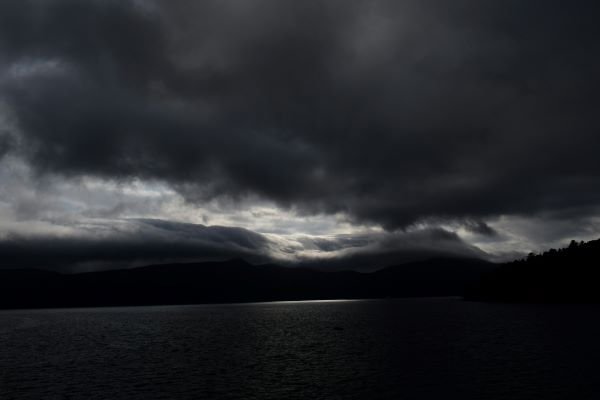
Many people define darkness as a lack of light. As I stare into the darkness night after night, I don’t know if the darkness is simply the absence of light. Darkness has substance and power. Space and time, which are clearly demarcated in the light of day, dissolve in the darkness of night. The maps and schedules that define my life disappear and I find myself unmoored and floating in the primordial waters of time and space. Memories float in my consciousness: yesterdays and old encounters, awkward moments, strained relationships, good things I wanted to do but didn’t. In the darkness of 3 a.m., I am keenly aware that my life has been destroyed.
I was scared to wake up every night. I felt that darkness was my enemy, enduring the onslaught of night and anxiously waiting for the morning light to release. But over time, my feelings changed. I began to realize that there is a unique light and a unique blessing in the darkness. It sheds light on the flotsam of my soul while also giving me time to examine the broken parts of my life. Like a kintsugi artist, I was able to take the pieces, gild them, and restore my soul vessel.

I don’t know if I would call the darkness “my old friend” the same way Paul Simon would, but I sometimes experience its dissolution as a time when darkness is restored and space is given for God. . This change in my understanding of darkness coincided with a change in my understanding of its Biblical meaning.
darkness is destruction and death
Growing up in a Reformed community, I heard numerous sermons and catechesis that encouraged us to imagine God as light and the world as caught in a struggle between the forces of light and darkness. I received it. My various mentors emphasized Bible verses such as:
All things came into being through Him, and without Him nothing came into being. What came into him was life, and that life was a light to all people. The light shines in the darkness, but the darkness could not overcome it (John 1:3-5)
This is the message we hear from Him and declare to you: God is light and in Him there is no darkness at all (1 John 1:5).
And there are no more nights. They don’t need lamps or sunlight. For the Lord God will be their light, and they will reign forever and ever (Revelation 22:5).
As a Calvin graduate, influenced by the teachings of Abraham Kuyper, I believe that I am called to join God in fighting the great, dark forces at work in various areas of the world and seeking end-time victory. felt. I adopted this understanding of cosmic warfare as my worldview and could not imagine darkness as anything other than a force opposed to light, a Biblical symbol of ignorance and deception that leads to destruction and death.
As I continued my research and dug deeper into the scriptures, I discovered that the scriptures’ depiction of darkness was multifaceted. In some passages darkness is portrayed negatively, as a force that seeks to overcome God’s light; in other passages, darkness is portrayed positively as God’s dwelling place and the cloak that allows for communion with the dazzling light of God. did.
darkness is the abode of god
Ancient believers believed that God is Sovereign, that His energetic presence is the source of all things, that His Word is the source of all things, both the world (Genesis 1-2:4) and the nation of Israel (Exodus 19-24). I understood that I created both. They saw that these two acts of his creation followed a similar pattern. Both depict darkness as God’s abode and cloak of protection from God’s radiance, and both depict God’s word as the means of creation.
Genesis 1-2:4 tells us that an unknown prophet (Moses, according to tradition) announced to the world what no one else could have witnessed: when the words and breath of God congealed to form the created order. This is a passage from a vision that reveals how it was born. This passage is an example of Hebrew poetry, where the repetition of key words links the lines and expands the meaning. The prophet introduces a vision with a description of the state of the world before God began speaking.
when God created in the beginning
Heaven And Earth,
And the earth was a formless void
And darkness covered the face of the abyss,
And the Spirit/wind of God blew over the waters (1:1-2).
The prophet sees three primordial “substances” that are all amorphous, omnipresent, and overlapping. The first substance is a water-like deep layer, which in subsequent lines is called a formless cavity, a deep layer, and water. The second substance is the darkness that covers the depths. The third entity is the Spirit/Wind of God that blows through the darkness and the water.
What is often overlooked in this depiction is the relationship between darkness and the Spirit of God. Darkness covers the waters and envelops the Spirit of God. The prophet describes darkness as the abode of God.
As the vision continues, the prophet sees God weaving this primordial darkness into the fabric of the created order.
Then God said, “Let there be light.”
And there was light.
And God knew that the light was good.
And God separated light from darkness.
And God called that light “day”
And the darkness he called night.
and the evening came
And the morning came,
First day (1:3-5).
Inspired by this depiction of darkness, ancient believers were convinced that God did not exist apart from the created order. God was with them throughout his life, hence the name Immanuel. From evening until night, they entered the abode of God. Ancient Israelites, like Jews today, recognized the importance of darkness by celebrating evening as the beginning of the day. In the darkness of the night, God may be present and appear to them in dreams and visions. God came to Abraham on a starry night (Genesis 15), Jacob had a dream of a ladder between heaven and earth (Genesis 28), and Joseph had a dream of hanging sheaves of grain. (Genesis 37) So he came to Elijah at night. The still small voice (1 Kings 19), the shepherds watching over their flocks at night (Luke 2), and the disciples when Jesus walked on the water at the fourth watch of the night. (Matthew 14:22 et seq.). Summary of Genesis 1:1-2).

In Exodus 19-24, Moses mediates a covenant between God and the tribes of Israel at Mount Sinai. God appears on top of the mountain with fire, smoke, thunder, and lightning. God’s glorious presence is consuming and intense, and Moses would be in mortal danger without the cloak of dark cloud to protect him. Moses enters the dark cloud where God lives, receives the law and commandments, and mediates the covenant between God and Israel.
And the glory of the Lord will appear,
It was like a consuming fire,
at the top of the mountain
in front of the people of Israel.
And Moses went into the midst of the cloud,
And he climbed the mountain.
And Moses was on the mountain
Forty days and forty nights (24:17-18).
darkness and worship
Ancient believers celebrated Genesis 1-2:4 and Exodus 19-24 as two separate but related acts of creation, and that these two acts were the foundation upon which Israelite worship was built. This became the basis for the development of the project. Both acts were remembered and reenacted in various liturgies performed in the Tabernacle and later in the Temple.
The Ark of the Covenant, the key to understanding the worship of the Israelites, was the center of the sacred space and the destination of all pilgrims visiting the Tabernacle and Temple. It represented the throne of God, the place where God rules and speaks the words that sustain the kingdom. God spoke ten words (the ten proclamations following “And God said” in Genesis 1-2:4) that created the physical structure of the world, and ten commandments that created the social structure of the nation of Israel. I gave it. Inside the ark were tablets of these commandments written by the finger of God.
The ark was placed in the tabernacle and later in the temple. Both sanctuaries consisted of two rooms. The outer sanctuary, called the sanctuary, contained the menorah and the table of holy bread, and the inner sanctuary contained the ark. This inner sanctuary was a place of darkness. God’s instructions to build the tabernacle made it clear that darkness was God’s desired dwelling place. God required that the Holy of Holies and Holy of Holies be covered with woven cloth and animal skins. This covering protected these rooms from the light of the sun, moon, and stars.
God also commanded that a woven curtain separate the Holy of Holies from the Holy of Holies. This curtain protected the ark from the light of the menorah in the sanctuary. God lived in the darkness of the Holy of Holies. At the dedication of the temple, Solomon said: I have built you an exalted house, a place to dwell forever (1 Kings 8:12-13).
The tabernacle and temple were the center of worship for the Israelites, and the liturgy brought pilgrims to the presence of God seated on the ark. Through the mediation of a high priest wearing a breastplate encrusted with jewels representing the tribes of Israel, the pilgrims entered the darkness of the Holy of Holies, where the boundaries of time and space melted. They returned to the place and time when God brought the world into existence and gave the Law to Moses. Believing that God was speaking to bring the world and nation back into existence, they returned home to start a new life.
darkness mediates the presence of God
Darkness is a major theme in scripture. We are most familiar with its negative portrayal as a force opposed to God, and less familiar with its positive portrayal. However, the Bible teaches that darkness is God’s abode and that God has woven darkness into the fabric of his created order. Evening is the door to God’s abode, and darkness is the medium of God’s presence. The scriptures affirm that I am a child of light and a child of night.

When you wake up each night and stare into the darkness, you experience something more than the absence of light, something more akin to power. This power reveals brokenness in my life, but it also gives me the opportunity for greater wholeness and deeper intimacy with God. In the darkness of the night, I found comfort and awe. It is a sign that I am entering the deep darkness of death, which is drawing closer and closer.
In the second half of this essay, we will explore more deeply what happens in the darkness of the night, specifically during what our spiritual ancestors called the “dark night of the soul.” I would like to think about a particular encounter that often floats in my consciousness, an encounter characterized by unresolved tensions. That was my encounter with my father.
