

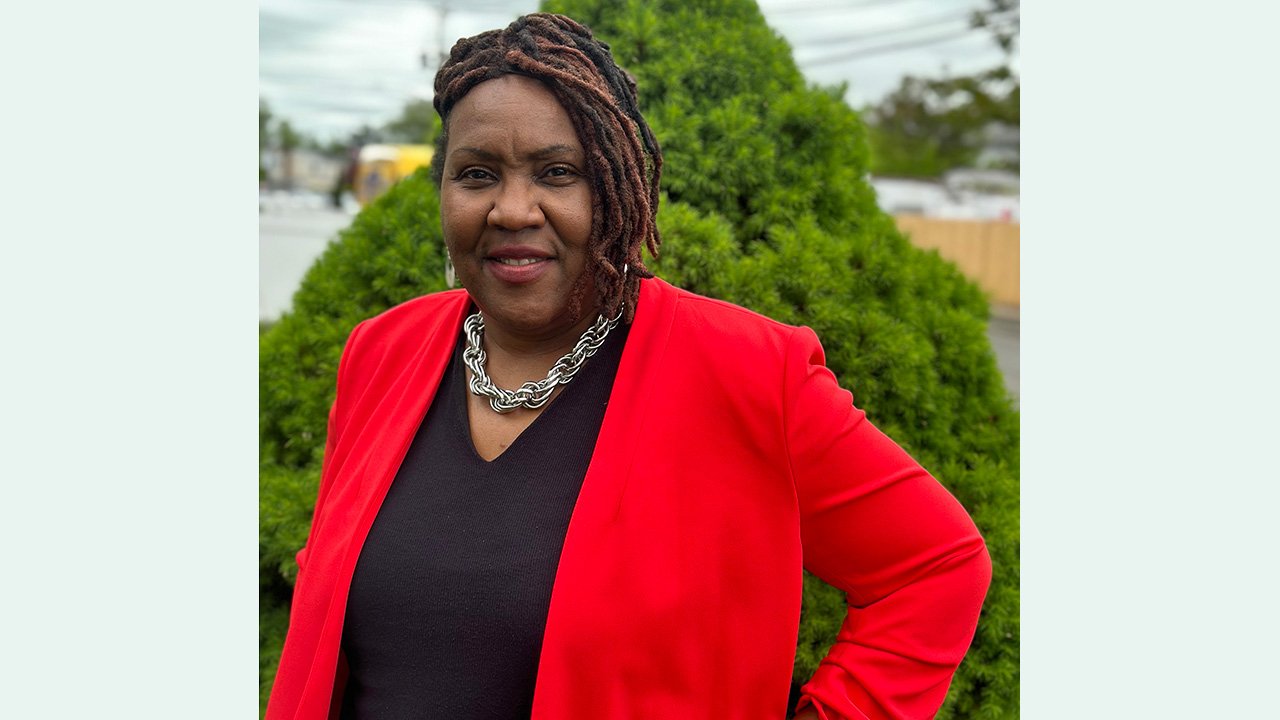
Throughout her 25 years in social work, helping people struggling with homelessness and drug addiction and those trying to regain custody of their children, Doreen Gibbs felt like something was missing, and at Fordham University she found the perfect fit.
“I’ve long felt that there needs to be a spiritual component when working with clients,” says Gibbs, who owns a senior living business and is working on a master’s degree in mental health counseling and spiritual integration. “In my personal work with clients, their spiritual lives are heavily tied to how they were raised.”
The program, offered through the Graduate School of Religious Studies and the School of Religious Education, offers a “fantastic” education in mental health and spirituality, and Gibbs believes it’s an area that will only become more in demand. “I think the field is only going to grow,” she said.
The Church is a “Second Home”
A New York City native, Ms. Gibbs is the granddaughter of Southern sharecroppers and remembers the prejudice her family faced after moving to the Rosedale neighborhood of Queens decades ago. She recalled the church as “a second home, a place where we could find support.”
She graduated from Baruch College, where she earned her MBA, and went on to earn a master’s in vocational rehabilitation counseling from New York University. Through her church, she came up with the idea to start SafeCircle, a company that provides services to seniors and caregivers in the New York City area about 12 years ago. She discovered the spiritual side of Fordham University while researching online and enrolled in the university’s degree program.
After graduation, she hopes to expand her company to serve women of color who have suffered from generational trauma and incorporate more spirituality into their services. Additionally, “I have a strong interest in bringing mental health to the forefront, especially within the Black church,” she said.
“I think churches are a good place to hold educational forums on mental health and normalize discussions about mental health. [it],” she said.
Standing on others’ shoulders
Key to her professional growth at Fordham was an eight-month internship at Faith Mission Alcohol Crisis Center in Queens, where she gained experience integrating spirituality into everyday care. She gained a “full understanding of the impact that alcohol and drug addiction has on the mind and body,” helping clients understand the impact of drug addiction on their lives and identify their triggers. “The change when they get sober is remarkable,” she said.
Like many of her classmates, Gibbs worked 20 hours a week at her internship while attending school full time, which was made easier by supportive and understanding professors. Her path to degree completion was also made smooth by the encouragement of her “church family” at Bethany Baptist Church in Jamaica, New York, and the support of her family, including her daughter and mother.
“When I got home in the evening, she came by and said, ‘I have a plate for you on the stove,'” Gibbs said.
She will remember them all at her graduation.
“When you walk across the stage, you’re actually walking on the shoulders of other people,” she says, “and if you’re fortunate enough to have that support, they’re graduating with you.”
Remember, on the evening of May 18th, the Empire State Building in New York will be lit up in maroon for Fordham University graduates.
