


Our diet plays an important role in how our bodies age, but the relationship between the two is much more complex than we thought.
Numerous studies in animals have shown that restricting calories increases lifespan. In fact, calorie restriction appears to reduce various signs of aging in humans as well.
“There are many reasons why caloric restriction may extend human lifespans, but this topic is still being researched,” said Dr. K., a postdoctoral fellow at Tulane School of Medicine and a Ph.D. in biobehavioral health at Penn State University. Waylon Hastings said in a statement. “One of the major mechanisms that extend lifespan involves intracellular metabolism.
“When energy is consumed within cells, the waste products produced during this process can cause oxidative stress, which can damage DNA and destroy cells. However, calorie restriction reduces the energy consumption of cells. When there is less waste, the cells don’t break down as quickly.”
To replace these worn-out cells, our bodies need to create new cells, and to do this they need to copy the DNA present in existing cells.
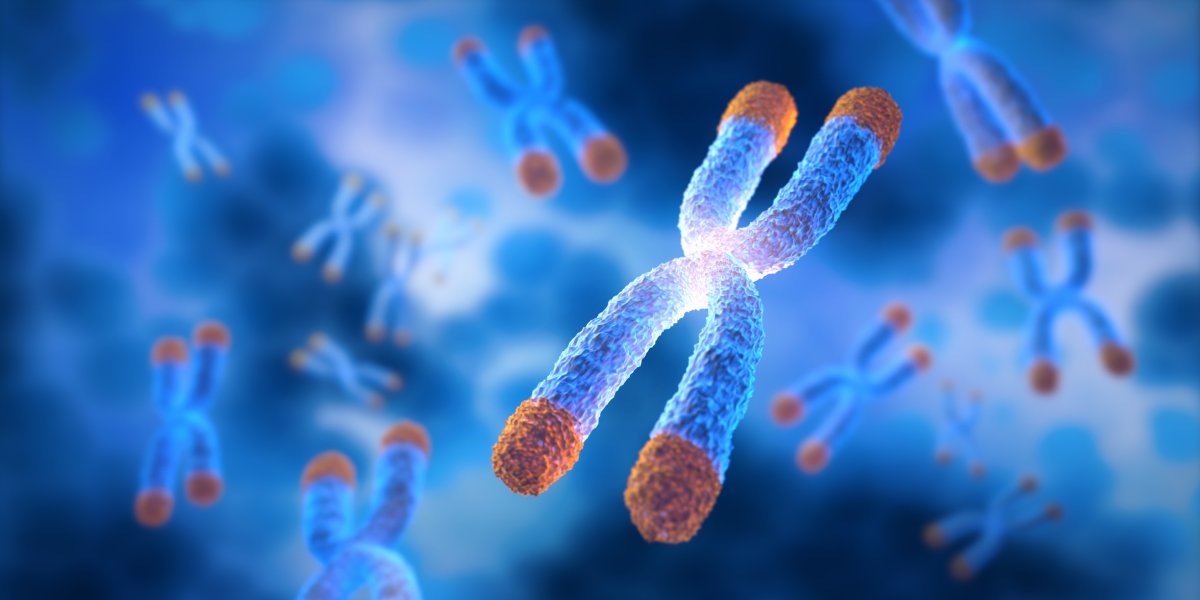
Our DNA is like shoelaces. Each chain has a molecular “cap” at the end that prevents it from fraying and tangling. These caps, called telomeres, shorten slightly each time DNA is copied and new cells are produced. Therefore, telomere length is a useful indicator of a cell’s biological age.
Peterschreiber.media/Getty
Age, stress, illness, diet, and genetics can all affect how often your cells replicate, and therefore how quickly your telomeres shrink. However, the effects of caloric restriction on human telomeres are less well understood.
To investigate these effects, Hastings and colleagues at Penn State collected data from the national CALERIE study, the first randomized clinical trial of calorie restriction in humans. The research team analyzed data from 175 participants after 24 months of calorie restriction.
“We hypothesized that telomere attrition would be slower in people undergoing caloric restriction,” study lead author Ihsan Shalev, an associate professor of biobehavioral health at Penn State University, said in a statement.
But what they discovered was not black and white. After a year of calorie restriction, participants actually lost telomeres faster than on a standard diet. However, after two years, once the participants’ weights stabilized, telomere loss began more slowly.
At the end of the two-year period, those on the calorie-restricted diet had approximately the same telomere length as those on a standard diet.
“This study shows the complexity of how caloric restriction affects telomere loss,” Shalev said.
Further research is needed to determine whether continuing caloric restriction for an additional year results in statistical differences in biological aging between participants. However, these results are ambiguous, and despite the complex relationship between calorie expenditure and telomere length, the CALERIE study shows that calorie restriction has other effects on human health, such as lowering “bad” cholesterol and blood pressure. It highlights many benefits.
Do you have a health concern? Let us know at health@newsweek.com. You can ask experts for advice and your story could be featured in an upcoming article. newsweek.
rare knowledge
Newsweek is committed to challenging conventional wisdom, finding common ground and finding connections.
Newsweek is committed to challenging conventional wisdom, finding common ground and finding connections.
