

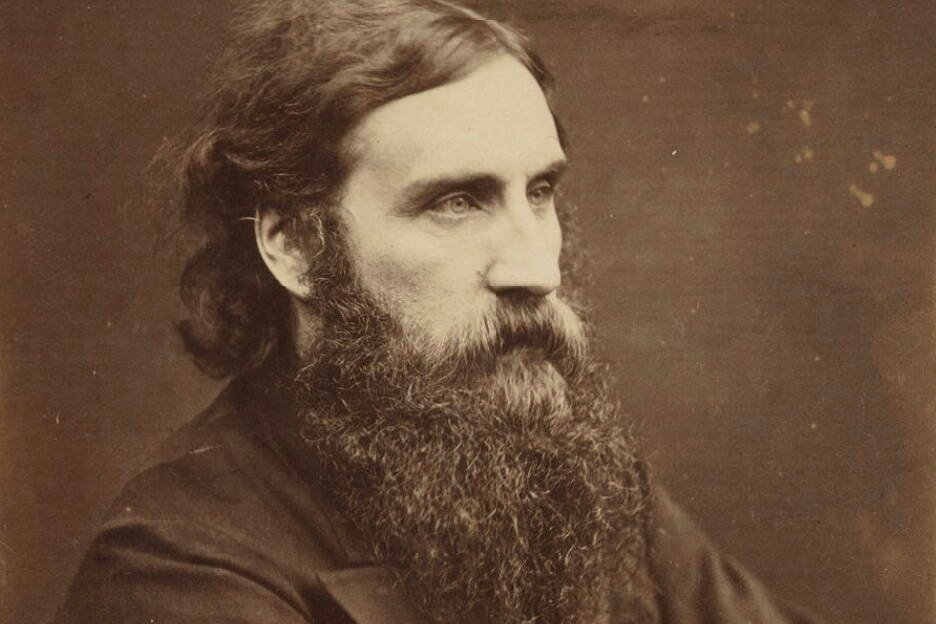
“I know nothing that gives me a greater sense of spiritual healing and cleansing than reading George Macdonald.” —CS Lewis.
I completely agree with CS Lewis. I am especially grateful to McDonald for beautifully and convincingly expressing his beliefs about God’s care and love for animals. A belief that I wholeheartedly share.
When I was a child, my mother read to me children’s books such as George Macdonald’s The Princess and the Goblin, The Princess and Curdy, and The Golden Key. Decades later, when I read these books to my children, they delighted me as much as they did when I was a child.
George MacDonald was born in Scotland in 1824. He received his master’s degree in chemistry and physics in 1845, but soon thereafter decided to dedicate his life to the service of God. He studied theology in London and became a congregational minister at the age of 26. After he served in the diocese for three years, he was effectively dismissed by the church’s elders for his “heretical” views. Their problem with MacDonald was primarily that MacDonald believed that God’s unconditional love and the possibility of salvation extended to all people, even unbelievers. He thought that God would eventually reconcile all creation to Himself, including animals (more on this below).
After losing his parish, MacDonald embarked on a prolific writing career that covered many genres, including novels, sermon books, children’s books, and fantasy. His work had a huge influence not only on C.S. Lewis, but also on many other writers, including J.R.R. Tolkien, Lewis Carroll, and Madeline L’Engle. MacDonald also helped and continues to help many people embrace Christianity, including CS Lewis, who was an atheist until he was 32 years old. Lewis wrote of the Scotsman: To the Spirit of Christ Himself. ”
For an introduction to Macdonald’s thought, we recommend George Macdonald: Anthology 365 Readings, edited by C.S. Lewis, and Hope in the Gospel, which provides an overview of his love-based, Christian-centered theology.
The underlying theme of George MacDonald’s genre-defying works is the inexorability of love. He continually affirms that God eternally loves and cares for all of creation, not just humans. Nowhere are his beliefs spelled out more clearly than in the final chapter of “Hope in the Gospel.” He makes a logical and persuasive argument that if humans believe in a loving Creator and believe that we are destined to live after death, why don’t other animals share this fate? Expand.
MacDonald refuses to believe that a loving God creates creatures only to have them live short and often painful lives before death and destruction. Like many people who believe in God and love and have been loved by dogs, cats, and other animals, I have always believed this intuitively. MacDonald believes that even wild animals and animals that some of us don’t seem to love, such as insects and reptiles, are loved and cherished by God and will not be forgotten even when their earthly lives are over. claims. Do we limit God’s goodness, love, and divinity so much that we think it is impossible?
Jesus said that no sparrow is exempt from God’s care (Matt. 10:30). If we believe this, if we believe that our Creator loves all of creation, then the way we eat, the way we test medicines and other products, the way we treat the created world, etc. It has profound implications for how we treat the creatures we share our planet with. general.
George MacDonald concludes “Hope in the Gospel” with words that hold great promise for all of us who mourn the loss of a beloved pet or the cruelty inflicted on the animals we share our world with. Masu.
“To those who look forward to the world to come, I say: “Pay attention to how you carry yourself toward creation, which will occupy with us the world to come.” ‘ To those who are troubled for his creatures, I say, ‘The Lord is mindful of himself and saves both man and beast.’
Amen.
• Tim Spengler attends Holy Trinity Episcopal Church in Juneau. He practices spiritual direction at his spenglerspiritualdirection.com and is also a hospice chaplain. “Living & Growing” is a weekly column written by a variety of authors and submitted by local clergy and spiritual leaders. Posted every Saturday on Juno Empire’s faith page.
