


ASTANA – Former Brazilian Senator and President of the Planetary Union (União Planetária), Ulisses Rieder de Rezende, has played a key role in strengthening relations between Kazakhstan and Brazil. The Planetary Union is a non-governmental, non-profit, civil society organization working on social, educational and environmental projects.
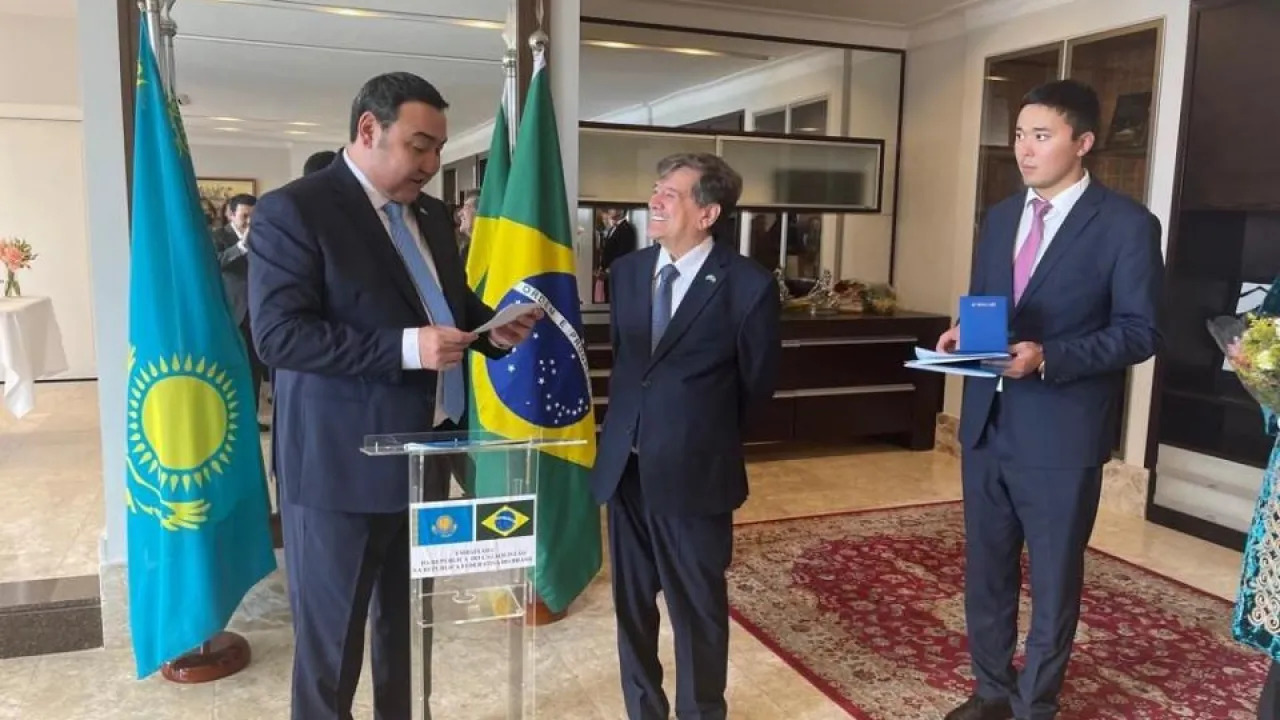
The Embassy of the Republic of Kazakhstan in the Federative Republic of Brazil congratulates the Brazilian politician, Honorary President of the Brazilian Planetary Union, Chairman of the Kazakhstan-Brazilian Friendship Forum and former Senator. Ulises Riedel de Resende About the Higher Awards of the Republic of Kazakhstan. Photo courtesy of dknews.kz
Last year, Riedel was awarded the Order of Dostyk 2nd Class by decree of President Kassym-Jomart Tokayev in recognition of his contributions to strengthening and developing relations between Kazakhstan and Brazil.
In an interview with The Astana Times, Riedel spoke about the union’s goals, notable events, its partnership in Kazakhstan, and how it navigates the intersection of media, spirituality and social responsibility in its professional endeavors.
The Union’s Philosophy and Mission
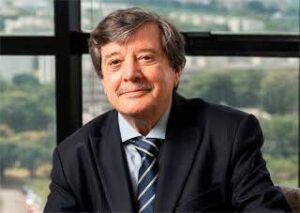
Ulises Riedel de Resende. Photo credit: ncst.org
Founded in 1997, the Planetary Federation aims to build a “new model of virtuous civilization” to make life more beautiful through love and universal brotherhood.
“To achieve this goal, our organization strives to shape the collective consciousness of humanity and ethically uplift the world spirit through various projects. The organization’s main activity is to support the global movement for peace around the world,” Riedel said.
Riedel emphasized the union’s philosophy of dialogue and understanding, pointing out that ethical values are achieved, not imposed..
“The organization advocates that action should be taken to conquer hearts and minds with love, avoiding criticism and confrontation and respecting all existing understandings,” he said. “It works to promote interreligious and intercultural dialogue, aiming at world peace, harmony among nations and international cooperation.”
Communicating ethical values
Riedel also described Brazil’s TV Supren, an educational and cultural television channel that aims to support the global movement to renew social structures and ensure citizen solidarity.
“Its main objective is to spread good news, educational, cultural, philosophical and self-awareness content that stimulates dialogue and reflection through inspiring cases and heart-warming stories, encouraging good behaviour,” he said.
TV-Supren, who launched their YouTube channel in 2011 and now have nearly 100,000 subscribers, creates content that is aligned with the ethical and humanitarian values of Planetary Union, and stands out in Brazil for their commitment to high values and building a moral and proactive society.
“TV-Supren focuses on noble themes such as non-partisan politics, spirituality, health, culture of peace, self-awareness, human development, the environment and the animal kingdom,” Riedel said. “Its programming promotes social welfare, ethical and moral education, and dialogue between different individuals, cultures, nations and religions.”
Strengthening bilateral relations
The Planetary Federation has participated in related events such as the Conference of World and Traditional Religious Leaders in Kazakhstan and the recent “Our Common Home” Roundtable in Rome.
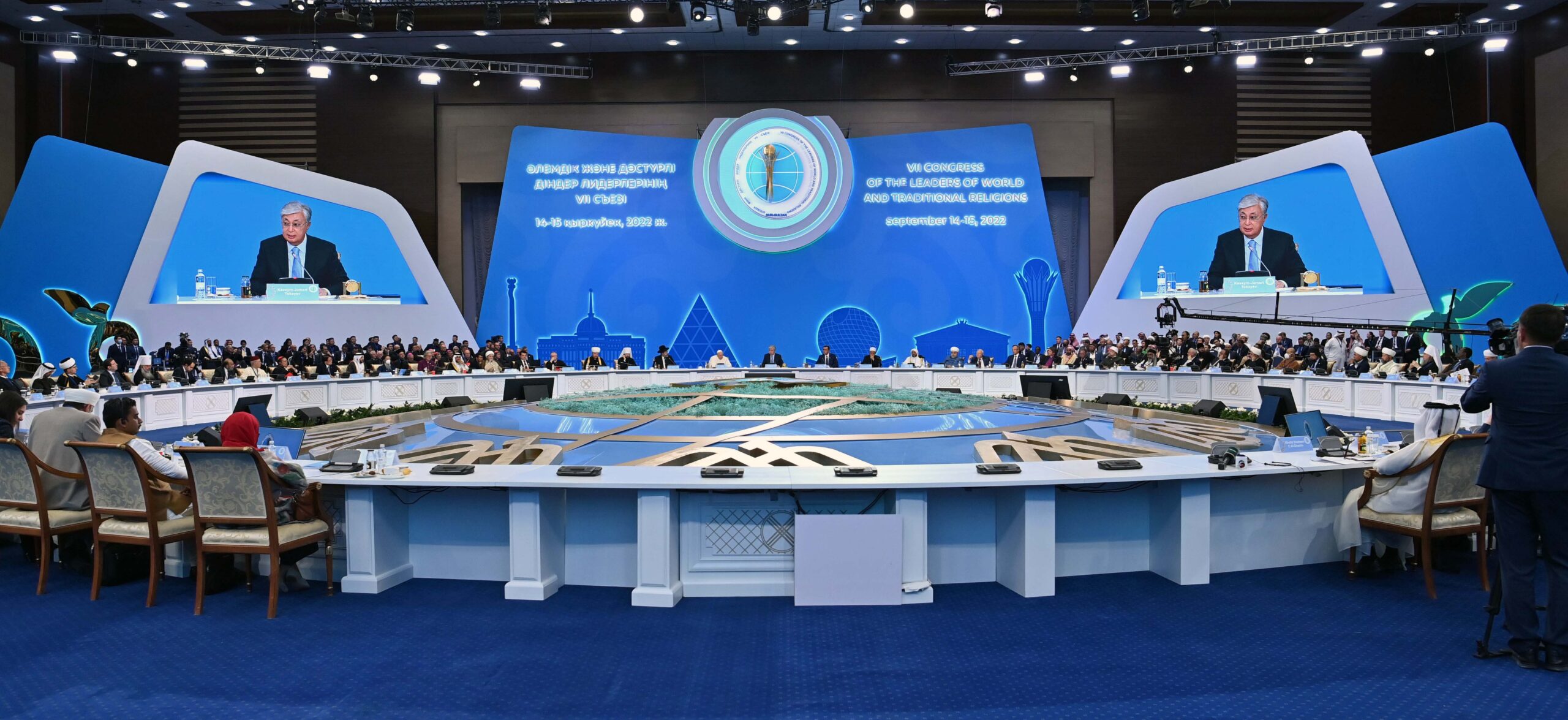
Kazakhstan’s President Kassym-Jomart Tokayev delivers a speech at the closing ceremony of the 7th Congress of Leaders of World and Traditional Religions on September 15, 2022. Photo credit: Akorda News Agency
In 2018, Riedel attended the conference and highlighted Kazakhstan’s work in global security, including on nuclear disarmament and hosting events for peace and stability.
“These events highlight the importance of a platform where religious and community leaders can share views and work together to solve global problems such as religious intolerance, social injustice and environmental degradation,” he said.
Inspired by his participation in a working group for the Secretariat of the Conference of Leaders of World Religions and Traditions in 2010, Riedel wrote a book called Spiritual Ecology: A Genealogy of the Soul, which has been published in Portuguese and English.
He also mentioned the World Spiritual Forum held in Brazil in 2006, which was well-received and featured prominent speakers from both Japan and abroad.
“Such events should be increasingly promoted by society as they help explore harmony among different religions, traditions, customs, national and philosophical ideas,” he said.
The Union’s main initiative in Kazakhstan was the 2023 agreement with the Nazarbayev Center to work for world peace. The partnership promotes understanding and cooperation between different cultures and religions and addresses issues of world peace and cooperation. The partnership resulted in the “Science of Peace” project, which brings together leading universities and talented people to promote research and publication on peace.
“Through scientific knowledge, we are actively contributing to the construction of a new paradigm of civilization based on virtue, decency, dignity and humanism,” Riedel said. “The plan is to establish an interdisciplinary research center within the university, providing a comprehensive space for reflection and concrete action for peace.”
The Kazakhstan-Brazil Friendship Forum, established in 2022, will strengthen bilateral cooperation, promote Kazakh culture and traditions in Brazil and enhance bilateral relations.
“These activities not only foster understanding, but also develop practical solutions to global challenges and strengthen ethical and inclusive thinking,” Riedel said.
Integrating media, spirituality and social responsibility
Riedel emphasized that navigating the intersection of media, spirituality and social responsibility requires a continuous pursuit of integrity and ethics in all communications and endeavors.
“I am a firm believer in the transformative power of media – it has the power to change people’s minds, positively influence society, spread high values and inspire the creation of a more just and compassionate world,” he said. “We strive for truth, transparency and honesty, eschew sensationalism and negativity, highlight inspiring stories, examples of good practice, content that encourages reflection and self-awareness, and demonstrate the intersection of media and spirituality.”
Social responsibility is another fundamental pillar, according to Riedel, and the company uses the media to address social and environmental issues to promote awareness and positive action.
“Environmental education, social inclusion, human rights and social justice focus are at the heart of our programming. We provide a platform for the expression of diverse opinions and perspectives, promoting mutual understanding and respect among communities and contributing to building a more harmonious society,” he said.
