

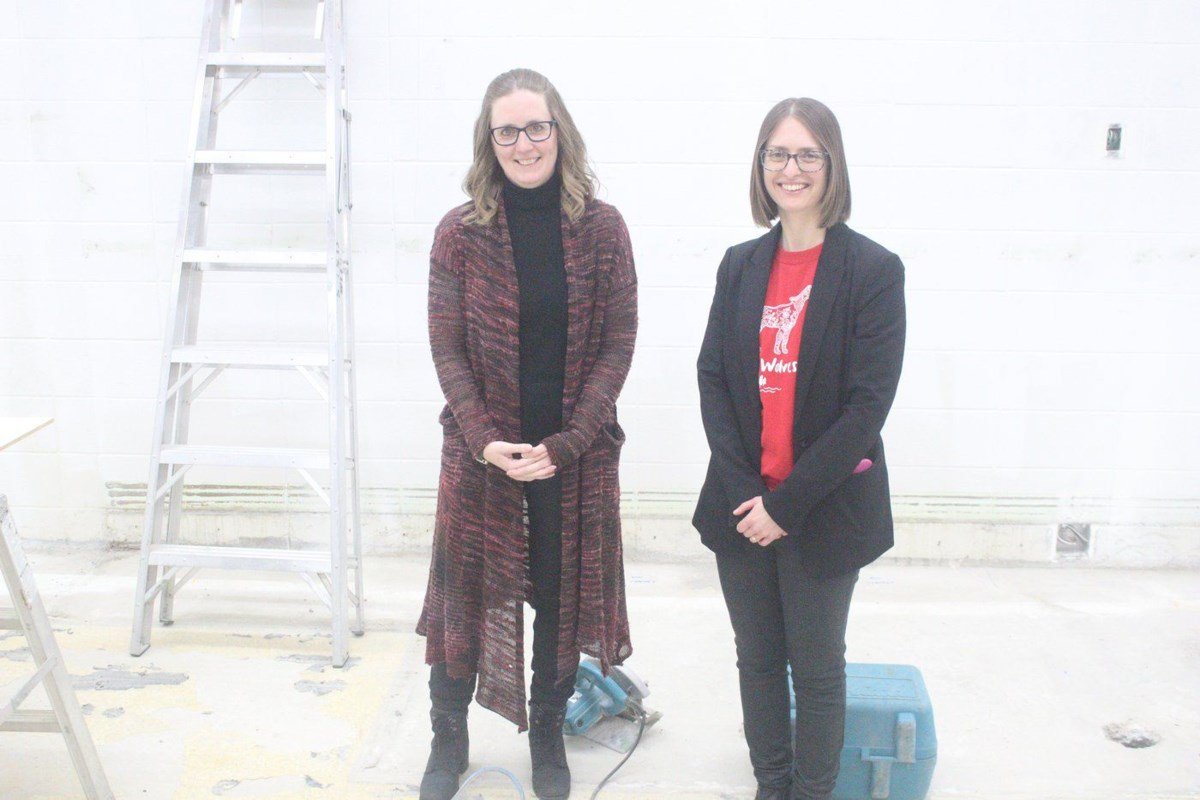
The cooking classes will benefit from the prize money.
PRINCE ALBERT — John Diefenbaker School in Prince Albert was recently awarded $15,000 as one of 10 schools selected in this year’s Mosaic School Nutrition Challenge.
The funding will allow the school to purchase commercial appliances, expand its practical and applied cooking program, and offer cooking classes to students. The school is converting underused space into a new kitchen and study area.
Principal Jenna Cross said the project has been several years in the making.
“I think we’ve had this plan in the works for a while, but it’s finally been realized and accomplished in the second half of this fiscal year,” Cross said. “We started working on it in earnest in December, January, and now we’re really at the stage of making it a reality.”
The grant will allow the school to start preparing the kitchen next autumn instead of January. Deputy Principal Angela Yeaman said the idea had been a dream four years in the making.
“This conversation probably started within the department four or five years ago,” she said.
“That’s how much of a difference this money means. When you think about how it will impact our children and families and also our staff and what they will be able to provide in our buildings, the impact is enormous.”
Yeaman said the money will really help fill in the funding gap. She said renovations to the facility have already begun and the school division has done a great job with the equipment.
“They’ve done the demolition work, they’re doing the cabinetry, so those are all departmental issues, but it’s the fit-out piece that we’ve had to plan for,” she explained.
“Money to build commercial appliances, tables and chairs, pots and pans. Otherwise, we’re just left with an empty shell that can’t be utilized because it doesn’t have anything in it that we need for programming.”
The new space will be home to nutrition programs: the school will be able to run its breakfast program, Friday cafeteria program, Feeding Our Futures program and school-wide Christmas dinner in the space.
“Food can be stored there, food can be prepared there, food can be delivered from there,” Yeaman said.
Cross said the renovations will also allow other spaces not being used for their original purposes to be put to proper use.
The renovated space includes a full kitchen, storage, and study space within the kitchen. Currently, students help distribute lunch and run the cafeteria. The new space allows everything to be stored in one area, and cafeteria work takes place at tables in the library.
Cross said the new space will also support staff because everything will be in one place.
“If you keep it in a neat, organized place, everyone knows what it’s for and why it’s there, and it helps you run it more efficiently,” Cross says. “That’s huge in terms of the efficiency of the building.”
Yeaman applied on behalf of the school, and she said she was not aware how many applications the program received.
“I’m not going to say you won’t be pleasantly surprised when you receive it. We put a lot of thought into this application,” she said.
Yeaman said the school can’t make plans to implement the grant portion unless the renovation department is ready. Yeaman said it’s a combination of planning and timing.
“I had thought about applying in the past but the timing was bad as I also needed to prepare for execution,” she added.
While the funding is a welcome addition to the school, Yeaman explained it will only cover a portion of the costs. The next step, she said, is to raise funds and seek community support.
“We’re still about $15,000 short of being fully funded to start the school year next fall with a fully equipped, ready-to-go kitchen,” she explained.
“We get a bit of funding from the school and then we go out into the community to see if businesses and individuals in the community can pitch in with grant funding to help us give JD a fully equipped kitchen before the new school year starts.”
Cross said the educational component is also important because teachers can offer a greater variety of unique learning activities in the space.
“There will be a lot more food-based learning activities on offer in both courses and across the various groups at the school. For example, we will be able to teach children how to prepare food,” she said.
Cross added that it will have a big impact on the community as children learn to prepare meals.
“Thinking about older kids is a huge factor,” she said. “If they’re preparing more meals, what does that mean outside of school?”
“That’s something we can support with that learning right now, so I think that’s a big part of it as well,” she added.
The couple thanked Mosaic and the SSBA for their financial support.
“This has really made it possible, and it’s happened a lot sooner than we expected, so we’re really grateful,” Cross said.
“We’d like to thank the school district, without their support this would not have been possible,” Yeaman added.
The Mosaic School Nutrition Challenge is a grassroots movement to help improve student nutrition. Formerly known as the Mosaic Extreme School Makeover Challenge, the program was launched in 2006.
Schools from across the province submitted projects to compete for a total prize pool of $150,000 provided by Mosaic. Schools receiving grants this year are governed by the Horizon, Isle à la Crosse, North East, Prairie Spirit, Prairie Valley, Regina Catholic, Regina Public, Saskatchewan Rivers and Saskatoon Public school boards, as well as the Meadow Lake Tribal Council.
The program began in 2006 to encourage grassroots efforts to help improve students’ nutritional status.
“As we enter our 18th year of the Mosaic Challenge, we continue to see great ideas and initiatives emerge,” SSBA President Jamie Smith-Windsor said in a statement. “We’re grateful to Mosaic for their continued efforts.”
MichaelOleksin@paherald.sk.ca
