

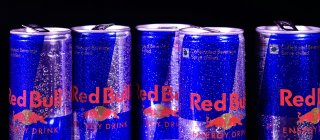
Yes, world champion Formula 1 driver Max Verstappen drinks Red Bull. How could he not? After all, he drives for the Red Bull Racing team! Max has said that he sometimes downs six cans of energy drink during a race weekend, but he has not revealed whether he drinks it just before a race to get an extra boost of alertness. However, there are plenty of athletes across a range of sports who rely on energy drinks to get a boost. But they are not the primary target of marketers. The ads are mainly aimed at young people who want a vibrant, energetic lifestyle and identify with the world-class athletes and teams sponsored by energy drink companies. Are these young people getting something more than they bargained for? Like an increased risk of sudden cardiac arrest? Some studies suggest so.
As with many other lifestyle interventions, the consumption of energy drinks becomes a risk-benefit analysis. In nutrition, the term “energy” usually refers to the caloric content of a food or beverage. This is not the case with “energy drinks”. These drinks are designed to provide mental and physical stimulation beyond their caloric content, mainly because they contain large amounts of caffeine, between 80 and 300 mg. Often, another source of caffeine, guarana, is added, along with other substances of questionable importance, such as taurine, glucuronolactone, B vitamins, carnitine, inositol, yerba mate, cola nut, milk thistle, ginkgo biloba, and ginseng. They usually contain large amounts of sugar, although some are artificially sweetened. There is no doubt that the main “energizing” ingredient is caffeine, about the same amount as in two cups of coffee.
Do these drinks really deliver on their promise of increasing mental and physical energy? As is often the case with nutrition research, there is no clear answer. Some studies show benefits, others don’t. The most frequently cited positive study dates back to 2001. Researchers from the University of the West of England conducted tests on 36 university students measuring mental focus, reaction time, memory, physical endurance, and performance. There was a slight improvement in all categories after drinking 250mL of Red Bull compared to a flavored carbonated drink used as a control group. Other studies have documented improved performance in cyclists and improved reaction times in a group of fatigued volunteers using a driving simulator. Meanwhile, female student volunteers from the University of Dammam in Saudi Arabia showed no improvement in any parameter in a standard treadmill test after drinking an energy drink. Top Costa Rican volleyball players who underwent a range of performance tests also showed no improvement. Overall, the evidence that drinking energy drinks improves mental or physical performance is unconvincing.
Now, the downside. Energy drinks can increase heart rate and blood pressure, which is not usually a problem for most people, but could be a risk for those without diagnosed heart disease. The effect on the heart seems to be greater than that of caffeine alone, and other ingredients such as taurine and glucuronolactone may also play a role. In 2013, doctors at the McGill University Health Centre reviewed published literature going back to 1980 for cases where heart attacks, serious arrhythmias, and sudden cardiac death were linked to energy drink consumption. They found 17 cases. Admittedly a very small number compared to the number of energy drink consumers, but still of concern, as only one case had evidence of previous mild heart disease. Most cases involved large intakes, about three cans consumed in a short period of time before the event. In three cases, energy drinks were consumed with vodka, a combination that increases the risk.
A recent study from the renowned Mayo Clinic in Minnesota backs up these findings. Doctors looked at the medical records of 144 patients who survived sudden cardiac arrest caused by arrhythmia and found that seven had previously consumed energy drinks. Genetic testing revealed that five of the victims had undiagnosed conditions that predisposed them to arrhythmia. Again, the energy drink-related case count (5%) of the 144 sudden cardiac arrests is a small but statistically significant number.
Adding further concern, a paper published in the Journal of the American Heart Association in 2019 reported the cardiac effects of 34 healthy young volunteers drinking 950mL (two large cans) of either of two types of energy drinks. Electrocardiograms were taken and blood pressure monitored. An abnormally long time for the ventricles to relax after the heart contracts, the so-called QT interval, was recorded. Such a long time is associated with an increased risk of arrhythmias and sudden cardiac death. The subjects’ blood pressure was also found to increase, which was not unexpected with such high caffeine intake. Although the case numbers in all these studies are overall small, the consistency of the results is enough to raise concerns about energy drink consumption, given that a significant proportion of the population is known to have undiagnosed genetic risk factors for heart disease.
To further complicate matters, it’s not just heart attacks that have been linked to energy drink consumption. Researchers at Newcastle University in the UK reviewed 57 studies involving 1.2 million children in 21 countries and concluded that energy drink consumption is associated with poorer sleep quality, lower academic performance, and an increased risk of anxiety, depression, and attention-deficit hyperactivity disorder (ADHD). People who consumed energy drinks frequently were also more likely to drink alcohol and smoke. As a result, many countries have banned the sale of energy drinks to people under the age of 18.
Where does all this lead us? As with most nutritional issues, it’s a bit confusing. We can certainly live quite comfortably without energy drinks, but they’re not going away. There’s too much money involved. We’re looking at a multi-billion dollar industry. The risk is minimal for the majority of the population, but how minimal is still an open question, since heart attack victims aren’t necessarily asked about what they were ingesting. Additionally, there’s the issue of increased risk for those with a genetic predisposition to arrhythmia, although many may be unaware of the condition. Also, the effects of ingredients other than caffeine in energy drinks on the heart need to be further investigated. At the very least, they should be required to list the exact amounts of all ingredients on the label. Aggressive marketing targeting young adults and promising an energy boost has certainly boosted sales. I’m sure it will also increase emergency room activity.
Joe Schwartz
