

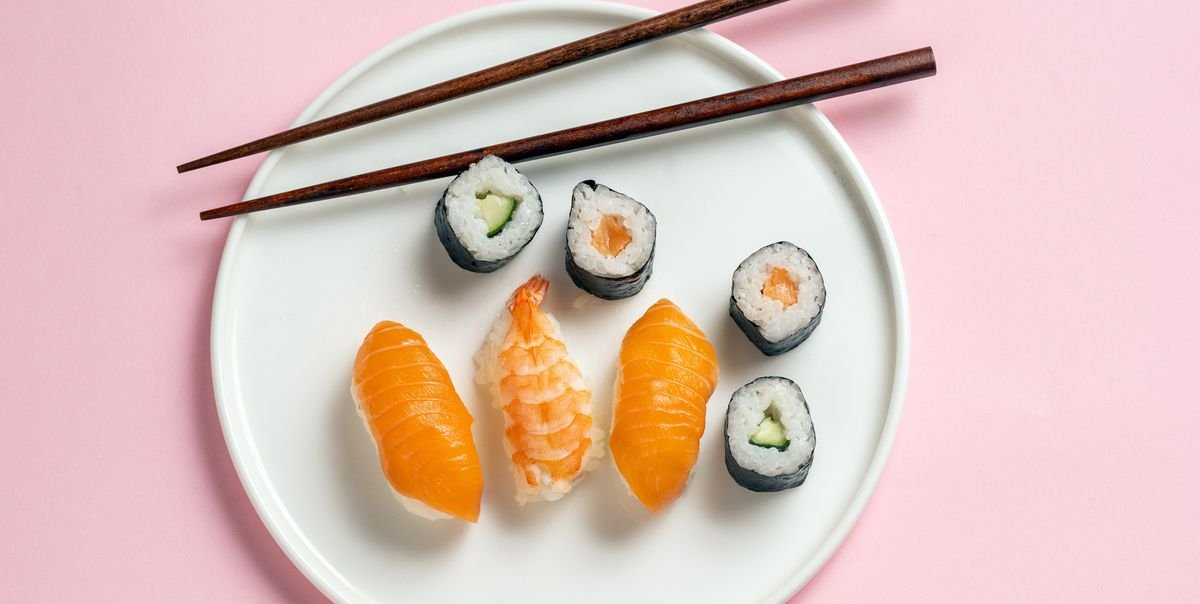
Certain foods have an undeniable reputation for being healthy, but it can be hard to know if that reputation is justified, which leaves you wondering if what you’ve heard is true. Case in point: is sushi good for you?
The answer, like most things, is a little complicated: “Sushi can be a healthy choice, or it can fall into the fast food category,” says Christy Brissett, MS, RD, owner of 80 Twenty Nutrition in Laguna Beach, California.
Meet Our ExpertsDeborah Cohen, DCN, RDN, Associate Professor, Department of Clinical and Preventive Nutrition Sciences, Rutgers University School of Health Professions; Christy Brissett, MS, RD, Owner, 80 Twenty Nutrition, Laguna Beach, California; Tara Gidus Collingwood, MS, RDN, Owner, Tara Gidus Nutrition Consulting, Orlando, Florida;
A nutritionist explains what to expect nutritionally when eating sushi, and how to make sure the sushi you eat is a healthy choice.
Is sushi good for you?
“It depends on what you order,” Brissett said.
“A salmon avocado roll is around 300 calories and is packed with heart-healthy fats and protein, while a shrimp tempura roll is over 500 calories and high in inflammatory fats thanks to the deep-fried shrimp and mayonnaise,” Brissette says.
Eating fried foods regularly also increases your risk of heart disease and obesity, she points out, so eating tempura rolls all the time isn’t a healthy choice. But if you incorporate tempura rolls with non-fried fish and vegetables into your diet, sushi could be a healthier option.
Does sushi help you lose weight?
Sushi may help you lose weight, but it’s not guaranteed. “Sushi is usually eaten in very small portions — about 0.5 to 1 ounce of fish on top of sushi rice, with about 40 to 60 calories. Small portions allow you to control your calorie intake,” says Deborah Cohen, PhD, associate professor in the Department of Clinical and Preventive Nutrition Sciences at Rutgers University’s School of Health Professions. Rice also contains fiber, which may make you more likely to feel full after eating it, says Cohen.
But sushi is also loaded with calories. Cohen points out that a cream cheese Philadelphia roll can have 300 to 500 calories per roll, while a firecracker roll can have 400 to 600 calories per roll. “In general, most rolls that don’t have cream cheese or mayonnaise-type sauces are relatively low in calories,” Cohen says. “The bottom line is that eating sushi won’t make you lose weight, but it can be a healthier option compared to many of the options offered by fast food and chain restaurants.”
Sushi nutritional information
There are many different types of sushi rolls, but one of the most popular is the California roll. According to the United States Department of Agriculture (USDA), eating one California roll provides the following nutritional value:
calorie: 28
protein: 0.87 g
fat: 0.2 grams
carbohydrates: 5.5 grams
fiber: 0.3 grams
sugar: 0.6 grams
(Of course, keep in mind that most people eat six pieces per sushi roll in one sitting, sometimes more).
What is the healthiest sushi?
There are plenty of healthy sushi options out there. Cohen lists some healthy sushi rolls, including California rolls and tuna rolls, adding, “Vegetable, salmon and rainbow rolls are all healthy options.”
Brissette loves the salmon avocado roll: “It’s a great choice because you’ll get protein and heart-healthy omega-3 fats from the salmon, and monounsaturated fats, fiber, folate and potassium from the avocado,” she says.
Making it with brown rice and using reduced-sodium soy sauce as a dip makes it even healthier, she says.
The health benefits of sushi
There are several health benefits to eating sushi.
An easy way to eat fish
Although many health organizations recommend including fish in your diet, it’s not a common food in the diet of many Americans. For example, the American Heart Association (AHA) recommends eating fish two times a week (with an emphasis on oily fish).
“Sushi can help you meet the recommended amount of fish consumption two to three times per week,” says Brissett. According to the U.S. Food and Drug Administration (FDA), a typical serving of fish is 4 ounces.
May help reduce inflammation in the body
The fish in sushi contains omega-3 fatty acids, which “may help reduce inflammation,” says Tara Gidus Collingwood, MS, RD, owner of Tara Gidus Nutrition Consulting in Orlando, Fla. According to the National Institutes of Health (NIH), inflammation in the body is linked to many serious health conditions, including autoimmune diseases, cardiovascular disease, and gastrointestinal disorders.
“Ginger, wasabi and nori (the seaweed that fish is wrapped in) are all great antioxidants,” Collingwood says.
Good for your heart
Choose oily fish like salmon, tuna, and mackerel to get EPA and DHA, “which are heart-healthy omega-3 fatty acids that help lower triglycerides and blood pressure,” says Brissett.
May Boost Bone Health
Oily fish “is a great source of vitamin D, which supports bone health and reduces inflammation and supports the immune system,” Brissett says.
The potential risks of eating sushi
When it comes to sushi, there are a few things to keep in mind.
It may cause food poisoning
This is one of the biggest risks from eating sushi: “There’s always a risk of food poisoning when eating undercooked or raw fish,” Cohen says. According to the Cleveland Clinic, this includes the risk of Salmonella infection, Vibrio vulnificus, and parasitic tapeworms.
May cause blood sugar spikes
“Many of my customers don’t realize that a typical sushi roll has about a cup of rice in it,” Brissette says. “The rice is packed so tightly together to make the roll that it’s hard to tell how much is in it.”
Sushi is often made with white rice, which can cause your blood sugar levels to spike and crash, says Brissette, “which can leave you feeling hungry, weak, cranky and tired,” she adds.
Mercury risk
Mercury is a toxic metal found in most types of fish, and consuming high amounts of it can make you sick, Collingwood says. “If you eat a lot of swordfish or tuna, mercury can be a concern,” she says. “If you eat mostly salmon, shrimp, and other white fish, the mercury content is low.”
summary
Overall, nutritionists say sushi can be part of a healthy diet. “Sushi can fit into a healthy diet,” Cohen says. If you want to eat the healthiest sushi possible, Brissett recommends avoiding fried rolls or rolls with cream cheese. You can also try sushi made with brown or black rice for more fiber, she says.
But overall, sushi is a healthy choice because it’s relatively low in calories and fat and contains protein, Cohen says.
Collin Miller is a freelance writer specializing in general health, sexual health and relationships, and lifestyle trends, and has written for Men’s Health, Women’s Health, Self, Glamour, and more. He has a master’s degree from American University, lives by the beach, and hopes to one day run a Teacup Pig and taco truck.
