

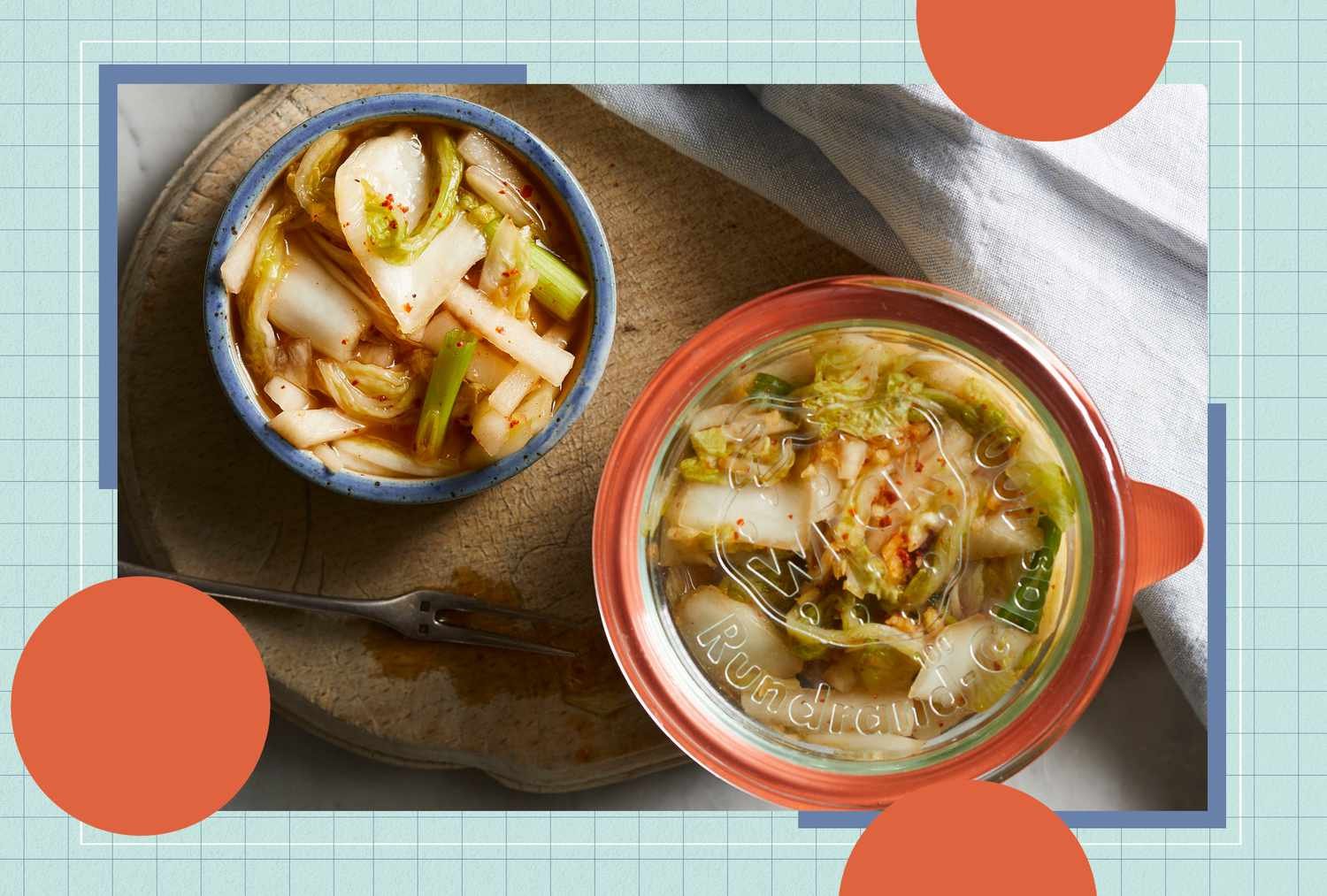
Kimchi, a traditional Korean fermented food, is now popular around the world in salads, sandwiches, stir-fries, soups, and more. You can find kimchi in the refrigerated section of any Asian grocery store, health food store, or most major supermarkets, near the tofu.
Kimchi is easy to make at home by following a two-step fermentation process. First, soak or salt the cabbage in salt water overnight or at room temperature for up to 24 hours. After draining the cabbage, add other vegetables such as radish and green onions and mix with seasonings such as salt, sugar, garlic, Korean chili pepper, fish sauce and fermented shrimp. Then, mix the ingredients in the same brine and bottle. Learn how to make your own kimchi with our step-by-step guide.
Whether store-bought or homemade, kimchi is packed with nutritional benefits and potential health benefits. This fermented Chinese cabbage is packed with vitamins A and C and good-for-your-gut bacteria. But you might be wondering how much you should eat. Scroll on to find out the answers to kimchi’s health benefits, potential risks, and tips from two registered dietitians.
The health benefits of kimchi
Probiotics in Kimchi and Their Role in Gut Health
Many bacteria naturally occur on vegetables, but the most abundant bacteria in kimchi is Lactobacillus. During fermentation, Lactobacillus produces the by-product of lactic acid, which gives vegetables their distinctive sour taste.
During fermentation, the LAB present in the vegetables multiply and grow. There are multiple strains of LAB, but the most common strains found in kimchi are: Lactic acid bacteria, Weissellaand Leuconostoc.
The bacteria in kimchi are thought to be the unsung heroes of the digestive system that may support gut health. Eating kimchi is said to increase the diversity and abundance of gut bacteria that produce short-chain fatty acids, keeping the intestinal lining healthy and making the gut an inhospitable place for harmful bacteria.
May protect the brain and improve mood
Some probiotics, such as those found in kimchi, have been shown to modulate neurotransmitters such as serotonin, gamma-aminobutyric acid (GABA), glutamate, and brain-derived neurotrophic factor when consumed in appropriate amounts. These neurotransmitters may protect the brain against degenerative diseases like Parkinson’s, support learning, and improve mood disorders like anxiety and depression, according to Maggie Moon, MS, RD, a Korean-American nutritionist and brain health nutrition expert at MIND Diet Meals.
May improve heart health
The probiotics in kimchi may also boost heart health by lowering cholesterol levels and reducing inflammation, says Cheryl Mussatto, MS, RD, owner of Eat Well to Be Well. Research has shown that eating kimchi may slow the buildup of plaque in your arteries and lower your LDL cholesterol levels. This cardioprotective effect may also be related to the antioxidants, folate, and dietary fiber contained in preserved vegetables.
The Nutrient Density of Kimchi
In addition to the probiotics in kimchi, one of its main ingredients is Chinese cabbage, which contains vitamin K, a nutrient that promotes blood clotting and bone metabolism, and folate, a nutrient that improves and prevents anemia and supports heart health.
Depending on the ingredients used to make it, kimchi can be a good source of vitamin C. Vitamin C is an antioxidant that helps with wound healing, supports the immune system, and improves iron absorption.
May Support Immune System
Consumption of fermented foods such as kimchi that contain probiotics has been associated with supporting digestive and immune function. It is widely recognised that a significant portion of the immune system (approximately 70-80%) resides in the gut, where a diverse microbial population plays a key role in maintaining immunity. For example, a study on the probiotic strains found in kimchi suggests that they may help your immune system eliminate damaging or harmful compounds.
Antioxidants in Kimchi and Their Benefits
Moon said there are more than 200 different types of kimchi, and the types and concentrations of antioxidants vary depending on the ingredients used to make it. “Common ingredients include cabbage, radish, green onions, red chili peppers, fermented shrimp and garlic,” he added.
These ingredients are rich in antioxidants such as vitamin C, beta-carotene, and polyphenols. Antioxidants have the ability to protect the body from radicals that can damage cells, and the polyphenols in kimchi may also help prevent degenerative diseases and slow down the aging process.
Kimchi nutrition facts
Let’s take a closer look at the nutritional content of 1 cup (150 g) of kimchi.
- calorie: twenty three
- Total Carbohydrates: 4 grams
- protein: <2g
- Total Fat: 1 gram
- Saturated fats: 0 grams
- Dietary fiber: 2 grams
- sodium: 747mg
- Beta Carotene: 82.5ug
- Folic Acid: 78μg (20% of daily intake)
- Vitamin K: 65μg (55% of daily intake)
- iron: 4 mg (21% of the daily intake)
Potential risks and considerations
High sodium content
Kimchi is a vegetable, and if you like it, you might think you should eat lots of it. After all, 90% of the U.S. population doesn’t eat enough vegetables. But kimchi has 747mg of sodium per cup, one-third of your daily recommended intake, so you might want to be more careful about how much you eat. Because of its high sodium content, eating large amounts of kimchi regularly could increase your risk of high blood pressure, says Mussatto. So if you’re watching your sodium intake, Moon and Mussatto recommend eating kimchi in small portions.
Histamine sensitivity or intolerance
If you have histamine sensitivity or intolerance, your body cannot break down the histamine in your food due to the malfunction of certain digestive enzymes. Depending on the ingredients used in kimchi, fermented vegetables may contain histamine. Therefore, if you have histamine sensitivity or intolerance, you should eat them with caution.
Moon says the source of the histamine is likely the Korean fermented seafood “jeokgal” and Korean fermented fish sauce “aekgal” used in kimchi, and recommends looking for vegetarian kimchi as an alternative.
Food safety concerns
Traditional Korean kimchi is naturally fermented and not pasteurized; commercial kimchi may contain additives such as potassium sorbate and alcohol. During fermentation, the lactic acid bacteria in kimchi produce protective compounds that prevent the growth of other microorganisms.
However, whether you make your own kimchi or buy it at a store, if you do not store it properly, harmful bacteria and mold can grow, increasing your risk of food poisoning. People over 65, pregnant women, children under the age of five, and those with weakened immune systems are at higher risk of food poisoning.
How to incorporate kimchi into your diet
Kimchi is a versatile ingredient that is spicy, flavorful and pairs well with savory dishes. Enjoy kimchi as a side dish with rice or add it to stews and salads.
Moon likes to eat kimchi with rice, vegetables, and lean protein, like in her kimchi tofu soup with sesame seeds and eggs. Her recipe for tempeh and brown rice bowls with gochujang is another example of how to add kimchi as a topping to a grain and veggie bowl.
If you want to make your own kimchi, you can make pork kimchi fried rice with chopped vegetables or flavorful kimchi pancakes.
One of Moon’s favorites is topping his fish tacos with shredded kimchi, and our Korean Beef and Cabbage Tacos are another creative way to enjoy a taco-inspired dish.
Tips for Buying and Storing Kimchi
If you use commercial kimchi, buy it from a reputable source, store it in the refrigerator at or below 40°F (4°C), and use it before the best-before date to maintain the best quality.
Fermented foods like kimchi have a long shelf life. Refrigerated kimchi can be stored in the refrigerator for 3-6 months, but is best consumed within the first 3 months to get the full probiotic benefits.
Kimchi is a fermented food, so it will continue to ferment during storage. It may become sour in taste and dull in color. If it starts to grow mold or has a strange smell or taste like fermented vegetables, it’s time to throw it out.
Conclusion
Kimchi is a traditional Korean staple that pairs well with a variety of savory dishes. This fermented food offers a variety of health benefits, from maintaining gut health to improving mood and lowering cholesterol. This preserved vegetable is packed with nutrients, including probiotics, vitamin K and dietary fiber, but is high in sodium. Enjoy it as a side dish if you’re trying to limit your salt intake.
FAQ
-
Is it safe to eat kimchi every day?It’s okay to eat kimchi every day in moderation. Kimchi is high in salt, so use it in small amounts as a seasoning.
-
Is store-bought kimchi healthy?Nutritionally speaking, store-bought and homemade kimchi have similar or similar nutritional value. Store-bought kimchi may contain additives, but homemade kimchi does not. Be sure to read the ingredients on the package and compare them to the ingredients used in your homemade recipe.
-
What are the advantages and disadvantages of kimchi?Strong Points:
- Contains probiotics, which may improve gut and brain health and lower cholesterol
- Nutritious
- You can make it at home or buy it in the store
- A versatile material
Cons:
- High in sodium
- Not suitable for people with intolerance to dietary histamine
- If not stored properly, food safety can be an issue.
