

Donovan Quintero
Special to The Times
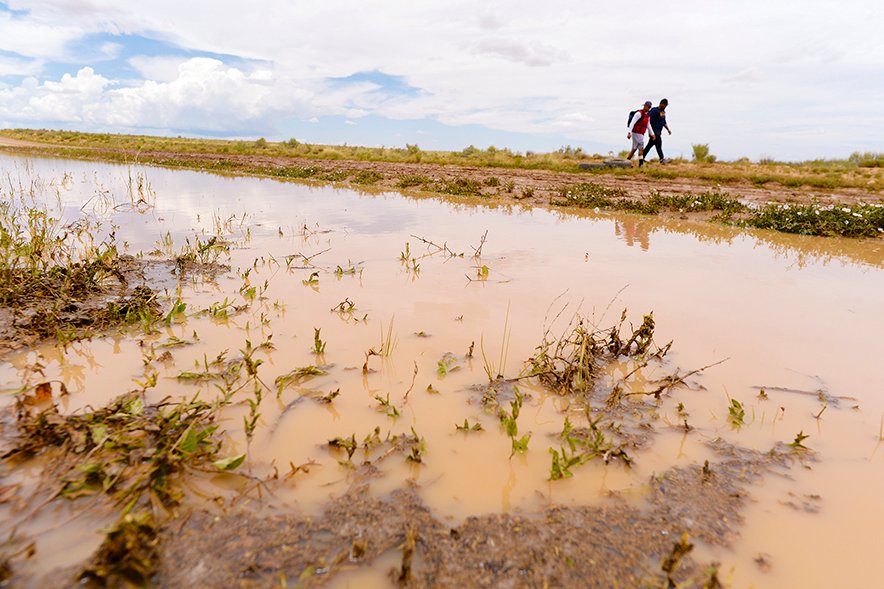
Burnside, Arizona – On a cloudy Saturday morning, with temperatures reaching 77 degrees Fahrenheit, a group of men set out on a journey towards sobriety and mental and physical wellness. The recent monsoon had transformed the landscape, creating a serene atmosphere for the introspective walk.
The previous night, they had witnessed a spectacular spectacle of the Thunder God’s might as thunder rumbled and strong winds lashed against the tent. With a mixture of amazement and determination, they marveled at his raw strength as they tried to keep their tent from collapsing.
Scattered along the seemingly endless stretch of dirt road, the men are deep in thought as they make their way to recovery, some walking alone, others forming support groups.
For most of the 11 men, their journey to sober living has only just begun, and this program offered by Beacon Treatment Center in Vernon, Arizona, is part of the road to sober living.
Walking the path to sobriety, relapse rates
Myron Eliacho, an outreach specialist at the treatment center and a traditional counselor who is on the sober path himself, also walked with the men.
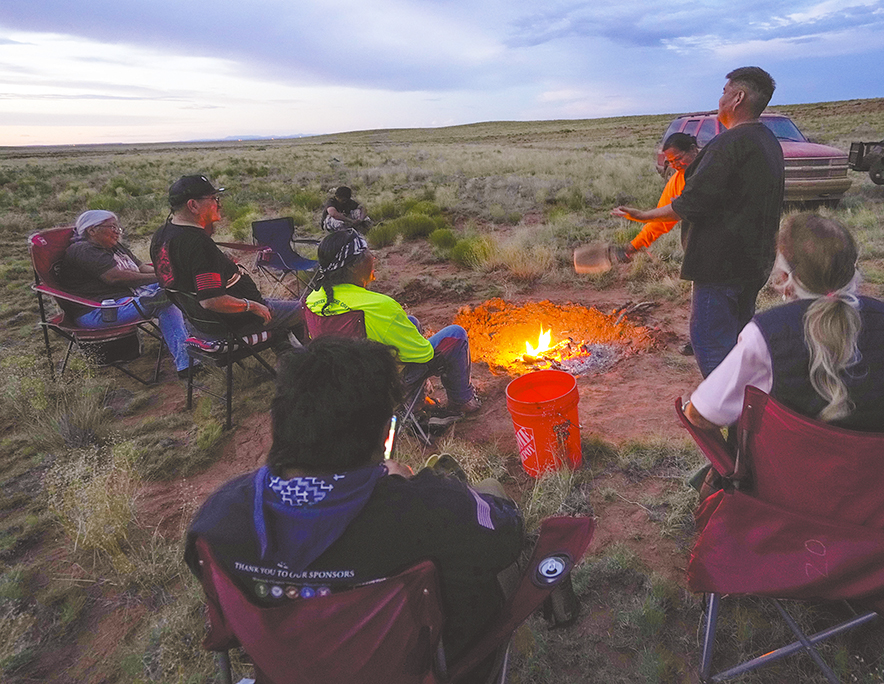
Special to The Times | Donovan Quintero
A Beacon Treatment Center patient is celebrated Saturday night in Burnside, Arizona, after completing a 17-mile walk as part of their treatment program.
“My relationship with the members is to provide guidance and direction because some of us have been through treatment ourselves,” he said Saturday. “So when I’m with the members, I remember when I was in treatment. I’ve been to a treatment centre twice in my life before I got sober. So, we’re all in recovery and that’s a good thing.”
Eliacho praised the men for trying hard to understand their addiction, but from his experience, staying sober and wanting to quit drinking are very different ways of life.
“Not everyone who comes to Beacon is going to do that. I know a certain number of them are going to stay clean and sober, but the reality is, some are going to quit,” he said. “It’s really up to them.”
According to the Indian Health Service, Native American men have shockingly high recidivism rates. Alcohol, drug use, mental illness, suicide, violence, and behavior-related morbidity and mortality rates in Native communities are well above the national average. Studies show that mental illnesses, including suicide, violence, and substance abuse, are disproportionately higher among Native people. This disparity results in Native people reporting significantly more mental distress within a month, 2.5 times higher than the general population.
According to the IHS, Native American communities have the highest suicide rates of any minority group in the United States, and suicide rates have been on the rise since 2003. They also have high rates of substance use disorders, including both illicit drugs and alcohol. Between 2016 and 2020, Native American communities had a significantly higher alcohol-related death rate of 519 per 100,000 compared to the rest of the U.S. population (12 per 100,000).
Already facing health disparities in their communities, these men are faced with the harsh new reality of returning to their hometowns without the solid support base they need from family, friends and communities, Eliacho said.
Eliacho added that treatment centers offer transition programs for patients to prevent relapse.
“We have had some individuals who have undergone transitional living and completed the program,” he said, adding that the program has had success stories: “We have had Navajo and other tribal and ethnic backgrounds who have participated in the post-treatment program and are now working.”
Walking in moccasins, imagining the future, and healing each other
Myron Eliacho walks in his moccasins, dried mud stains on the leather. He’s there, and he sees the march as a pivotal moment for the men, each reflecting on past hardships and looking toward a brighter future. He hopes they can take their newfound strength back into their communities, breaking the cycle of addiction and inspiring younger generations to follow a different path.
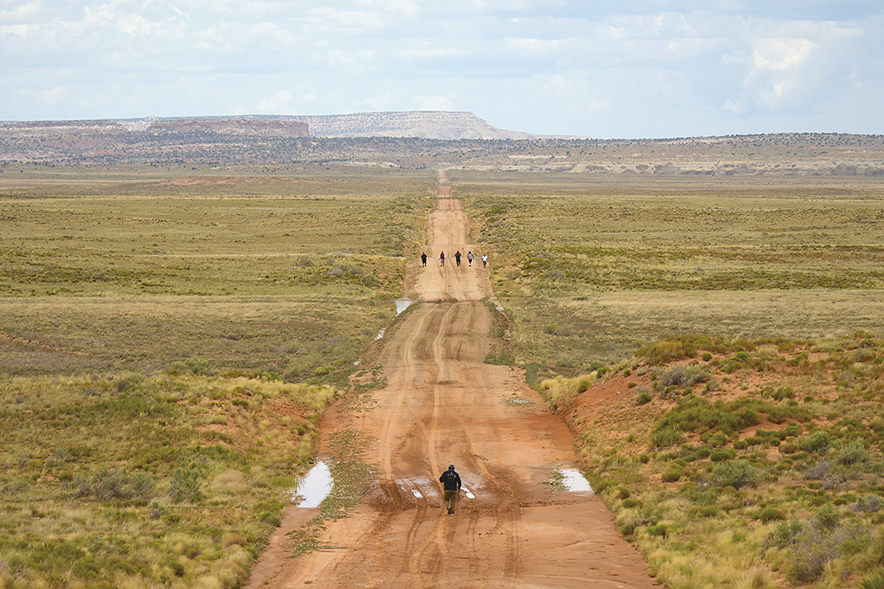
Special to The Times | Donovan Quintero
On Saturday, pedestrians will walk 17 miles along Navajo Highway 25, which leads to Cottonwood, Arizona, to visit patients at Beacon Treatment Center.
“We have guys that are building houses in Show Low. They’re not going back home, but rather they’re trying to learn a trade. For example, we have some younger guys that went to work with older guys that are carpenters. They’re building houses now. They’re working for contractors in Show Low. So they’re staying clean and sober,” Eliacho said.
Nolan, 53, who would only give his first name because of the treatment center’s confidentiality rules, said a doctor once told him that people who drink excessively die violently and alone.
He explained that he had been staying at a sober facility for meth addicts in Phoenix but felt it wasn’t working for him.
“I was in a sober house for a while, but it wasn’t very productive for me, so I got on a bus and went back to Gallup,” Nolan said, “but first I bought two bottles of liquor, drank them, blacked out and was almost hit by a city bus.”
When he returned to the reservation, he couldn’t believe that his drinking had nearly caused him to be hit and killed by a bus.
When he sought help at Sage Memorial Hospital, a PL 93-638 medical facility in Ganado, social workers and emergency doctors delivered a harsh reality that was hammered home to him.
“A doctor said to me at one point, ‘Yes, you are a heavy drinker. Heavy drinkers die alone. They die violently. They get hit by a car or killed.’ And I thought, ‘That’s never going to happen to me. Never, I’m being too careful.’ But it almost did. I said, ‘I’ve got to take control of my life,'” Nolan said after completing the 17-mile journey. “And so I recovered and came back here to the reservation.”
When he decided to leave the sober living facility, the 90-day program had stretched to nine months, but he said he felt confident enough to start living drug-free — and then alcohol came into his life.
“I was so confident I’d come back here and be drug-free, but I turned it into alcohol and it almost cost me my life,” Nolan said. “So I said to myself, ‘I’ve got to do something, if I want to stay alive’. I don’t want to be a statistic, that’s why I’m here in Beacon.”
Read the full article in the June 27th edition of the Navajo Times.
