

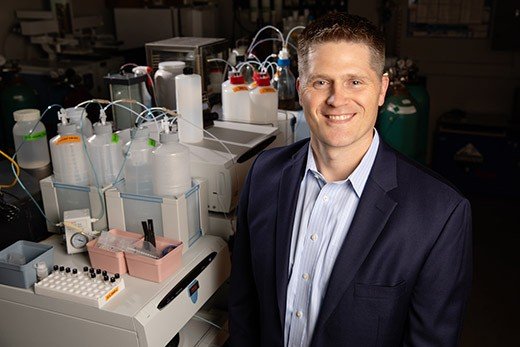
We all want to do the right thing by our furry friends, but it’s hard to know what trends are appropriate to optimize their health and nutrition. . Should my dog be vegan too? Will a new type of food help Fluffy slim down his figure? Dr. Kelly Swanson (he/him), chair of nutritional sciences and professor in the department of animal sciences in the College of Agricultural, Consumer, and Environmental Sciences at the University of Illinois at Urbana-Champaign, can help solve this problem. confusion. A major part of his research focuses on optimizing the nutrition of dogs and cats, including service animals such as search and rescue dogs.
Please contact Lauren Quinn. [email protected] To arrange an interview with Dr. Swanson.
biography:
Dr. Kelly Swanson (he/him) studies the impact of nutritional interventions on health outcomes, with a primary focus on gastrointestinal health and obesity, identifying mechanisms by which nutrients influence gene expression and host physiology. doing. His laboratory’s research contributes to the development of diets that help prevent obesity and other health-related problems in humans and animals.
For more information:
Swanson uses genome biology to study nutrition-related issues in the areas of obesity and gut health. His laboratory conducts both comparative and applied nutrition research projects, including studies of human subjects, companion animals, and rodent models. The main aim of his research group is to study the effects of diet and age on the abundance and activity of the gastrointestinal microbiota. DNA-based technology [e.g., quantitative polymerase chain reaction (qPCR); next-generation sequencing] Used in the laboratory. The current project is designed to evaluate the effects of dietary fiber and prebiotics, dietary lipids, and protein:carbohydrate ratios on gastrointestinal microbial populations. Important connections between the gut microbiota, host physiology, and disease are also being studied. Another major area of research concerns energy homeostasis and obesity. Molecular techniques (e.g., qRT-PCR, Fluidigm, RNAseq) are used to identify the mechanisms and/or metabolic pathways affected in key metabolic tissues. Adipose tissue and skeletal muscle play important roles in energy homeostasis and glucose and lipid metabolism and are the focus of several ongoing projects.
Affiliation:
Dr. Swanson is a professor of animal nutrition and nutrigenomics in the Department of Animal Sciences in the College of Agricultural, Consumer, and Environmental Sciences (ACES) at the University of Illinois at Urbana-Champaign. He is also interim director of ACES’ Division of Nutritional Sciences.
