

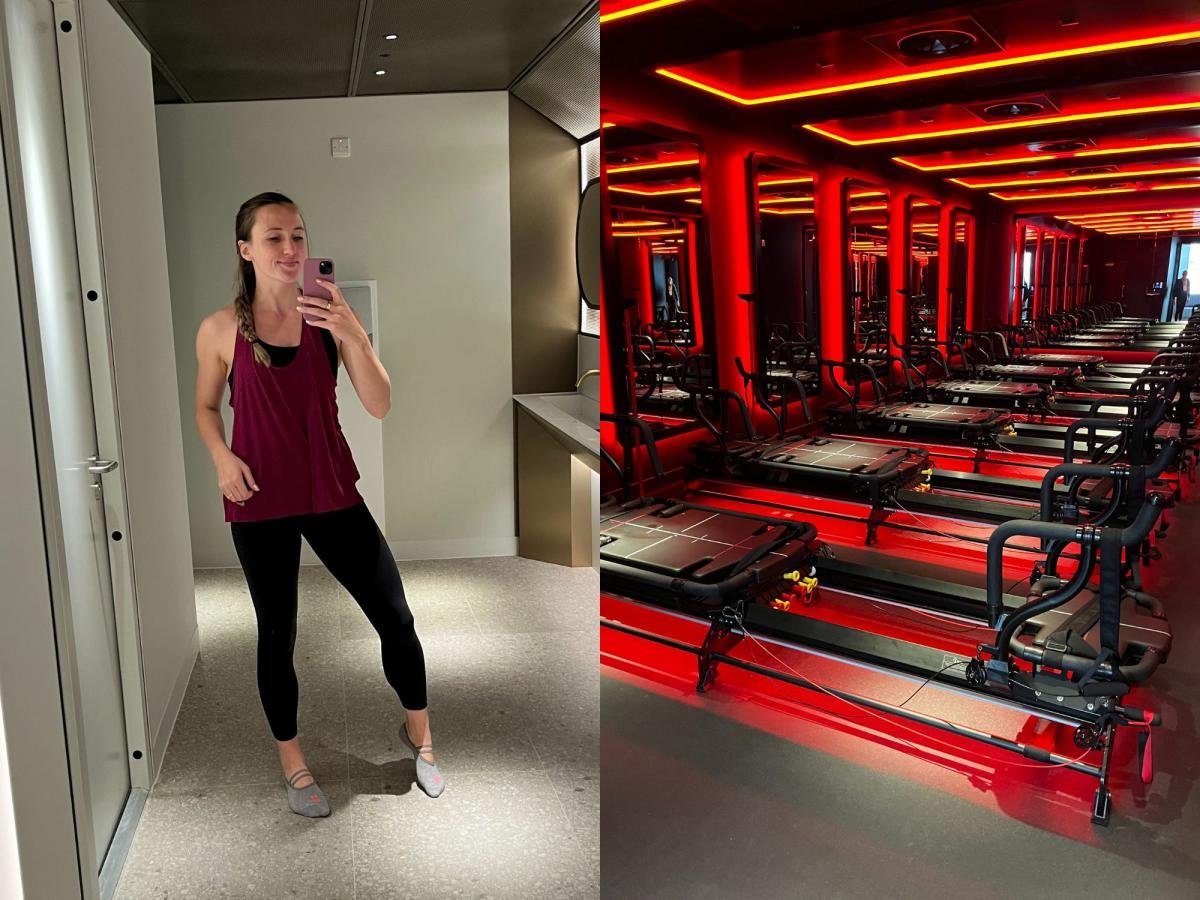
-
A favorite of many celebrities, the Megaformer is like a Pilates Reformer on steroids.
-
It uses spring-based resistance to provide a high-intensity, low-impact workout.
-
I tried out the Megaformer workout class and it was really tough even for a fitness reporter.
To me, the word “Megaformer” conjures up images of monster robot toys for children advertised by a male voice.
But this is no child’s play.
The Megaformer is a fitness machine similar to a Pilates Reformer, but on steroids. Invented by trainer to the stars Sebastian Lagree and patented in 2006, the Megaformer uses spring-based resistance to challenge the body under prolonged tension.
Lagree’s list of celebrity fans is long and reportedly includes Jennifer Aniston, Meghan Markle, Kate Hudson, Jennifer Lopez, Michelle Obama, Kim KardashianThe workout launched in the US but is now available in the UK, where the boutique fitness studio industry is booming.

The global boutique fitness studio market is currently worth $55.16 billion and is expected to reach $79.66 billion by 2029, according to Research and Markets. Demand for luxury workout methods remains strong, at least in Britain’s biggest cities, despite the rising cost of living.
I’m a health and fitness reporter who works out most days of the week, combining strength training with cardio, but the Megaformer was tough. I’d done reformer Pilates and taken lots of barre classes before, but I hadn’t done anything low-impact, high-intensity like Pilates for a few years since moving out of London.
There was a real burning sensation and my inner thighs were sore for a few days afterwards. I’m not normally a pilates style workout person, but this class reminded me how important it is to vary my training for overall health.
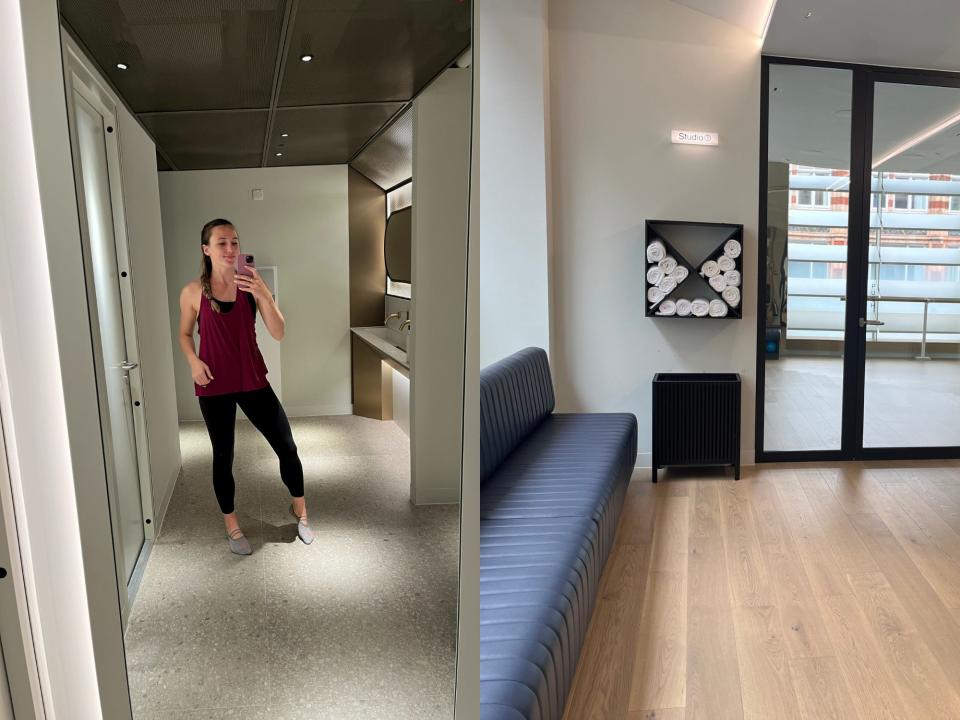
The gym was luxurious yet minimalist., Club-style studio included
There are currently two fitness studios in London that offer Megaformer workout classes, both of which cost £35 ($45). The one I went to was Studio Fix in Kensington, an affluent area with a number of high-end boutique gyms, but other classes there cost £25 ($32).
The entrance is minimalist, modern and industrial (think exposed pipes on the ceiling) with gold and chrome accents.
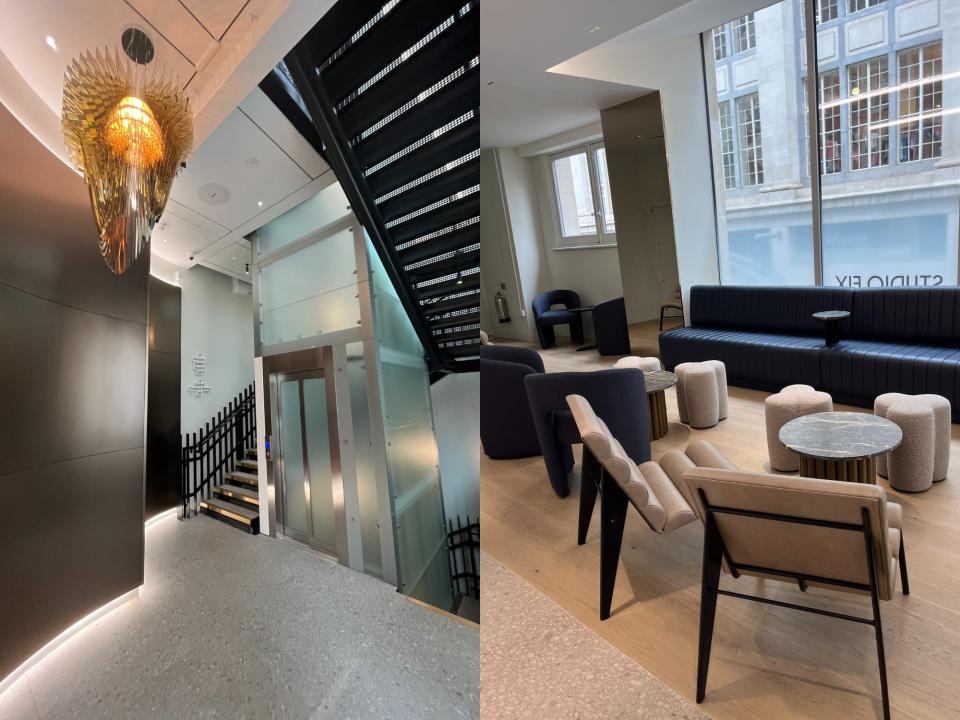
I checked in for my class at reception and glanced at the protein shake menu: £7.50 ($9.50) each… a luxury I could do without.
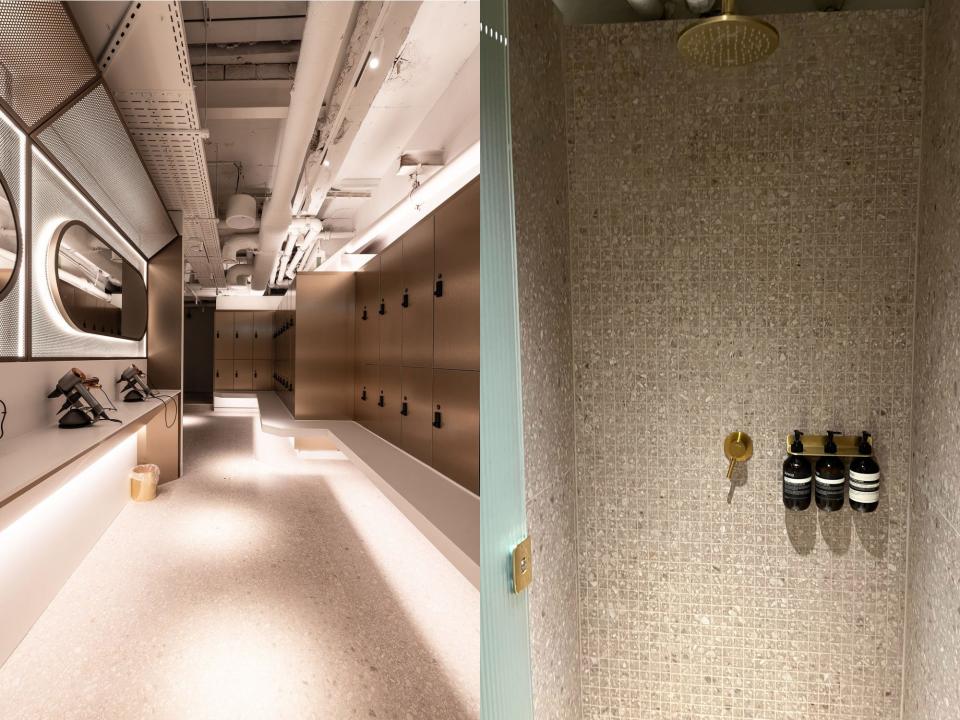
The changing rooms were stocked with Dyson hairdryers and straighteners, deodorant, dry shampoo, hairspray, hair ties, and Aesop toiletries.
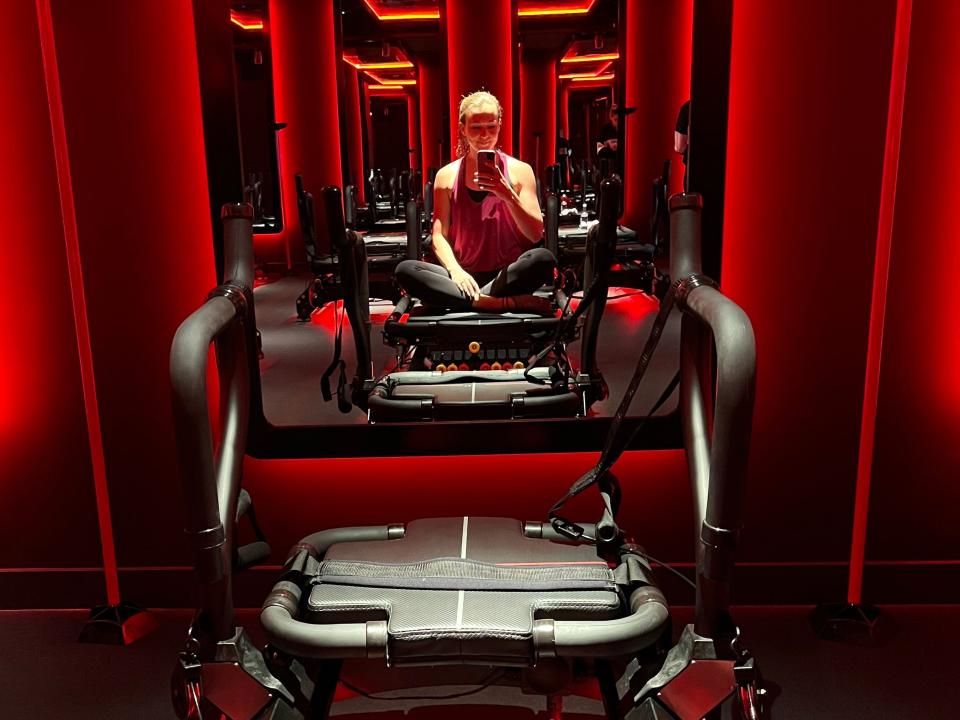
Unlike the gym’s other brightly lit studios, the Megaformer studio is windowless and decked out in mirrors and red lights, giving it a club-like atmosphere.
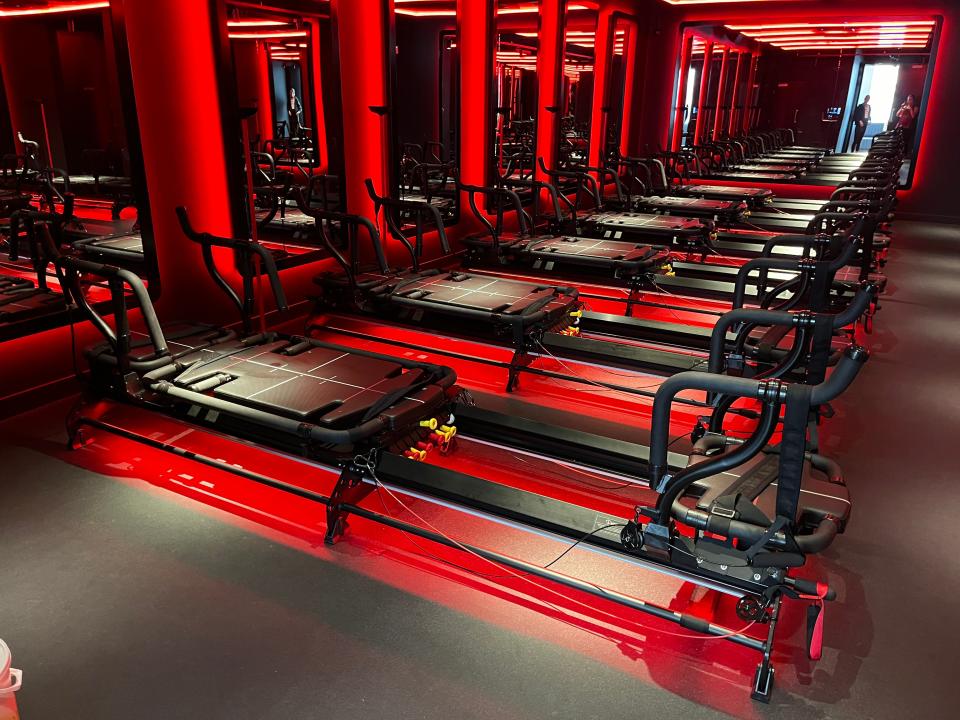
The machine is rather intimidating looking, it’s huge, has various handles and straps and has a moveable ‘trolley’ with various markings on it that slides back and forth.
I arrived early, so the class instructor, Andrea, walked me and the other beginners through the basics. She told me and my five classmates (all sleek, slim women in their 30s and 40s) that it might be difficult on our first try. And she was right.
The tense moments are everything.
The class started with core training, which felt pretty easy at first, but as the core training went on and on, my abs quickly started to tire and burn. There were lots of pikes, planks, and pulses.
Megaformer training involves lots of small movements as well as large movements with a wide range of motion, and each movement must be performed very slowly to maximize tension (e.g., four seconds down on a lunge, four seconds back up). It sounds easy, but it wasn’t.
As Lagree himself once told me, moving slowly means you can’t use momentum to lift weight.
“You’re activating more muscle fibres, so your training is more responsive. If you only do explosive movements, you’re primarily activating the fast-twitch fibres that are responsible for building muscle.”
Andrea gave instructions and demonstrated each move throughout the class so I never felt like I didn’t understand anything, and I appreciated that she took breaks to demonstrate each move first, otherwise there would have been no breaks at all.
After the core section, we moved on to the lower body, using straps and cables to do different exercises on one side and then repeating on the other side. We didn’t have to do any one exercise for long, but it was still long enough to get the burn. Many of the exercises looked easy, but were surprisingly painful – in a good way. We were working our muscles in ways they weren’t used to, so they were burning and starting to shake.
The final section of the workout was upper body, which was the easiest and shortest but I wish I had done it longer.
This class was too expensive to take regularly.
The class flew by and I left feeling great and satisfied with my body after having stretched and improved my range of motion.
The areas that were particularly painful for me that afternoon and for the next few days were my inner thighs, a reminder to not neglect them in my own training.
It was also a good reminder of the importance of variety in your workouts: You can squat twice your bodyweight, but you’re not going to be able to pulse for 15 seconds without doing a lunge on the Megaformer.
I wouldn’t do only Megaformer classes, as heavier strength training and cardio are also important, but if my budget allowed, I think it would be a good addition to my training program.
When I asked Studio Fix founder Najeeb Abnour why Megaformer training is more expensive than the studio’s other training, he explained that it’s because they have a licensing agreement with Sebastian Lagree for the use and training of the Megaformer.
“We bring in master trainers from Europe and also certify all our Lagree Method instructors,” Abnaal said.
Unfortunately it’s too expensive, but if I have the money I’ll definitely go again.
Read the original article on Business Insider
