


There’s no better time than this. Really There are more active ingredients to choose from than ever before for your skincare routine (let’s be honest, hyaluronic acid is now a household term), but that brings us to the next big question: What ingredients can you combine for maximum effect, and what are the no-no’s?
This is often mentioned with vitamin C and niacinamide, both of which are effective ingredients for discoloration and blemishes (among other things): “Niacinamide and vitamin C are both antioxidants. and “Anti-inflammatory,” says board-certified dermatologist Melanie Palm, M.D. But the two aren’t necessarily BFFs. So should you take these two ingredients together? Here’s what you need to know.
What is Niacinamide?
This ingredient, a form of vitamin B3, does a whole lot of good. First, it “helps the skin produce keratin, a protein that supports the skin’s barrier function by retaining moisture and protecting against environmental damage,” says Dr. Palm.
In skin care products, niacinamide helps soothe inflammation, minimize the appearance of pores, regulates sebum production, and addresses abnormal pigmentation to even out skin tone. (Phew.) Because of this, it’s often combined with harsher ingredients (like retinol) to soften any side effects.


What is Vitamin C?
Vitamin C is key for many functions throughout the body, but especially for the skin, where it acts as an antioxidant and “can protect skin from free radicals that cause signs of aging,” says Dr. Palm. Not only does it protect skin from free radicals (caused by sunlight and pollution), Dr. Palm says, “vitamin C has been clinically proven to brighten skin, promote collagen production, reduce pigmentation, provide some protection against photoaging, and prevent sagging skin.” In other words, it’s the MVP of your beauty routine.
What happens when you take niacinamide and vitamin C together?
Good news: the idea that vitamin C and niacinamide don’t get along is a total misconception. “This theory arose from earlier research that suggested there could be an interaction between the two ingredients,” says board-certified dermatologist Claire Chan, MD. “The study suggested that combining vitamin C and niacinamide could create a compound called nicotinic acid, which can cause irritation, burning, and redness in the skin.”
But more recent studies have surpassed those earlier studies, showing that “the interaction between these two ingredients is minimal and the combination is generally well tolerated,” says Dr. Chang. In other words, it’s fine.
What’s more, the two also make an effective combo, especially for dark spots and discoloration. Vitamin C inhibits tyrosinase, an enzyme that’s important in producing melanin, or pigment, in the skin. Blocking tyrosinase helps prevent excess pigment from forming. Meanwhile, “niacinamide works to reduce the amount of melanin that transfers to and accumulates in the skin,” says Dr. Chang. This means that each ingredient works in a different way to reduce excess pigment production and brighten and even out skin tone.
Therefore, “we believe that these two ingredients have synergistic effects on the skin, including skin whitening, anti-aging and antioxidant properties,” says Dr. Chang.
Which is better for your skin?
It depends! If you have sensitive skin, niacinamide may be your best bet, since it has “proven benefits in reducing inflammation and improving hydration.” Dr. Chang also notes that vitamin C can be irritating for some patients. For those prone to acne, niacinamide may also be a better option, as it helps reduce sebum production. Of course, you can use both.
How to Use Niacinamide and Vitamin C in Your Skin Care Routine
If you’re using them in two separate products, follow the age-old advice of applying the products from thinnest to thickest texture. For example, “a lighter serum can be applied before your moisturizer,” says Dr. Chang. “If you have vitamin C in your serum and niacinamide in your moisturizer, you can use the vitamin C first, followed by your moisturizer that contains niacinamide.”
Even better, these two ingredients are now combined in a variety of products and work over time to brighten skin and fade blemishes faster.
Best Vitamin C + Niacinamide Products

Fenty Skin Dark Spot Serum

INKEY LIST Vitamin B, C, E Moisturizer
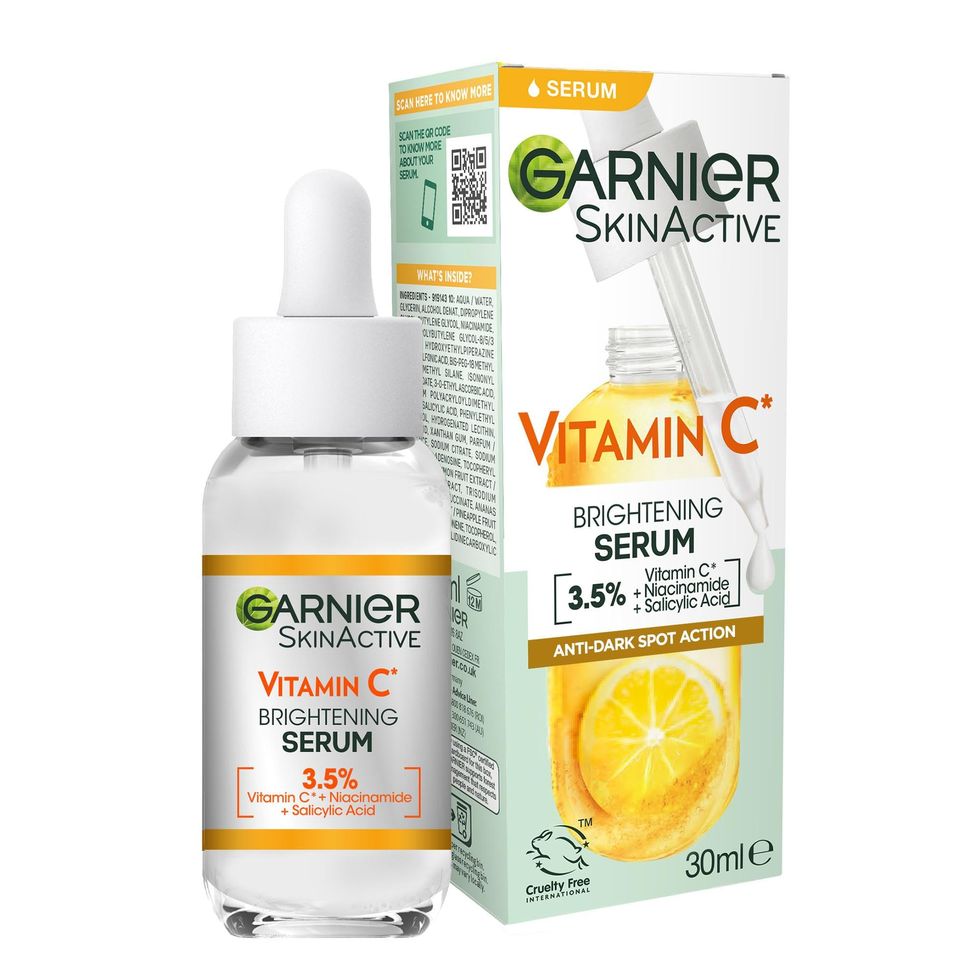
Garnier Vitamin C Anti-Dark Spot & Brightening Serum
Get 33% off now

Bubble Daydream Vitamin C + Niacinamide Serum

Summer Friday CC Me Serum

Bobbi Brown Vitamin Enriched Smoothing Serum

In addition to using serums for the best of both worlds, you can also take advantage of the free-radical-fighting compounding effects of your sunscreen. (Bonus! Because sun exposure is a big factor in discolouration and dark spots, using SPF every day is also effective at fading them.)
Best Vitamin C + Niacinamide SPF

Murad Environmental Shield Essential C Day Moisture SPF30
Get 20% off now

L OAL PARIS Bright Reveal Dark Spot UV Fluid SPF 50 Niacinamide 50ml
Get 19% off now

Boots SPF+ Niacinamide Moisturizing Lotion SPF50

Rodial Vitamin C SPF30 Moisturizer
summary
Ultimately, there’s very little risk in using both niacinamide and vitamin C in your skincare routine, especially if you’re targeting post-inflammatory hyperpigmentation after a breakout or just wanting to create a bit of a glow-from-within look. Not only can’t they do any harm by combining them, they actually complement each other for even better luminosity than either one alone.
Meet the experts:
- Claire ChanDr. MD is a board-certified dermatologist at Union Square Laser Dermatology in New York, NY.
- Melanie PalmDr. MD is a board-certified dermatologist at Art of Skin in San Diego, California.
Why Trust Us COsmopolitan?
Deanna Pai ‘s interim deputy beauty editor. cosmopolitan With over 12 years of experience covering skincare, makeup, and more, she’s an authority on all skincare categories, but an expert when it comes to active ingredients, because she’s used most of them herself (unfortunately). When she’s not testing skincare formulas, she’s talking to top dermatologists to learn about new and innovative stuff.
Deanna Pai is a New York-based freelance beauty writer and editor with over 10 years of experience writing about beauty and wellness.
