

How many plants do you eat each week? Think you can hit 30? That’s the magic number, says River Cottage chef Hugh Fearnley-Whittingstall, who has just published a new cookbook on the subject. How to eat 30 different plants a week. The book includes a foreword by physician and gut health guru Tim Spector, who details the benefits of structuring your diet around a variety of plants. This includes not only fruits and vegetables, but also nuts, seeds, spices, legumes, and even chocolate and coffee. Not sure where to start? Here are three recipes from his hot new book.
Hugh Fearnley Whittingstall’s Recipes

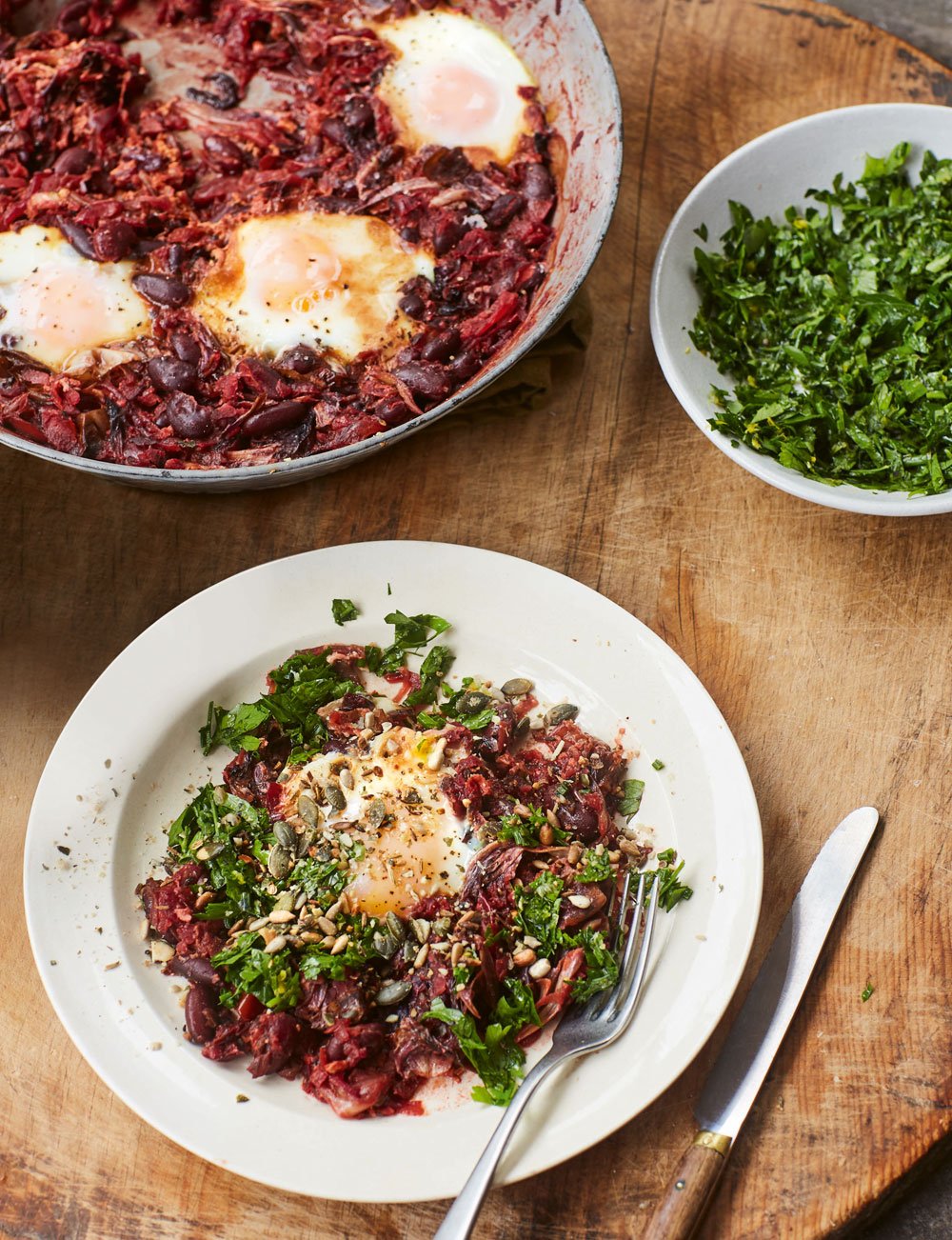
Purple Shakshuka
Beets add fiber and richness to the classic shakshuka and give it a gorgeous purple color — perfect for breakfast or brunch, or served with whole wheat bread or toast for a hearty dinner for two.
Serves 2 generously or 4 lightly
material:
- Cooking oil or fat
- 1 large red onion or 2 medium-sized red or brown onions, finely sliced
- 2 cloves garlic (finely grated or chopped)
- 1 small red chili pepper or a pinch of dried chili flakes (optional)
- 1/2 teaspoon cumin seeds
- 1/2 teaspoon smoked paprika, plus a pinch
- 1 medium beet, washed and coarsely grated (approximately 150g)
- 1 red bell pepper, cored, seeded, and sliced (optional)
- 400g canned peeled plum tomatoes
- 2 tablespoons extra virgin olive oil
- Canned green beans 400g
- 1 radicchio, roughly chopped
- 4 eggs
- sea salt and black pepper
serve
- 50g (coarsely chopped) herbal leaves such as parsley, chives, coriander, chervil, and lovage
- Grated rind and juice of half a lemon
- 1-2 teaspoons extra virgin olive oil
- Dukkah
Method:
- Heat a little oil or fat in a medium skillet or wide, shallow, fireproof casserole over medium heat. Add the onion and sauté for 6 to 8 minutes until soft but not coloured, then add the garlic, chili pepper, cumin seeds and smoked paprika. Cook for 2 minutes, stirring frequently.
- Add the beets, red pepper (if using), and canned tomatoes, mashing them with your hands (remove any stems or skins). Cook for 8 to 10 minutes, until the tomatoes begin to fall apart when you use the back of a spoon. Add the extra virgin olive oil and stir, adding a little water if the mixture looks completely dry.
- Drain the beans, reserving a little liquid, and add to the pot with the reserved liquid. Add the radicchio and simmer over low heat, stirring occasionally, until everything is softened and well combined to form a sauce, 4 to 5 minutes.
- Use the back of a tablespoon to make 4 wells in the mixture. Crack an egg into each well and season with salt, pepper, and a pinch of smoked paprika. Reduce heat, cover pot, and simmer until egg whites are set but yolks are still runny, 4 to 6 minutes.
- Meanwhile, combine the herbs in a small bowl with the lemon zest and juice, a pinch of salt, and extra virgin olive oil.
- Once the shakshuka is done, serve immediately with the herbs tossed in the dressing and a sprinkling of dukkah.
swap
- Instead of kidney beans, use cannellini, flageolet or butter beans, canned chickpeas or puy, green or brown lentils.
- You can also replace radicchio with plenty of seasonal vegetables like red chicory, little gem lettuce, or purple or green kale. If you don’t have beets, you can use a carrot or two instead.
Chickpea and apricot caponata
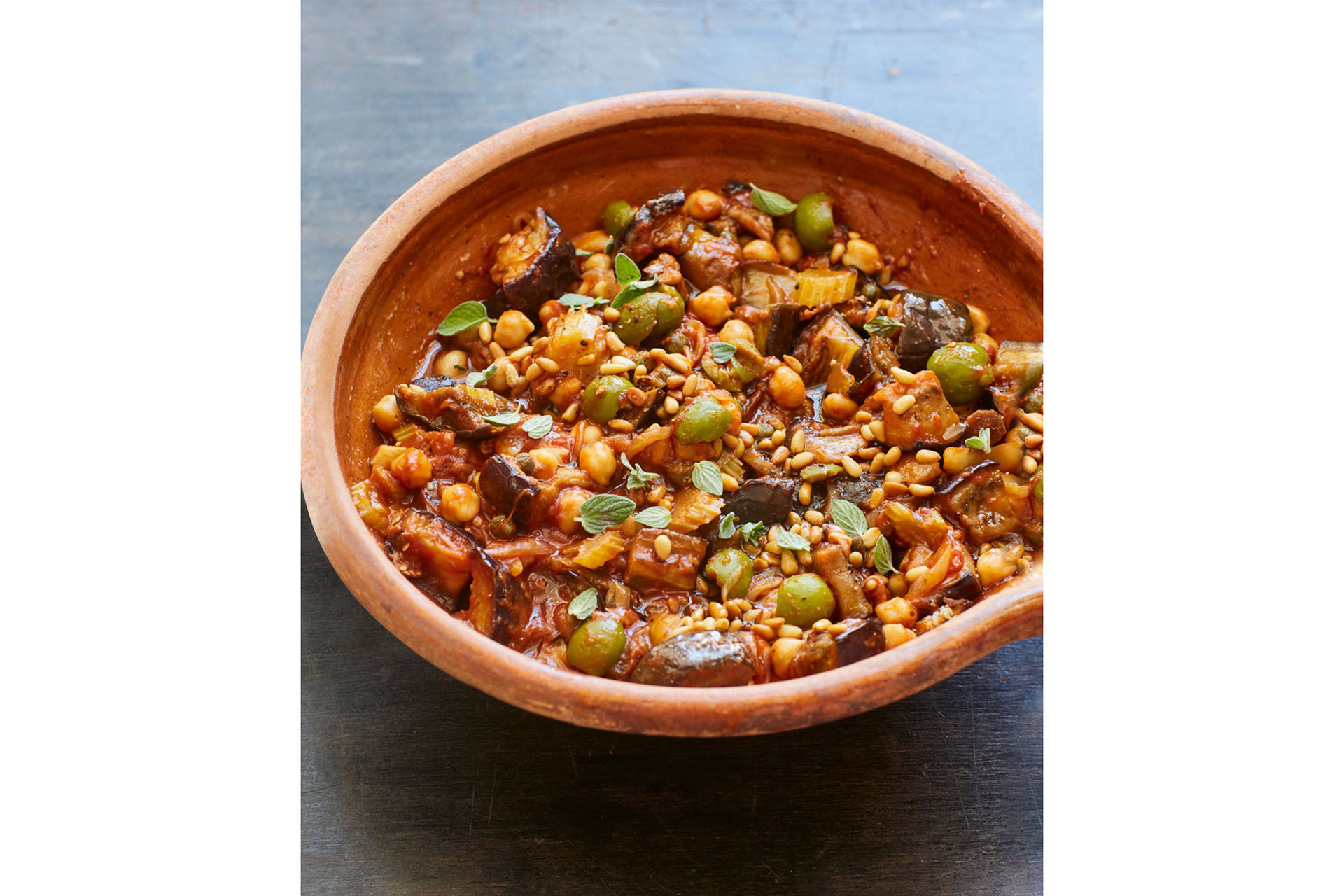
Caponata is a Sicilian sweet and sour dish featuring eggplant. I also used zucchini here, but you can use just eggplant if you prefer. I like the lumpy texture of dried apricots, but you can add other dried fruits if you like. Chickpeas aren’t as authentic, but they add great flavor and texture and make for a heartier dish.
Caponata is traditionally served at room temperature and can be stored in the refrigerator for several days, making it suitable for making ahead of time.
For 4 people
material:
- 2 medium eggplants (total approx. 500g)
- 2 medium zucchinis (or use another eggplant)
- 3 tablespoons vegetable oil
- 1 onion (finely sliced)
- 2 celery sticks (thinly sliced)
- 2 cloves of garlic, minced
- 6 large plums or other ripe tomatoes, peeled, seeded and chopped, or 400g can of peeled plum tomatoes
- 400g canned chickpeas (drain and wash)
- 2 tablespoons balsamic vinegar
- 70 g dried unsulfured apricots, roughly chopped
- 2 tablespoons capers
- 60g pitted green olives (halved)
- sea salt and black pepper
Finish:
- 50g toasted pine nuts or pumpkin seeds
- Lots of oregano leaves (or basil or parsley)
- squeeze lemon juice
- Drizzle with extra virgin olive oil
Method:
- Cut the eggplant into 2-3 cm cubes, place in a colander, and sprinkle with 2 teaspoons of salt. Mix well and let stand for about 1 hour to release the juices. Cut the zucchini into cubes of similar size. Set aside.
- When the eggplant is about half way through the salting time, heat 1 tablespoon of the oil in a large pot over very low heat. Add onion and celery and sauté until soft and golden, about 10 minutes. Add the garlic and sauté for another 2 minutes until fragrant.
- Add the tomatoes (crush canned tomatoes with your hands and remove any stems or skin pieces). Simmer for 10-15 minutes to reduce slightly. Add the chickpeas, balsamic vinegar, dried apricots, capers, and olives and simmer for another 10 minutes, stirring frequently. Remove from heat.
- Wash the eggplant and pat dry with kitchen paper. Heat a little oil in a large frying pan over medium heat. Once hot, add the diced aubergine and fry until golden brown and softened, about 5-10 minutes, stirring occasionally. Remove with a slotted spoon, drain on kitchen paper, and pour into the tomato mixture.
- Add a little more oil to the frying pan and fry the zucchini in the same way, then drain and add to the eggplant-tomato mixture.
- Bring to a boil again and cook for another 10 to 15 minutes, stirring occasionally, until everything is well combined and reduced and thickened. Season with salt and pepper to taste.
- Allow the caponata to cool to room temperature if you have time, but serve warm if you prefer. Finish by garnishing with toasted pine nuts or pumpkin seeds, oregano (or other herb) leaves, a squeeze of lemon juice, and a drizzle of extra virgin olive oil.
Chocolate and spice cookies
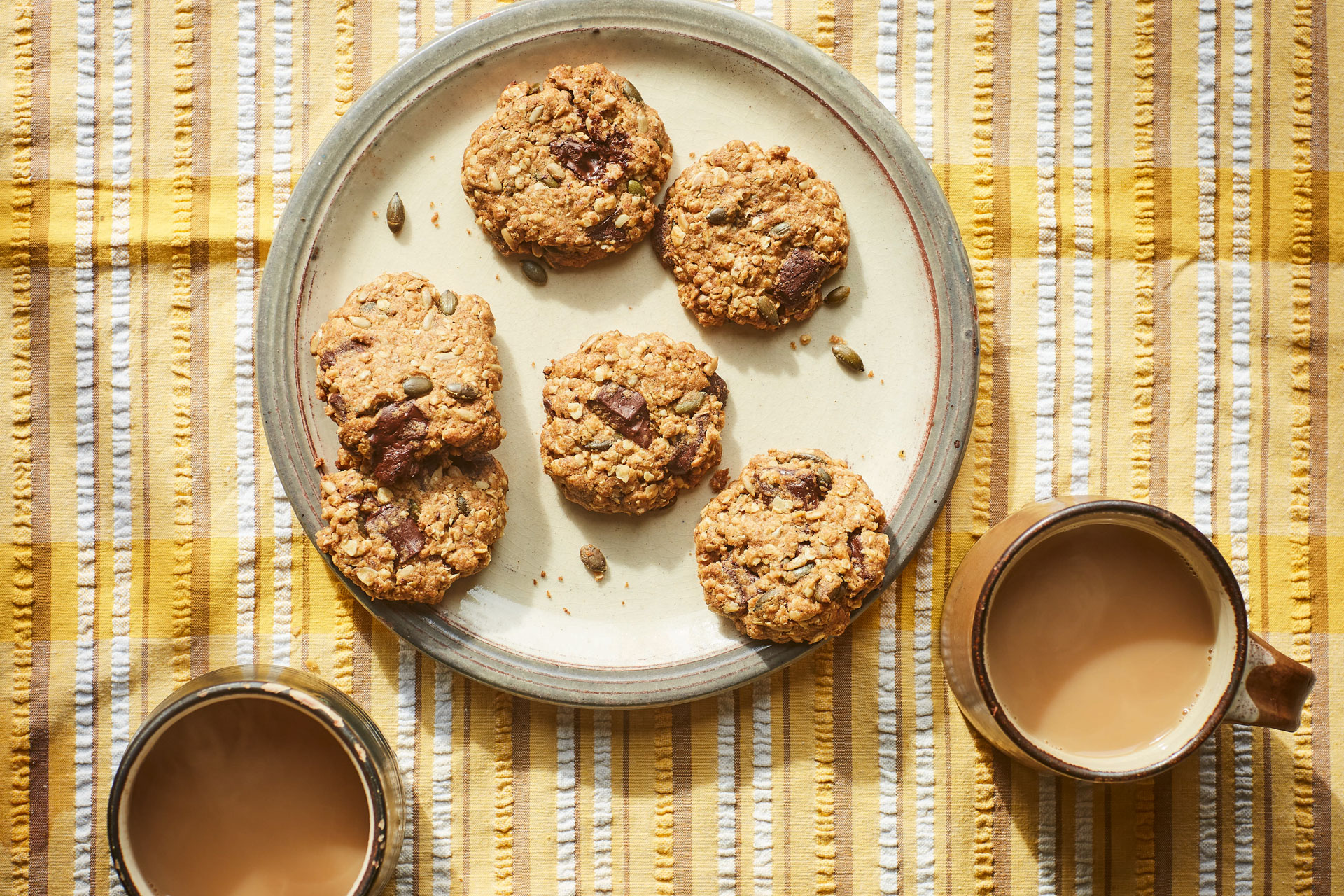
There’s no reason why a tasty treat like a cookie can’t be topped off with some healthy seeds, some lovely spices and maybe some chocolate to help boost your plant intake – I love the combination of ginger, cardamom and chocolate, but you could also use a teaspoon of mixed spices if that’s more convenient.
You can start with chilled butter in the refrigerator (butter will melt), so it’s easy to make in a hurry. This is a fairly small batch. If you want to make more, double the amount. Below you will find some lovely variations of this simple recipe.
12 servings
material:
- 125g butter
- Soft brown sugar 40g
- 2 cardamom pods (or 1/2 teaspoon ground cardamom)
- 125g high-quality whole wheat flour
- 75g oatmeal porridge
- 50g sunflower or pumpkin seeds (or a mix)
- 1 teaspoon grated ginger
- 70g dark chocolate (70% cocoa solids), chopped into small (pea-sized) pieces
Method:
- Preheat the oven to 180°C/160°C. Fan/Gas 4. Line a baking sheet with baking paper.
- Melt the butter and sugar in a small saucepan over low heat, stirring frequently. Remove from heat and let cool slightly.
- In the meantime, if using cardamom pods, tap the pods with a rolling pin to remove the seeds, then use a pestle and mortar to crush the seeds. Discard the broken pods and use the crushed seeds.
- Mix together the flour, oats, seeds, grated ginger, and cardamom and stir into the melted mixture until evenly mixed. If the mixture is still warm, let it cool for a few more minutes before adding the chocolate (so the chocolate doesn’t melt). Stir to distribute the chocolate throughout the cookie dough.
- Ladle dessert spoonfuls of the mixture onto a baking tray lined with baking paper. They will spread a bit as they bake, leaving 3-4cm of space in between. Use the back of a spoon to flatten each cookie into a rough circle no more than 1cm deep (you’re aiming for 12 fairly small cookies).
- Bake in the oven for 12-15 minutes depending on size, until the cookies are golden and darker around the edges. They’ll still be a little soft at this point, so leave them to cool completely and crisp up before removing from the tray.
- The cookies can be stored in an airtight container for up to a week, but storing them that long can be a challenge.
swap
- Try adding raisins, chopped dried apricots (not sulfurized), or other dried fruits. Up to 50g can be mixed with or in place of chocolate.
- To make chocolate cookies with nuts, use coarsely chopped hazelnuts, peanuts, cashews, walnuts, or almonds instead of sunflower or pumpkin seeds.
- You can also use 1 teaspoon of ground mixed spices instead of cardamom and ginger.
Excerpt from How to Eat 30 Plants a Week by Hugh Fearnley Whittingstall (Bloomsbury, hardback £25). Photo © Lizzy Mason.
