

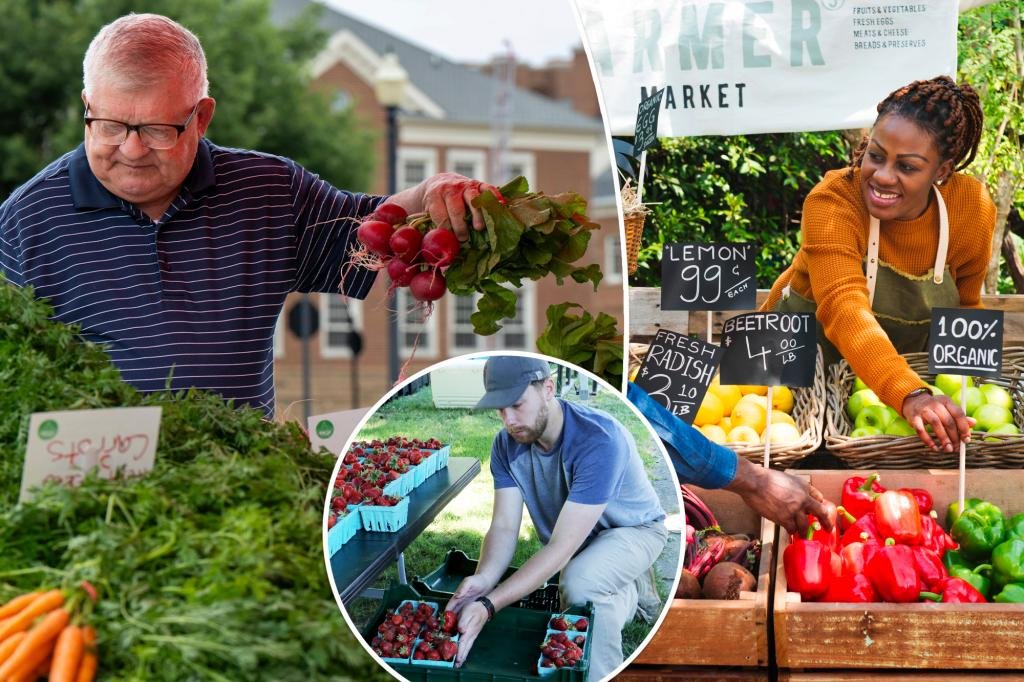
Nothing beats a farmers market, unless you end up making yourself sick shopping there.
The Centers for Disease Control and Prevention estimates that 48 million people get food poisoning every year in the United States, resulting in 128,000 hospitalizations and 3,000 deaths. Food poisoning is more common in the summer because bacteria thrive in warm, moist environments.
“There are regulations at the state level regarding farmers markets. [US Department of Agriculture] “This is to ensure safe food handling,” says Lisa Valente, R.D., nutrition editor for Healthline.
But problems do occur: One study found that between 2008 and 2015, there were seven major food-borne illness outbreaks and two recalls linked to foods from farmers markets.
Another study published in 2018 warned about poor hand-washing, personal hygiene and contamination prevention techniques at Pennsylvania farmers’ markets — precautions that could help prevent the spread of foodborne illness.
There are more than 7,000 registered farmers markets across the country, and nutrition experts spoke to The Washington Post about how to avoid food poisoning while grocery shopping.
Beware the Warning Signs
Sam Cutler, a Harvard trained nutrition and health coach and founder of MINDFULL, warns against imported products.
“This is usually an indication that the product is not fresh, has not adapted to the current climate or season and is at higher risk of spoilage,” Cutler told the Post.
Vendors should also be mindful of hygiene: Valente reports that raw meat should not come into contact with fresh produce, and that hands and clothing should be kept clean, especially when handling food.
Pay attention to the temperature
When purchasing hot or cold foods, it’s important to check how they are stored.
“When purchasing foods that should be kept chilled, such as meat, seafood, milk or cheese, make sure they are properly cooled on the spot to prevent the food from falling into dangerous temperature zones,” Valente says. “The same goes for hot, ready-to-eat foods, which should be kept at a warm temperature to remain safe.”
Bacteria grow most rapidly between 40 and 140 degrees Fahrenheit, a range known as the “danger zone.”
“Most of the cheese, milk, meat and fish sellers have coolers and the means to keep their products refrigerated because they don’t want to waste or spoil the product,” Valente explained.
She recommends shopping early on hot days and bringing cooler bags and ice packs to keep food cold until you finish shopping and get home.
According to the United States Department of Agriculture (USDA), once you take food out of a cooler or refrigerator, it can usually be eaten within two hours, but if the temperature outside is above 90 degrees Fahrenheit, it should be eaten within an hour.
Meanwhile, Cutler recommends avoiding perishable foods like dairy, meat and fish altogether during warmer months.
“Instead, choose fresh produce, dried goods and herbs,” she said.
Check for pasteurization
As the H5N1 avian flu virus continues to spread among U.S. dairy cows, there has been much discussion about raw versus pasteurized milk.
Pasteurized milk is safer than raw milk because the heat treatment process kills harmful bacteria, yeasts and molds that may be present in the milk.
Valente said the best way to tell if milk or juice is pasteurized is to read the label or ask the farmer.
“Milk that is pasteurized should be labeled as such, and milk that is not should be labeled as such. Every state has different rules about selling raw milk,” Valente says. “In some states it’s completely illegal, while in others it may be sold on farms or at farmers’ markets.”
Unpasteurized juices should carry a warning label saying they’re unpasteurized, with the exception of juices sold by the glass at farmers markets, Valente said. Cheese labels should state whether they’re made with raw or pasteurized milk.
ask a question
Valente points out that it’s important to vet the produce you buy, and if you have any questions about how it was grown, always ask the farmer before buying.
“Farmers markets are both a shopping and a social experience,” Valente said.
- Scrub your vegetables even if you plan to peel them before eating.
- Store cold foods below 40°F and hot foods above 140°F.
- Inspect the fruit for any large bruises or worm holes that may harbor bacteria.
- Refrigerate fruits and vegetables within two hours of cutting or peeling them.
- Wash your reusable tote bag frequently.
