


The statistics about skin cancer are certainly grim. But don’t take them at face value. Following Skin Cancer Awareness Month, which takes place every May, take a look at these statistics released by the Skin Cancer Foundation:
- More than two people die from skin cancer every hour in the United States
- One in five Americans will be diagnosed with skin cancer by age 70.
- The number of newly diagnosed cases of melanoma in 2024 is estimated to increase by 7.3%.
- By 2024, melanoma deaths are expected to increase by 3.8%.
- An estimated 200,340 cases of malignant melanoma will be diagnosed in the United States in 2024. Of these, 99,700 will be noninvasive and limited to the epidermis (top layer of skin), and 100,640 will be invasive and penetrate through the epidermis to the second layer of skin (dermis). Of the invasive cases, 59,170 will occur in men and 41,470 will occur in women.
- An estimated 8,290 people will die from melanoma in 2024, of which 5,430 will be men and 2,860 will be women.
- Having five or more sunburns doubles your risk of developing melanoma.
- In the United States, melanoma cases are the fifth most common cancer after breast, prostate, lung, and colon cancer. This ranking does not include basal cell and squamous cell carcinomas, which are not required to be reported to cancer registries.
If you’re reading these statistics and thinking, “I better pick up the phone and schedule an appointment with my dermatologist for my annual skin cancer screening,” you’d be right. Early detection is your best defense against the serious effects of skin cancer.
“One of the key statistics when it comes to skin cancer is that if melanoma is caught early, the five-year survival rate jumps to 99 percent,” said Dr. April Larson, chief medical officer at Utah-based PathologyWatch, which specializes in digital dermatopathology services. “Early detection is one way we work to achieve our goal of preserving and extending patients’ lives while reducing healthcare costs.”
Understanding skin cancer is the first step to recognizing the impact of early detection. We also look at how regular self-exams, annual screenings, and new technologies can help in the fight against skin cancer.
Understanding Skin Cancer
Skin cancer develops when skin cells undergo abnormal changes, usually due to exposure to ultraviolet (UV) radiation from sunlight or artificial sources like tanning beds. There are three main causes of skin cancer:
- Squamous cell carcinoma begins in the thin, flat cells that form the top layer of the epidermis.
- Basal cell carcinoma begins in the cells of the basal layer of the epidermis.
- Melanoma begins in cells that make melanin and are found in the lower part of the epidermis. Melanin is the pigment that gives skin its color. When skin is exposed to the sun, melanocytes make more pigment, causing the skin to darken.
The first two, basal cell carcinoma and squamous cell carcinoma, make up the two most common types of skin cancer. Both are usually curable, but can be disfiguring and expensive to treat.
On the other hand, malignant melanoma causes the most deaths as it often spreads to other parts of the body, including vital organs.
The impact of early detection
Early detection plays a vital role in treating skin cancer. The earlier skin cancer is detected, the more treatable it is and the higher the chances of successful treatment.
Early diagnosis allows for less invasive treatment options, reduces the risk of complications, and may even prevent the cancer from spreading to other parts of the body. Additionally, early detection minimizes the need for aggressive treatment and preserves healthy tissue, significantly improving a patient’s quality of life.
While early detection significantly improves patient survival rates, the National Library of Medicine noted in its report that 50 percent of cancers are at an advanced stage at the time of diagnosis, meaning improved technologies are key to understanding the biology and progression of pre-cancerous and early cancers to identify cases that require intervention.
“Insights must be translated into early detection technologies with the sensitivity and specificity to be appropriately evaluated to support real-world clinical implementation,” the report states. “Multidisciplinary collaboration is key. Advances in technology and biological understanding highlight that the time has come to accelerate early detection research and transform cancer survival.”
Technologies to Promote Early Detection
Transforming the art of early detection and treatment is an area where companies like Malaysian-headquartered PathologyWatch are making an impact globally through digital dermatopathology. With an intuitive digital pathology solution that includes access to leading dermatopathologists and streamlined clinical workflows, PathologyWatch combines cutting-edge technology with clinical decision-making to deliver enhanced patient care.
“PathologyWatch is at the forefront of the digital transformation of dermatopathology,” says PathologyWatch’s April Larson, “This gives physicians much more tools at their disposal than they ever had before.” As evidence of the company’s expected growth and influence in digital dermatopathology, PathologyWatch was acquired by Australia-based Sonic Healthcare in November for $150 million.
“Sonic Healthcare’s laboratories provide healthcare to more than 120 million patients each year,” Larson said, “so we’re excited to be able to apply our technology on a broader scale than ever before, on a global scale. We’re excited to see this technology benefit tens of millions of patients each year over the next few years.”
Currently, the majority of people in Utah who get screened for skin cancer through outpatient care have their samples processed at the PathologyWatch lab, and Larson says that as technology continues to advance, diagnostic and treatment options should continue to improve.
“Machine learning techniques will revolutionize both diagnostic and prognostic pathology. In the future, we may be able to predict which melanomas will be more severe, allowing those who need it to receive treatment and follow-up while reducing unnecessary procedures for others,” Larson said. “We are most excited about the applications of these emerging technologies.”
How to detect it early
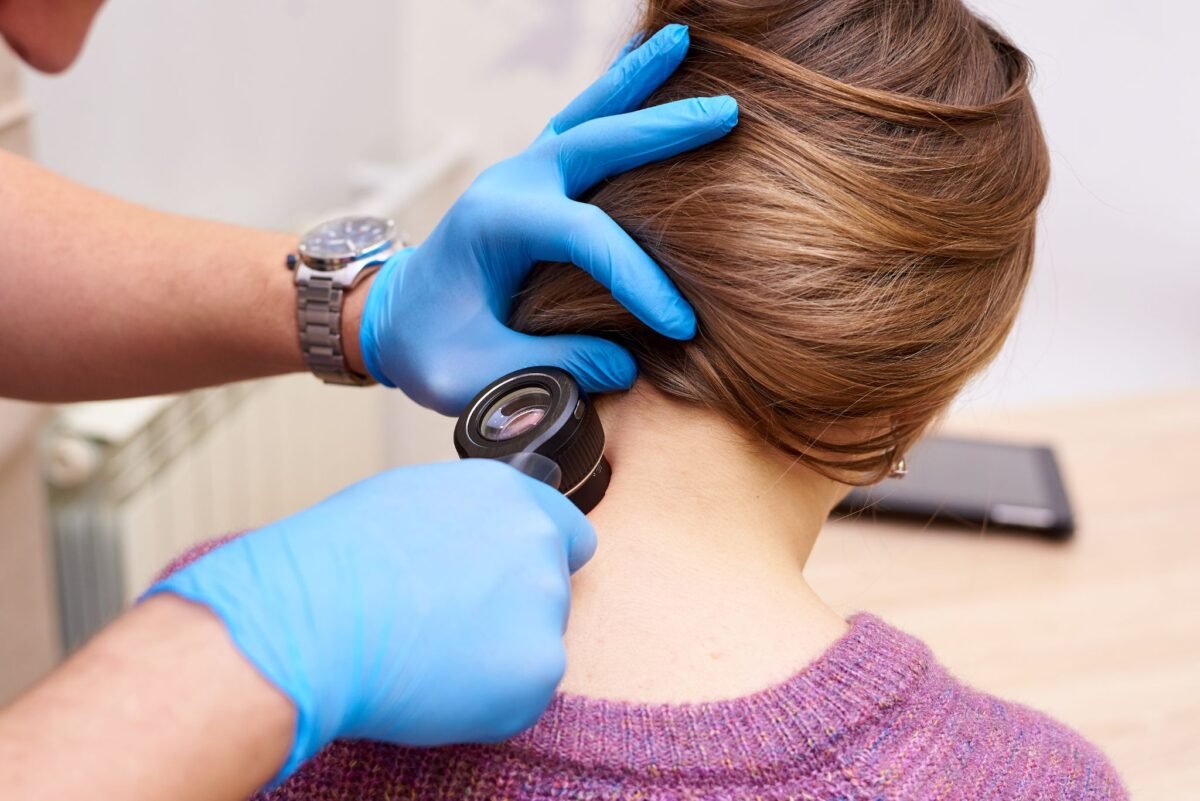
Regular skin self-examinations and annual exams by a dermatologist are essential for early detection of skin cancer. During self-examinations, closely monitor your skin for moles, freckles, and any changes in the appearance of your skin. Report any suspicious growths or changes to a health care professional immediately.
Self-testing is easy and can be done at home using the ABCDE rule.
- Asymmetry: Look for irregularly shaped moles or lesions.
- Borders: Look for uneven or jagged edges.
- Color: Keep an eye out for changes in color, especially if the mole darkens or shows multiple shades.
- Diameter: Be aware of the increase in size, especially if it exceeds the size of a pencil eraser.
- Progression: Monitor for changes over time, such as itching, bleeding, or changes in shape or size.
Scheduling regular skin cancer screenings with a dermatologist remains important, especially for those with a history of excessive sun exposure, a family history of skin cancer, or fair skin. With a greater understanding of skin cancer and the impact of early detection through self-examination and technological advances, people will be much better equipped to prevent and fight this widespread disease.
Doug Fox is a Project Manager at Fullcast, a Silicon Slopes-based end-to-end RevOps platform that enables companies to design, manage, and track the performance of their revenue-generating teams.
Newsletter
