

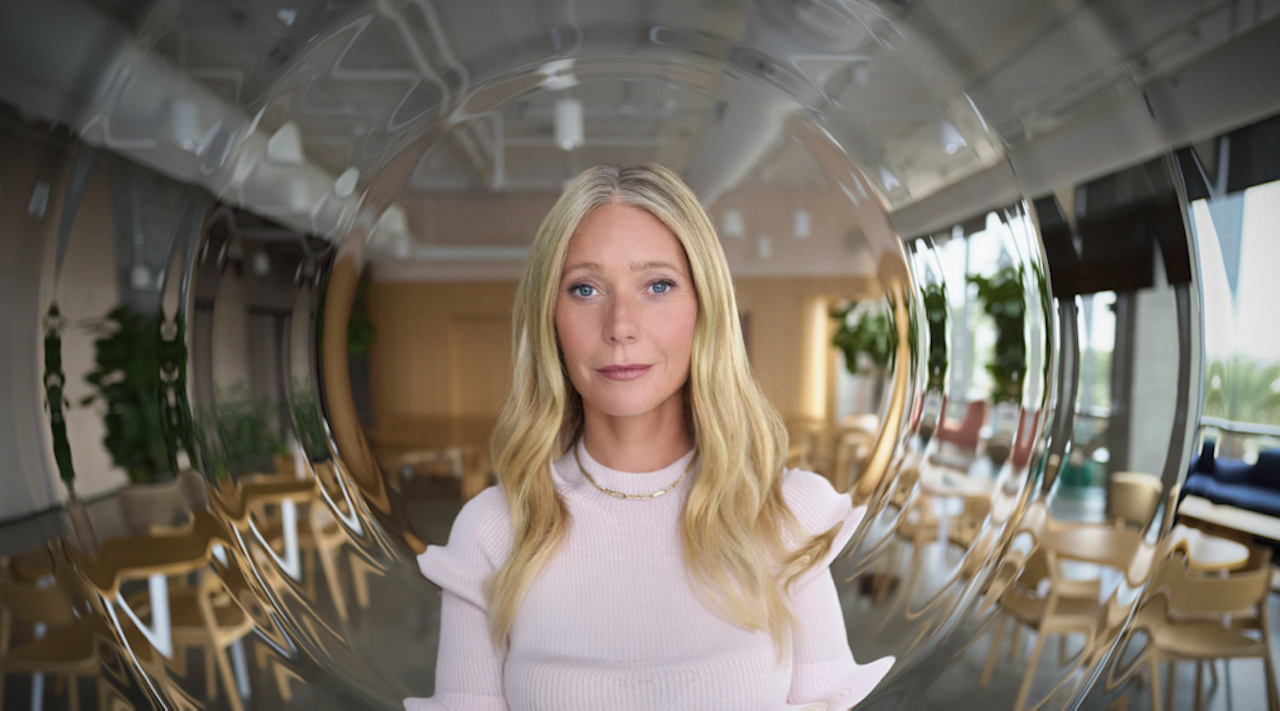
The Hollywood star and founder of wellness empire Goop is helping bring to market an AI app that teaches the practice of eye-opening meditation. However, this is not just a sponsorship activity. Co-founder Ben Little reveals how Paltrow went from the company’s mood board to the company’s board of directors.
Moments of Space is Gwyneth Paltrow’s latest business venture, and she is not only the face of the company, but also has capital and a role in shaping its long-term business strategy.
In this AI-powered app, Paltrow guides users through meditation exercises with their eyes open. The concept was first conceived by a trio of British technology innovators in 2021, before Paltrow came on board.
Ben Little is the founder and CEO of Fearless Frank, an innovation agency. He co-founded Moments of Space with his cousin Kim Little, a “lifelong” meditator and software engineer, and Julian Murphy, a former Apple executive who helped launch the App Store.
Little describes his vision: “What if you could meditate while washing dishes, changing diapers, or making tea? What if you could incorporate meditation into people’s lives? So it’s no longer a chore, it’s just a daily routine. It has become a part of my life…”
The app took two years to develop, but the project gained momentum after Paltrow came on board. Little called Paltrow the “queen of wellness” and credited Goop with paving the way for her to enter the wellness industry.
“She has a vision for what’s to come. What was niche then is now mainstream,” he says. These reasons are why Paltrow was on the original “manifestation committee” for Moments of Space. “So I chalk it up to phenomenon.”
Thanks to a chance connection with Paltrow’s management, the trio ended up developing the project under her nose. “I was working with a few guys who flew to America to stay with me.” [Paltrow’s] I offered to show the app to my agent,” Little said. “She loved the proposal, the idea, and she wanted to be a part of it.”
Paltrow was signed on not only as co-founder and global community director, but also as the face of the company, and was incorporated into content and marketing.
“From day one she was really passionate about getting it done and our vision of what we wanted to create was very aligned. We wanted to offer an alternative and build a successful business.”
Paltrow was deeply involved in the launch phase, securing more than 700 press interviews and being on-site at the official launch event in LA. “She was amazing,” Little said. “She’s a phenomenal professional and great at what she does. She’s had a very intense period.”
Apart from the announcement, Little said the Hollywood star is also “very interested in the company’s future strategy. She’s very passionate about eyes and open voices, and she’s also very passionate about AI.” “I’m interested,” he added.
The long-term ambition is to introduce a “spiritual guide” who will host sessions alongside Paltrow. “In the future, we have the flexibility and freedom to include other personalities in our apps,” Little says.
Transitioning from endorsement agreements to co-ownership
Paltrow’s co-ownership of Moments in Space is another example of a celebrity becoming involved in the future success of a business beyond traditional sponsorship deals.
“Right now, more than ever, celebrities are interested in this idea of co-ownership,” says Little. Part of this is due to certain celebrities paving the way, Little said. He points to success stories such as George Clooney’s sale of his tequila brand Casamigos to Diageo and Ryan Reynold’s sale of Mint Mobile to T-Mobile for $1.35 billion.
“Celebrities now think they have the opportunity to not only be the face of a brand, but to actually immerse themselves in the company. There are people who want to do that because they want to develop themselves and benefit from it. more and more,” he says. For example, Clooney has earned $40 million from his Nespresso ambassador contract since 2013, but he reportedly sold his tequila company Casamigos to Diageo for $1 billion.
But Little predicts that the celebrity business model is about to go a step further with “fractional ownership.” Here, the talent will co-own the business and her IP with her fans and community through tokens. So it’s essentially a celebrity crowdfund paid for with digital money.
“Celebrities have always been associated with brands, but we’ve been through a period where celebrities wanted a stake in those businesses, and we’re about to enter a big next era. “This is a time when ownership is available to everyone. Celebrities of all sizes can co-own with their communities,” he says.
Little admits this isn’t widespread yet, but he’s seeing fans seeking this level of connection with their idols. “They want more than a traditional celebrity endorsement. Fans want to be immersed in the experience and content, and they want to be closer,” he says.
Worrying for brands, Little urges marketers to be more “entrepreneurial” in how they sign talent, as celebrities seek ownership rather than sponsorship deals. .
“They need to read the market in terms of what the talent actually wants to do and how the talent wants to do it, and they need to collaborate. You also need to read the market from a perspective,” he says.
