

The Union government on Monday defended in the Supreme Court its August 2023 letter to states and union territories asking authorities not to take action against any entity violating Rule 170 of the Drugs and Cosmetics Rules, which deals with regulating inappropriate advertisement of Ayurvedic, Siddha and Unani drugs.
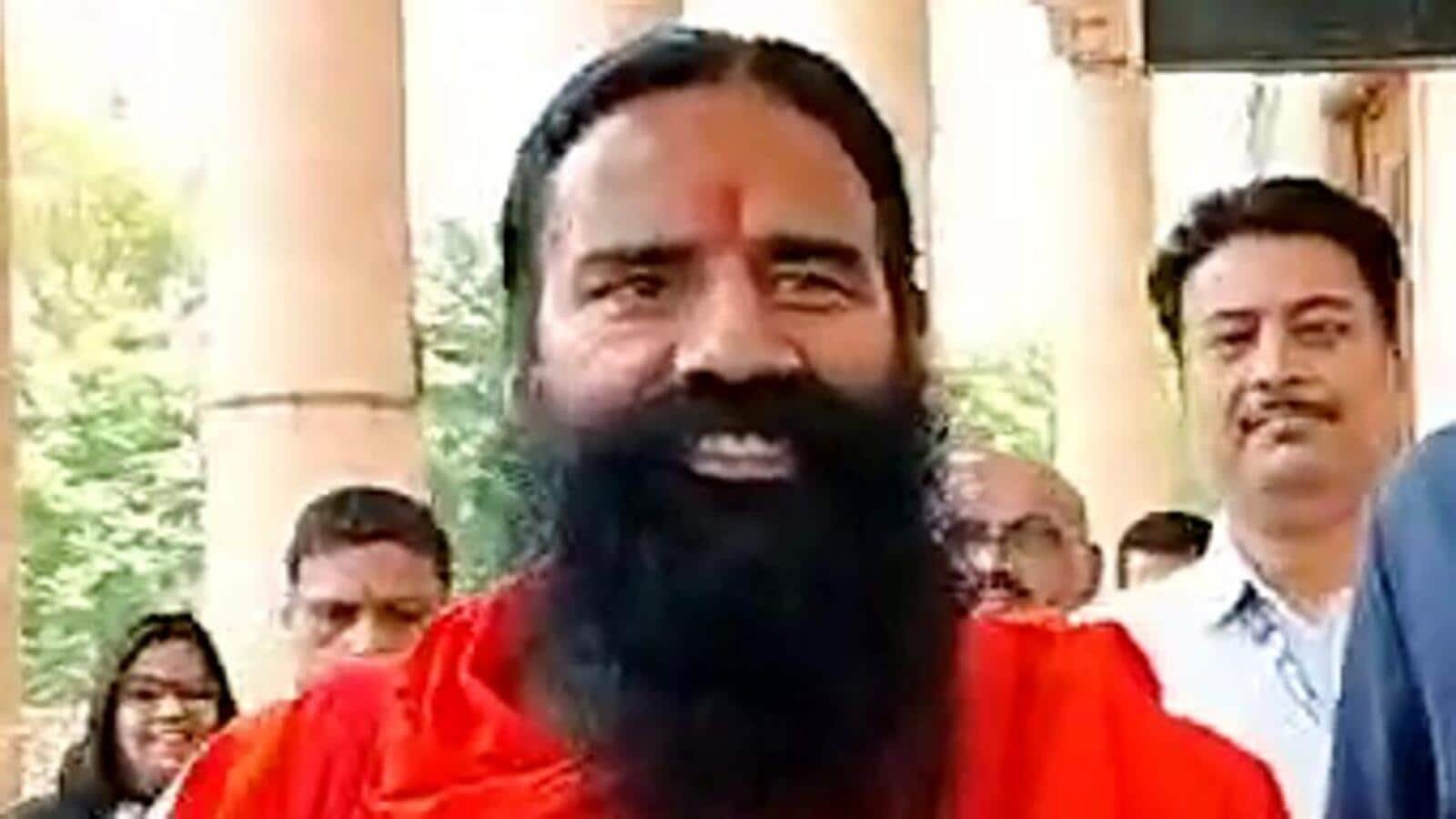
The Indian government, filing an affidavit in connection with a contempt case against yoga guru and entrepreneur Ramdev and Patanjali managing director Balkrishna over misleading advertisements, argued that the August 2023 letter was sent to states and union territories to avoid confusion and unnecessary litigation.
“As the processing of the final gazette notification will take further time, and therefore to avoid confusion among the SLAs (State Licensing Authorities) of the various States/Union Territories and to prevent inevitable litigation, the Ministry of Agriculture, Trade and Industry, by letter dated August 29, 2023, has directed the Licensing Authorities of all States/Union Territories not to take any action under Rule 170 of the Drugs and Cosmetics Rules, 1945 as the final notification is being processed,” the affidavit said, a day before the hearing in the Supreme Court.
Citing a large number of petitions filed in the Delhi, Bombay and Kerala high courts against the impugned provisions, the central government supported its decision to repeal Rule 170 and said cases against misleading advertisements could rather be considered under the Drugs and Magic Remedies Act.
A bench of Justices Hima Kohli and Ahsanuddin Amanullah will hear on Tuesday the issue relating to the regulatory framework to prevent misleading advertisements and unethical medical practices.
In a series of hearings on petitions filed by the Indian Medical Association (IMA) against Ramdev’s controversial comments on modern medicine and allegedly misleading advertisements of Patanjali products, the Supreme Court initiated contempt proceedings against the yoga guru and Balkrishna and accused Patanjali of spreading misinformation that could undermine public confidence in the healthcare system.
On April 30, the court had directed Ramdev and Balkrishna to submit newspaper copies showing the actual size of the apology they had issued for their past misleading advertisements and press conferences in violation of court orders, seeking to verify the sincerity and acknowledgment of the unconditional apology they had issued in the contempt proceedings.
A day before the court hearing, Balkrishna also filed a petition seeking initiation of contempt proceedings against IMA Chairman RV Asokan over an interview he gave to news agency PTI following the Supreme Court’s April 23 order widening judicial review of false advertisements to include “alleged unethical behaviour” by doctors practising modern medicine.
In the interview, Asokan criticised the Supreme Court’s treatment of practitioners of modern medicine, arguing that it is “not the function of the Supreme Court to harshly criticise the country’s health workers”, especially considering the sacrifices made during the COVID-19 pandemic.
Balkrishna argued that Asokan’s remarks were defamatory in nature and a clear attempt to disrupt the course of justice and the court should place the case on the judicial register.
In the previous hearing on April 23, the court had asked Solicitor General KM Nataraj, appearing for the central government, to submit an explanation on the recommendations made by the Ayurveda Siddha and Unani Drugs Technical Advisory Board (ASUBTAB) regarding the omission of Rule 170, which deals with regulation of improper advertisements and was incorporated in the amendment to the Drugs and Cosmetics Rules, 1945 notified by the central government in December 2018.
“On the one hand, the Minister has said in Parliament that effective action will be taken against misleading advertisements. On the other hand, the regulations are being amended in this regard….Can you issue rules which are contrary to the law? Is this not arbitrary or abuse of power? Will it not amount to encouraging injustice?” the court asked the Central government on the day, making it clear that the case will not be limited to one FMCG company or one pharmaceutical company and the court intends to “consider it in a broader perspective”.
